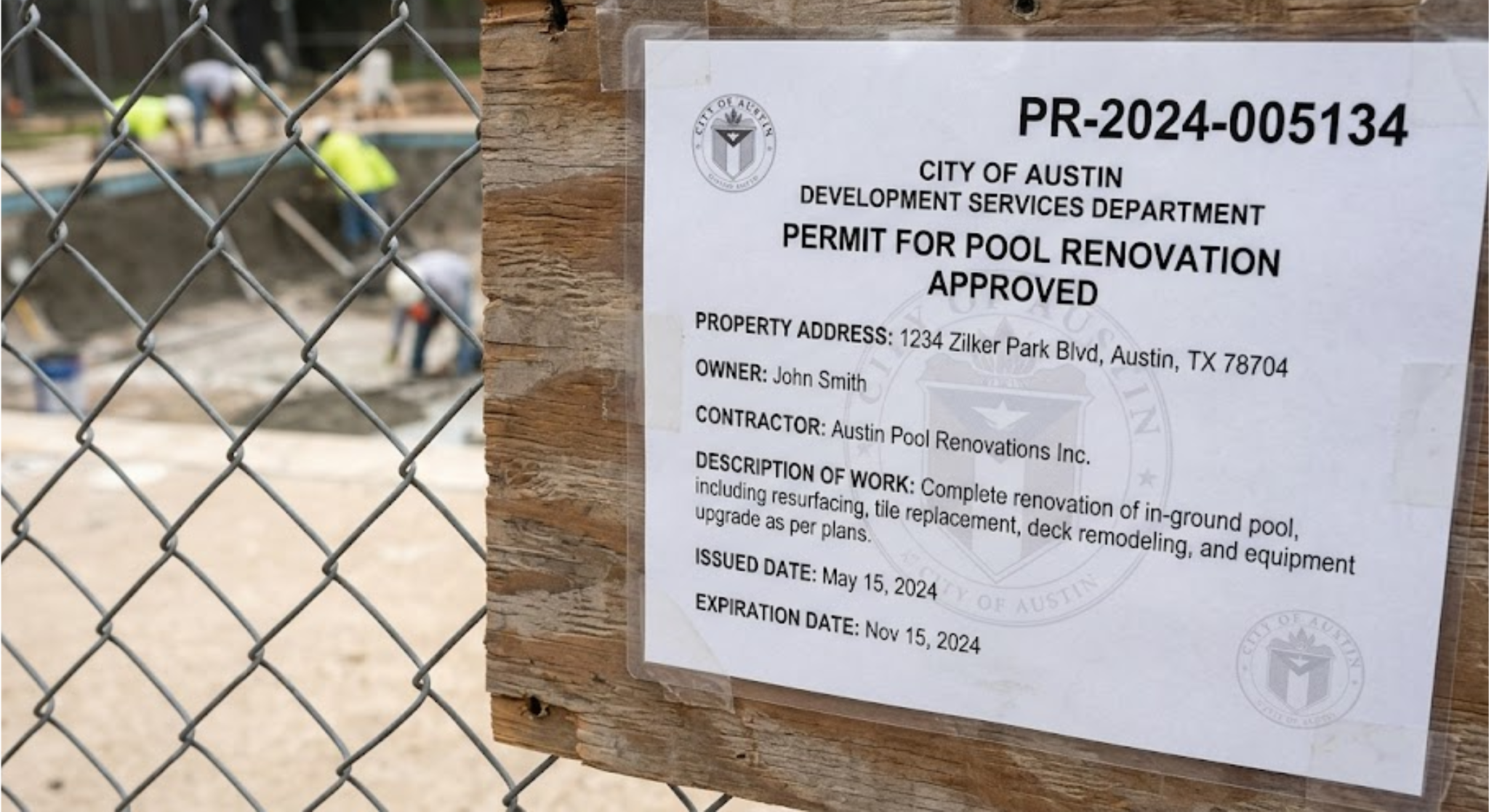
For homeowners across Central Texas, a backyard swimming pool is much more than a luxury; it is a vital escape from the intense summer heat. However, as the years go by, even the most beautifully designed pools begin to show signs of wear. Whether your plaster is heavily stained and chalking, your waterline tile is cracking, or your outdated mechanical equipment is driving up your energy bills, planning an Austin Pool Renovation is an exciting opportunity to breathe new life into your outdoor oasis.
As you start browsing premium pebble finish samples and modern LED lighting options, a critical logistical question inevitably arises: Do I actually need a permit to renovate my existing pool?
The answer is highly dependent on the scope of your specific project. In some cases, an Austin pool renovation may require permits, especially for structural changes. Clear Solutions manages compliance so you don’t have to. Understanding the difference between a simple cosmetic upgrade and a major structural overhaul is the first step toward a smooth, delay-free project. Here is a comprehensive guide to navigating pool renovation permits in the City of Austin.
1. The Purpose of Permitting in Pool Construction
Permits are frequently viewed by homeowners as frustrating, time-consuming bureaucratic red tape. However, building permits serve a fundamental purpose: protecting your property, your financial investment, and your family’s safety.
The City of Austin’s Development Services Department enforces building codes to ensure that all residential construction meets strict structural, electrical, and environmental standards. When it comes to swimming pools, water and electricity are in close proximity, making code compliance absolutely critical. Permits ensure that high-voltage pump wiring is properly grounded, structural steel is appropriately bonded, and the pool shell itself is structurally sound. Furthermore, permits ensure that your renovation adheres to the city’s specific zoning laws regarding drainage, neighborhood setbacks, and environmental protections.
2. When Does an Austin Pool Renovation Require a Permit?
If your remodeling project goes beyond the surface level, you should expect to navigate the city’s permitting process. In Austin, you will typically need a residential building permit (and often accompanying trade permits) if your renovation includes any of the following scopes of work:
- Structural Alterations: If you are changing the actual shape, depth, or footprint of the pool. This includes adding a sun shelf (Baja ledge), integrating an attached spa, or modifying the entry steps.
- Electrical and Plumbing Overhauls: Upgrading or relocating your primary pool equipment pad, installing new underground plumbing lines, or running new dedicated electrical circuits for variable-speed pumps and advanced heating systems.
- Adding Major Features: Integrating structural water features, sheer descents, gas-powered fire bowls, or constructing an extensive new concrete pool deck.
- Safety Barrier Modifications: If your renovation involves altering or removing the mandatory safety fencing surrounding the pool area, the city must verify that the new barrier meets strict child safety codes.
3. Projects That Are Typically Exempt from Permitting
Fortunately, not every backyard upgrade requires a trip to the permitting office. If your project is strictly cosmetic, it is generally considered “maintenance and repair,” which frequently bypasses the need for municipal approval.
| Type of Renovation | Scope of Work | Permitting Status |
| Resurfacing | Applying a new layer of traditional plaster, quartz, or exposed pebble over the existing pool shell without altering the structure. | Typically Exempt |
| Tile and Coping | Chipping off old waterline tile and coping stones and replacing them with new materials. | Typically Exempt |
| Basic Equipment Swaps | Replacing a broken pool pump or filter with a similar model in the exact same location using existing wiring. | Typically Exempt |
| Light Bulb Replacement | Changing standard incandescent pool bulbs to LED bulbs within the existing light niche. | Typically Exempt |
Note: While a project may be exempt from a structural building permit, replacing electrical components often still requires a minor electrical trade permit to ensure proper grounding. Always consult with a licensed contractor.
4. Navigating Austin’s Unique Environmental Codes
Austin has some of the most rigorous environmental and zoning regulations in Texas, which can heavily impact major pool renovations. If you are expanding your pool’s footprint or adding extensive concrete decking, two specific city codes will come into play:
- Impervious Cover Limits: Austin tightly regulates “impervious cover” surfaces that do not absorb rainfall, such as concrete, pavement, and the pool water surface itself. This is to manage stormwater runoff and prevent neighborhood flooding. If your renovation increases your backyard’s impervious cover beyond your specific zoning limit (often around 45%), your permit application may be denied without a specialized variance.
- Tree Protection Ordinances: The city fiercely protects its urban canopy. If your property features “protected trees” (generally trees with a trunk diameter of 19 inches or more), any major trenching, decking, or heavy machinery operation within the critical root zone requires a special review and protective measures.
5. The Danger of Unpermitted Construction
It can be incredibly tempting to hire an unlicensed contractor who promises to do the job faster and cheaper by skipping the permit process. This is a massive financial risk.
If the City of Austin Code Compliance department discovers unpermitted structural work, they will issue a “Red Tag” Stop Work Order, halting your project immediately. You will be subject to hefty fines and will be forced to apply for retroactive permits, which often take twice as long to process. Furthermore, if the work does not meet code, you may be legally required to tear out the expensive renovations and start over. Finally, unpermitted work can void your homeowner’s insurance policy and severely complicate the future sale of your property, as savvy buyers will demand to see the permit history.
Conclusion
A pool renovation is an incredible investment in your home’s value and your family’s quality of life. While navigating the complex landscape of municipal building codes, impervious cover limits, and electrical safety standards can seem daunting, it doesn’t have to be your burden to bear. By partnering with a reputable, fully licensed local expert, you ensure that your project is executed flawlessly and legally. Let the professionals handle the municipal paperwork, architectural drawings, and city inspections, so you can focus entirely on designing the stunning, modernized backyard retreat you deserve.
Frequently Asked Questions (FAQ)
Q: Can I submit a permit application for my own pool renovation in Austin?
A: While homeowners are technically allowed to pull permits as an “owner-builder” for their primary residence, it is highly discouraged for complex pool renovations. The application requires detailed site plans, structural engineering details, and code-specific documentation. A professional contractor handles this seamlessly, preventing costly application rejections and delays.
Q: How long does it take to get a pool renovation permit approved in Austin?
A: Timeline variations depend heavily on the time of year and the scope of your structural changes. Minor trade permits (like plumbing or electrical) can sometimes be processed in a few days. However, full structural permits requiring zoning and tree protection reviews can take anywhere from 3 to 8 weeks to clear the Development Services Department.
Q: Does replacing my pool deck require a permit?
A: If you are simply replacing existing concrete with new concrete in the exact same footprint, it may be exempt. However, if you are expanding the size of the deck, you must undergo a permit review to ensure you do not exceed Austin’s strict neighborhood impervious cover limitations.