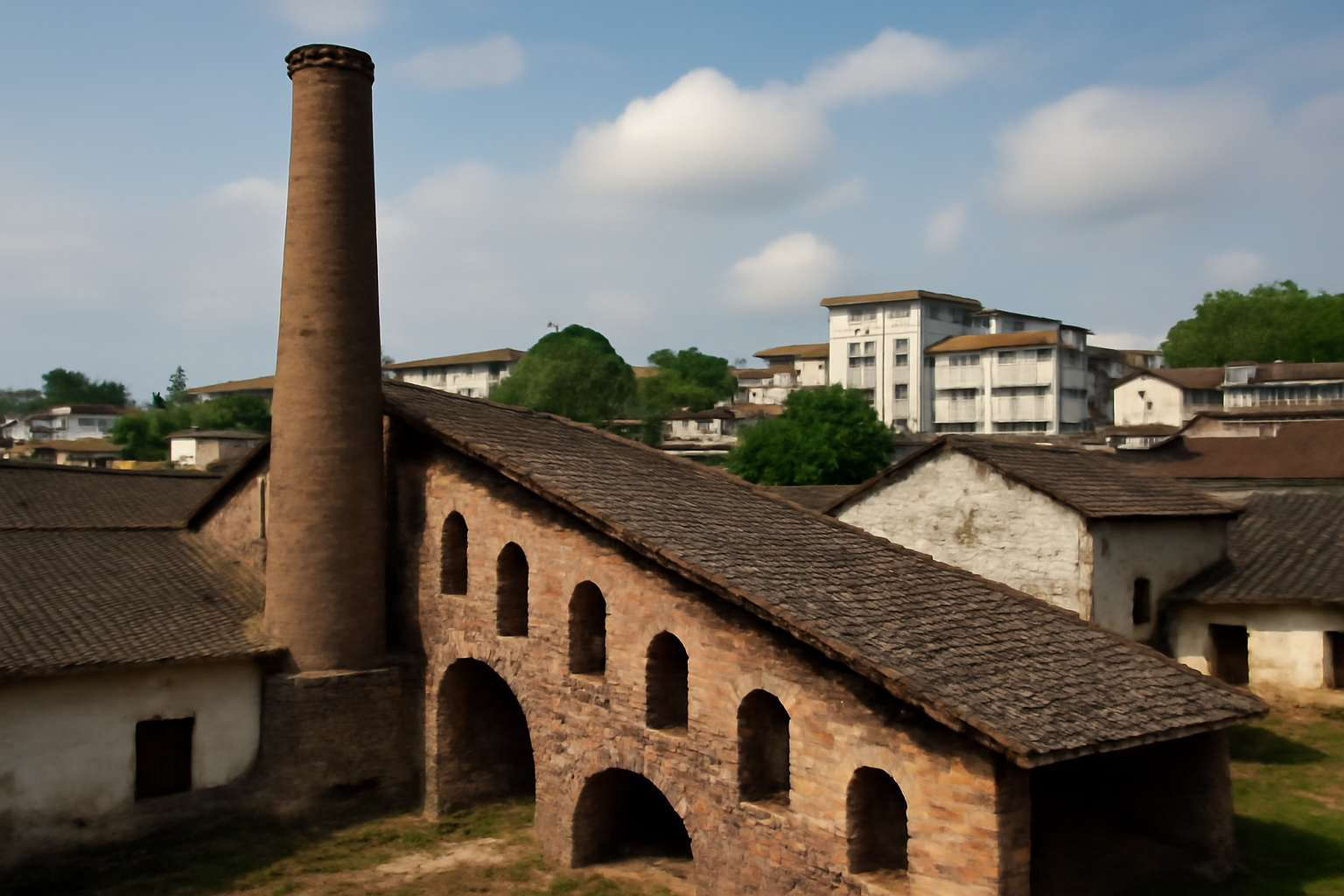
JINGDEZHEN, China, July 26, 2026 /PRNewswire/ — A report from Jiangxi International Communication Center (JXICC):
The Jingdezhen Handicraft Porcelain Industry Sites were inscribed on UNESCO’s World Heritage List on July 25 during the 48th Session of the World Heritage Committee in Busan, South Korea, becoming China’s 61st World Heritage site.
Located across the hilly landscape of Jingdezhen in East China’s Jiangxi Province, the property preserves a complete handicraft porcelain production system that flourished between the 10th and 19th centuries. Rich deposits of porcelain stone and kaolin clay, together with an extensive water transport network, helped transform the city into the world’s foremost center of porcelain production.
The heritage property comprises 45 component sites spread across 1,979 hectares, ranging from porcelain workshops in the historic urban center to raw material extraction sites, transportation routes and traditional neighborhoods that together illustrate the industry’s full production chain.
The World Heritage Committee recognizes the site under UNESCO’s cultural criteria No 2, 3, 4, and 6.
According to the World Heritage Committee, the property exhibits the innovative development of China’s handicraft porcelain making technology, porcelain art and porcelain industry, and evidences the profound impact of China’s handicraft porcelain industry on the development of the world’s ceramic industry and the exchanges and mutual learning among civilizations.
The committee commended the efforts and achievements made by the Chinese government in the protection and management of the heritage site.
Blue-and-white porcelain is one of the best examples. Produced by combining China’s porcelain-making techniques with Persian cobalt blue pigment, it became a defining influence on the “chinoiserie” style that flourished in European decorative arts throughout the 17th and 18th centuries.
Addressing the World Heritage Committee on behalf of the Chinese government, Rao Quan, vice minister of culture and tourism and head of the National Cultural Heritage Administration, reaffirmed China’s commitment to fully implementing the World Heritage Convention.
He pledged to continue strengthening the integrated protection, conservation and sustainable use of the sites, while working with UNESCO and other States Parties to safeguard the shared heritage of humanity.
 View original content to download multimedia:https://www.prnewswire.com/news-releases/jingdezhen-handicraft-porcelain-industry-sites-added-to-unesco-world-heritage-list-302834722.html
SOURCE Jiangxi International Communication Center(JXICC)

Distributed by PR Newswire / Cision.