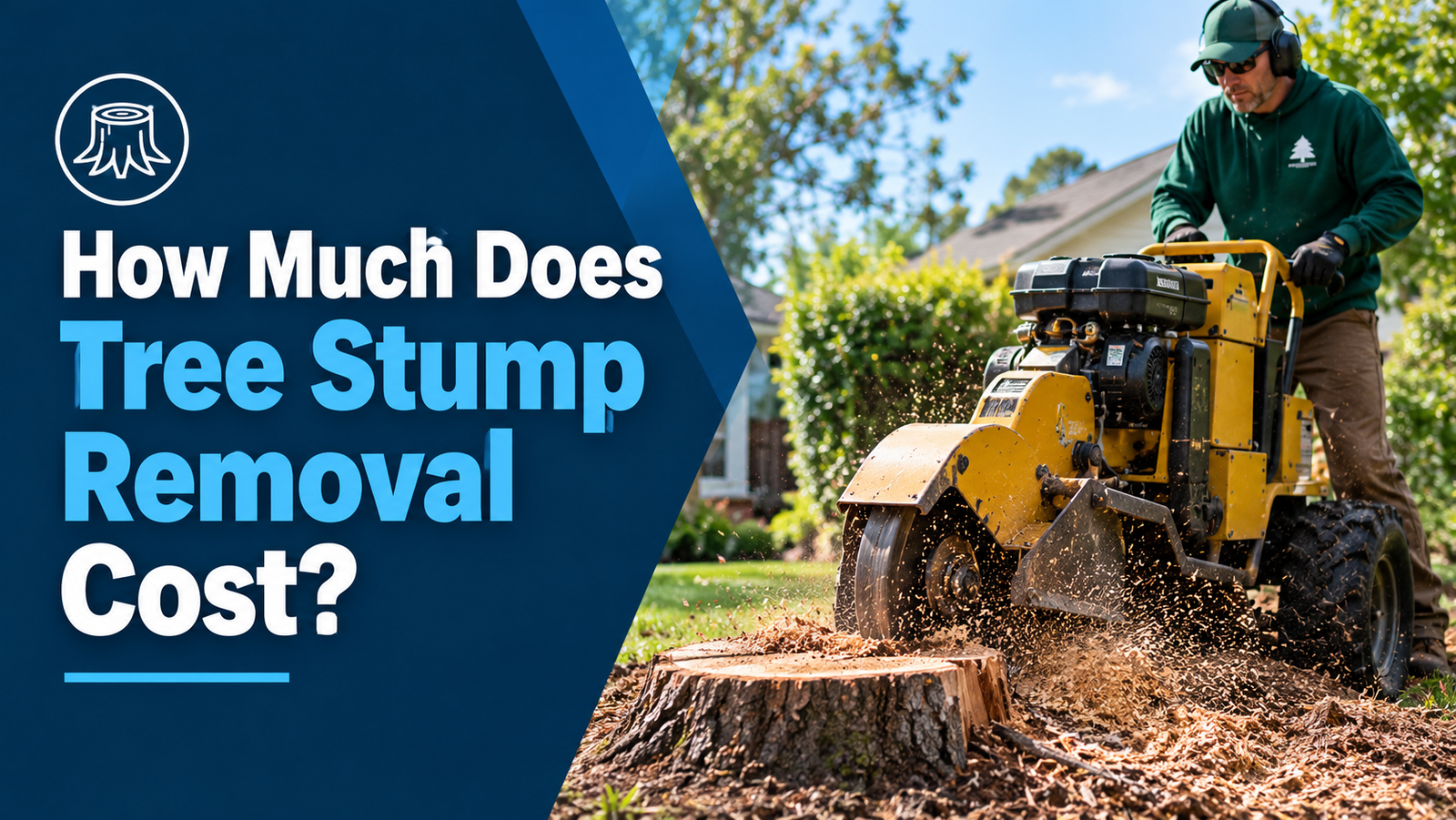
Removing a tree from your property does not always mean the job is finished. The remaining stump can take up valuable yard space, interfere with landscaping, attract insects, and create a tripping hazard. If you are planning to clear an old stump, one of the first questions you may have is, “How much does tree stump removal cost?”
The answer depends on several factors, including the stump’s size, root system, location, removal method, tree species, and accessibility. Professional stump removal can range from a relatively simple grinding job to a more involved excavation that removes the entire stump and root ball.
Understanding these factors can help you plan your budget and know what to expect when requesting estimates from a tree service professional.
What Is the Average Cost of Tree Stump Removal?
Professional stump removal commonly costs a few hundred dollars per stump, although smaller jobs may cost less and large or difficult removals can cost considerably more. Many contractors use a per-inch pricing model based on the stump’s diameter, while others provide a flat project price.
Some current U.S. cost guides report approximately $2 to $5 per diameter inch for stump removal or grinding, while minimum service charges can apply to smaller stumps. The actual price in your area may differ because labor rates, equipment expenses, travel distance, and local conditions vary.
For an accurate estimate, a professional will usually inspect the stump and surrounding property before providing a quote.
Factors That Affect Tree Stump Removal Cost
Stump Size
The diameter of the stump is one of the most important factors affecting the price. A small stump can often be ground quickly, while a large stump requires more time, cutting power, and cleanup.
For example, a stump measuring 12 inches across requires considerably less work than one measuring 36 inches or more. Contractors may measure the widest portion of the stump near ground level when calculating the estimate.
Root System
The roots can also influence the final price. Stump grinding typically removes the visible stump and grinds it several inches below the surface, while many of the underground roots remain in the soil and gradually decay.
Full stump extraction is different. It involves digging out the stump and removing much of the root system. This requires additional labor and equipment, especially when the roots have spread extensively.
Stump removal cost reflects size root system and equipment needed. Understanding the factors behind your tree stump removal cost can make it easier to compare estimates and choose the service that fits your property’s needs.
Removal Method
The method used can have a major effect on the price.
Stump grinding is one of the most common options. A specialized grinder chips the stump into small pieces, leaving the roots underground. This method is often suitable when you want to reclaim the area for grass or landscaping.
Full extraction involves digging the stump out of the ground. This may be appropriate when you need the entire root system removed for construction, a new planting location, or other major landscaping work.
Other methods, such as chemical decomposition or manual digging, may be considered depending on the stump and property.
Stump Grinding vs. Full Stump Removal
Stump Grinding
Stump grinding is generally faster and less disruptive than complete extraction. The grinder cuts the stump below ground level, and the resulting wood chips can often be used as mulch or removed from the property.
This option works well when you simply want the stump out of sight and need usable yard space.
Full Stump Extraction
Full extraction removes the stump and a significant portion of its roots. Because the process may require digging equipment, additional labor, and soil replacement, it can cost more than grinding.
Extraction may be necessary when roots are interfering with construction or when the property owner needs the entire stump removed rather than simply ground down.
Additional Costs to Consider
The initial stump removal quote may not include every service you need. Ask the contractor whether the estimate includes cleanup and debris disposal.
Debris Removal
Grinding produces a large amount of wood chips and sawdust. Some contractors leave the material on site, while others rake it up and haul it away for an additional fee.
Soil and Lawn Restoration
After grinding or extraction, you may have a hole or depression where the stump once stood. Filling the area with topsoil and reseeding the lawn can add to the total project cost.
Difficult Access
A stump located behind a fence, between structures, on a slope, or in another tight area can require specialized equipment. Difficult access may increase labor and equipment costs because the contractor has fewer options for positioning machinery.
Multiple Stumps
If you have several stumps on the same property, ask whether the company offers a reduced rate for multiple removals. Combining jobs can reduce repeated travel, setup, and equipment expenses.
How to Save Money on Stump Removal
Getting multiple estimates is one of the simplest ways to understand the local market. Make sure each quote includes the same services so you can make a meaningful comparison.
You can also ask about bundling stump removal with other tree or landscaping services. If several stumps need attention, having them removed during one visit may be more economical than scheduling separate appointments.
Another important consideration is choosing the right removal method. If you only need the stump removed from view, grinding may be sufficient. If you need the entire root system removed for a construction project, full extraction may make more sense.
Why Professional Stump Removal Is Worth Considering
Stump removal involves powerful machinery, underground roots, and potentially buried utility lines. Professional operators have the equipment and experience needed to evaluate the work area and determine an appropriate removal method.
Professionals can also identify potential obstacles around the stump before beginning work. This can help reduce the risk of damage to nearby landscaping, hardscaping, structures, or underground infrastructure.
Once the stump is removed, the area can be prepared for new grass, plants, a garden, or another landscaping feature.
Frequently Asked Questions
How much does it cost to remove a tree stump?
The cost varies depending on stump diameter, removal method, root complexity, accessibility, and local labor rates. Many professional services charge several hundred dollars for a typical residential stump, while particularly large or complicated jobs can cost more.
Is stump grinding cheaper than stump removal?
In many cases, yes. Stump grinding usually requires less excavation and labor because the underground root system is left in place. Full extraction requires more digging and equipment, which can increase the overall price.
Does stump removal include the roots?
Not always. Stump grinding generally removes the visible stump and leaves most underground roots to decay naturally. Full extraction is the option to discuss if you need more extensive root removal.
How long does stump removal take?
A small, accessible stump may be completed relatively quickly. Larger stumps, difficult access, extensive roots, and additional cleanup can increase the amount of time required.
Should I remove a stump or leave it?
Leaving a stump may allow it to decay naturally, but it can take years and may create obstacles for mowing and landscaping. Removing or grinding it can make the property easier to maintain and provide more usable space.
Conclusion
Tree stump removal is an investment that can improve the appearance, usability, and safety of your property. While the exact price depends on the circumstances, the biggest factors typically include stump diameter, root complexity, removal method, equipment requirements, accessibility, and cleanup.
Before hiring a contractor, request a detailed estimate that explains what is included in the price. Ask whether grinding, root removal, debris hauling, soil replacement, and lawn restoration are included. Comparing complete estimates rather than just the starting price can help you understand the true cost of the project.
With the right professional service, an unwanted stump can be removed efficiently, leaving you with a cleaner and more functional outdoor space.