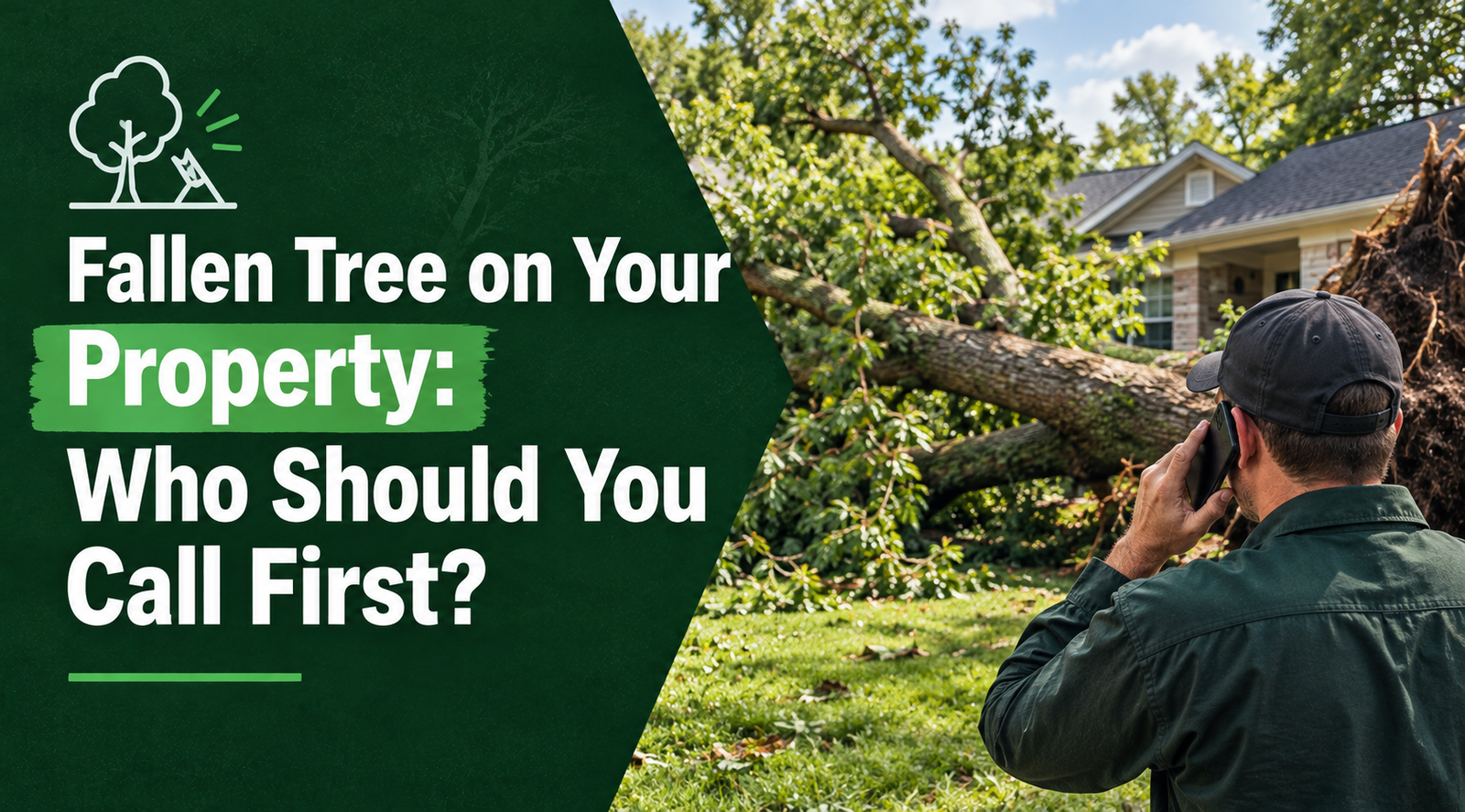
Finding a fallen tree on your property can be stressful, especially when it blocks your driveway, damages your roof, lands on a vehicle, or brings down power lines. Severe storms, strong winds, saturated soil, and weakened tree roots can cause trees to fall unexpectedly. Knowing who to contact first can help protect your family, reduce property damage, and prevent dangerous mistakes.
The right response depends on where the tree has fallen and whether it presents an immediate safety hazard. In some situations, emergency services or the utility company must be contacted before a tree removal contractor. In others, a qualified tree care professional can assess the damage and arrange safe removal.
For homeowners in Alpharetta, understanding these steps can make an unexpected tree emergency easier to manage.
Who Should You Call First When a Tree Falls?
1. Call Emergency Services if Someone Is in Danger
Your first priority should always be personal safety. If someone is injured, trapped, or in immediate danger because of a fallen tree, contact 911.
Emergency responders can assess dangerous situations and coordinate the appropriate assistance. Do not attempt to move heavy branches or cut a tree to reach someone unless directed by emergency personnel and it is safe to do so.
If a tree has caused major structural damage, avoid entering the affected building until authorities or qualified professionals determine that it is safe. A damaged roof, unstable walls, and shifting tree limbs can create additional hazards.
2. Contact the Power Company if Electrical Lines Are Involved
A fallen tree that touches a power line presents a serious electrical hazard, even when the wires appear inactive. Electricity may travel through branches, nearby fences, vehicles, and wet ground.
Stay well away from the tree, wires, and surrounding area. Keep children and pets away, and contact the utility company to report the downed line. If there is an immediate danger, fire, or another emergency, call 911 as well.
Never attempt to remove branches from electrical lines or use a ladder, chainsaw, or other tool near them. Wait until the utility company confirms that the electrical hazard has been addressed before arranging tree removal.
3. Contact a Professional Tree Removal Company
Once immediate safety concerns have been addressed, contact a qualified tree care company to evaluate the fallen tree and determine the safest removal method.
A professional team can assess the tree’s weight, position, structural stability, and proximity to buildings or other obstacles. They can also identify branches under tension that could shift or snap unexpectedly during removal.
Fallen tree removal should be handled by professionals especially near homes vehicles or power lines. Hiring an experienced company for fallen tree removal helps ensure that hazardous situations are assessed carefully and that removal is performed using appropriate equipment and safety procedures.
If you need Alpharetta tree removal, look for a company experienced in storm damage, emergency response, and removing trees from confined or difficult locations.
What to Do While Waiting for Help
After contacting the appropriate emergency services, utility provider, or tree care company, take practical steps to protect yourself and your property.
Keep Everyone Away From the Fallen Tree
Do not stand beneath hanging branches or approach a tree that is resting against a house, garage, or vehicle. A tree can shift unexpectedly as its weight settles or damaged limbs break.
Keep children and pets indoors or in another safe location. If the tree is near power lines, maintain a substantial distance and follow instructions from the utility company or emergency responders.
Avoid Cutting or Moving Heavy Branches
Cutting a fallen tree without proper training can be dangerous. Trunks and branches may be supporting one another, and cutting one section can release stored tension or cause the tree to roll.
Chainsaws also present significant injury risks, particularly when used on storm-damaged wood. Leave complicated cutting and lifting operations to trained professionals with the necessary equipment.
Document the Damage From a Safe Distance
If it is safe to do so, take photographs of the fallen tree and any visible damage to your home, fence, landscaping, or vehicle. These records may be useful when filing an insurance claim.
Avoid entering damaged structures or approaching unstable debris to obtain better pictures. Your safety is more important than collecting evidence.
Contact Your Insurance Company
If the tree has damaged your home, garage, or another insured structure, notify your insurance company as soon as practical. Ask what documentation is needed and whether your policy covers tree removal, structural repairs, and related cleanup.
Coverage depends on the policy language and circumstances of the incident. A tree that falls on a covered structure may be treated differently from one that falls in an open yard without causing damage.
Keep receipts for emergency services and temporary repairs. Before authorizing extensive nonemergency work, ask your insurer whether an inspection or approval is required.
How Professional Tree Removal Helps Prevent Further Damage
A fallen tree can create more problems than the initial impact. Heavy trunks may continue pressing against roofs, damaged limbs may hang above walkways, and unstable root systems can threaten nearby structures.
Professional tree removal companies use specialized equipment and controlled cutting techniques to manage these risks. Depending on the situation, the crew may remove branches in sections, use rigging equipment, or employ machinery to lift heavy wood safely.
An experienced contractor can also inspect the remaining tree canopy and identify nearby trees that may have suffered storm damage. This is especially important after severe weather, when weakened branches may fall later.
For homeowners seeking Alpharetta tree removal services, choosing a properly insured and qualified provider can help reduce the risk of additional property damage. Ask about emergency availability, cleanup services, disposal of debris, and whether stump removal is included in the estimate.
How to Prevent Future Tree Emergencies
Although not every fallen tree can be prevented, regular tree care can reduce certain risks.
Schedule Routine Tree Inspections
A qualified arborist can examine trees for structural weaknesses, damaged branches, decay, and root problems. Early identification allows homeowners to address concerns before a tree becomes hazardous.
Remove Dead or Dangerous Branches
Dead branches and damaged limbs may break during strong winds. Professional pruning can reduce some hazards while helping maintain appropriate tree structure.
Monitor Trees After Severe Weather
Inspect your property from a safe location after storms. Look for leaning trunks, newly exposed roots, cracked branches, and changes in the tree’s position. Contact a qualified tree care professional if you notice concerning changes.
Maintain Healthy Trees
Appropriate watering, mulching, and pruning can support tree health. Avoid damaging roots through unnecessary digging or soil compaction, and consult an arborist when a mature tree shows signs of decline.
Frequently Asked Questions
Who should I call first when a tree falls on my house?
Call 911 if anyone is injured or in immediate danger. If electrical wires are involved, contact the utility company and keep your distance. Once immediate hazards are addressed, contact a professional tree removal company and notify your insurance provider about property damage.
Can I remove a fallen tree myself?
Small branches may be manageable in some circumstances, but fallen trunks and storm-damaged trees can contain hidden tension and unstable weight. Professional removal is the safer choice when a tree is large, damaged, suspended, or close to buildings, vehicles, or power lines.
Does homeowners insurance cover fallen tree removal?
Coverage varies by policy and circumstances. Removal may be covered when a fallen tree damages an insured structure, but a tree that falls without damaging covered property may receive different treatment. Review your policy and contact your insurer.
How quickly should a fallen tree be removed?
Trees creating immediate safety hazards should be addressed through emergency services or the relevant utility provider first. Other situations should be assessed promptly, particularly when a tree is blocking access or resting against a structure. Never approach an unstable tree while waiting for assistance.
How do I choose an Alpharetta tree removal company?
Look for a qualified, insured company with experience handling storm damage and hazardous trees. Request a written estimate, confirm the scope of cleanup, and ask about emergency response procedures and any necessary permits.
Conclusion
When a tree falls on your property, knowing who to call first can prevent injuries and limit further damage. Contact emergency services if someone is in danger, report downed electrical lines to the utility company, and keep everyone away from unstable trees and debris.
After immediate hazards are addressed, a professional tree removal company can assess the situation and develop a safe removal plan. Document property damage and contact your insurer when appropriate.
For homeowners in Alpharetta, regular tree inspections and responsible maintenance can also help reduce the likelihood of future emergencies. Taking the right steps at the right time protects your property and helps your family recover more safely after a storm.