
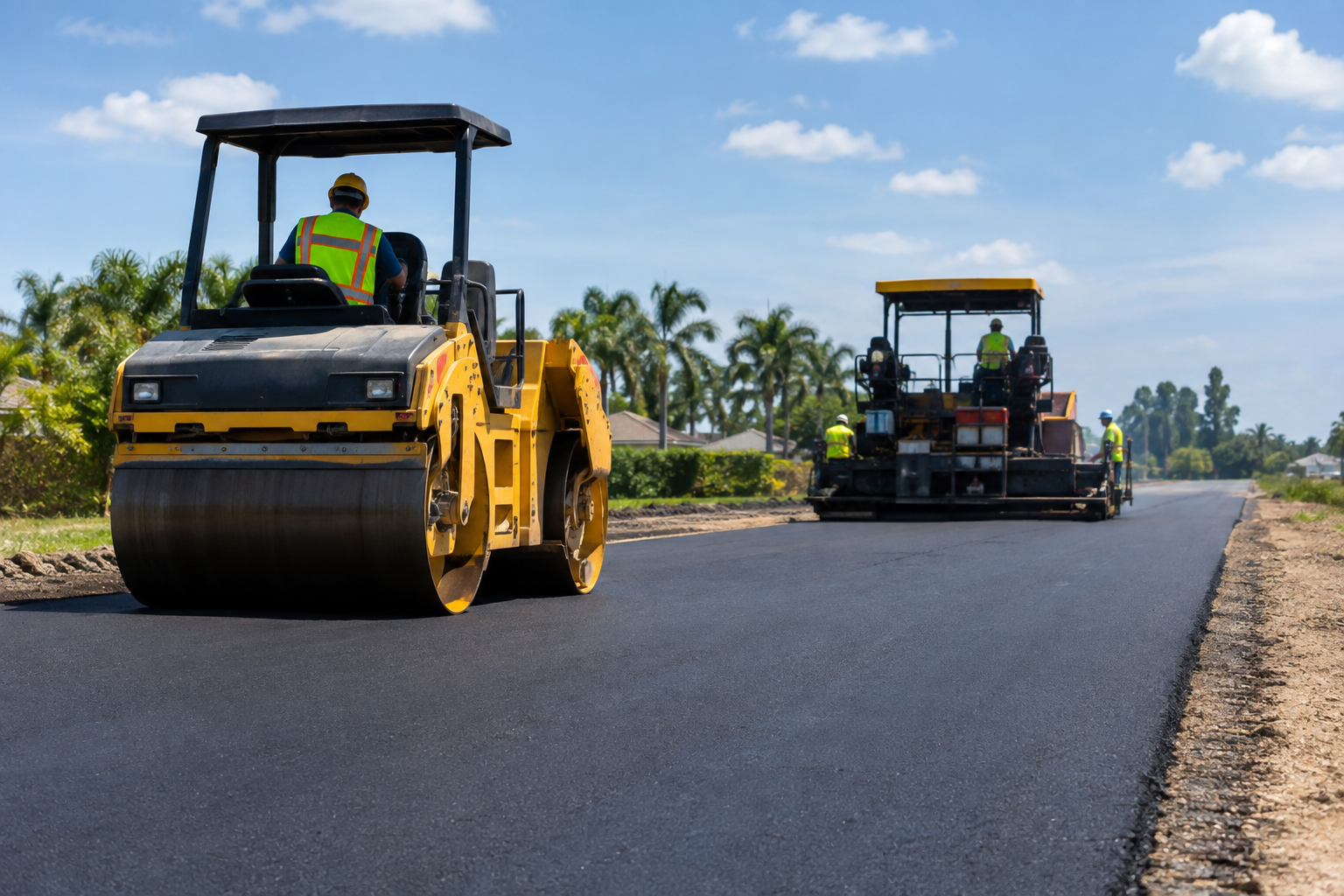
Why Asphalt Paving Is Popular in Southwest Florida
Asphalt offers several benefits that make it suitable for residential and commercial applications across Southwest Florida. Its dark, uniform appearance creates a clean finish, while its flexible structure allows it to accommodate some movement caused by temperature changes and normal traffic loads.
One of its biggest advantages is installation efficiency. When weather conditions and project requirements are suitable, asphalt can often be installed and opened to traffic sooner than certain alternative pavement systems. This is particularly valuable for businesses that need to minimize parking disruptions.
Other benefits include:
- Versatility: Asphalt works for driveways, parking areas, private roads, and access lanes.
- Maintainability: Cracks, surface deterioration, and other localized problems can often be addressed before they require extensive reconstruction.
- Smooth driving surfaces: Proper installation provides a consistent surface for vehicles and helps improve the overall appearance of a property.
- Design flexibility: Contractors can adjust pavement thickness, base preparation, and other project details to suit anticipated traffic and site conditions.
- Lifecycle value: Regular inspections and timely maintenance can extend the useful life of a properly constructed pavement.
Although asphalt has many advantages, its performance depends on more than the material itself. Poor drainage, weak subgrade soil, insufficient pavement thickness, and improper compaction can cause premature failure even when quality asphalt is used.
Understanding Southwest Florida’s Soil and Climate
Southwest Florida has environmental conditions that influence almost every stage of a paving project. Contractors must account for both the ground beneath the pavement and the weather the finished surface will experience.
Sandy Soil and Subgrade Stability
Many areas of Southwest Florida contain sandy soils, although actual conditions vary by property and may include clay, organic material, fill, or areas with a high groundwater table. Sandy soil can drain relatively well, but loose, poorly compacted, or inconsistent material may not provide a stable foundation for pavement.
Before construction begins, the contractor should evaluate the existing ground and determine whether unsuitable material needs to be removed, replaced, stabilized, or compacted. The goal is to establish a consistent subgrade capable of supporting the planned traffic loads.
A driveway serving a few passenger vehicles may require a different design from a commercial loading area used by delivery trucks. Matching the foundation to the intended use helps prevent rutting, settlement, and cracking.
Heavy Rainfall and Drainage
Rain is one of the most important considerations for pavement in Southwest Florida. Intense storms can overwhelm poorly designed drainage systems, allowing water to collect on the surface or enter pavement layers through cracks and joints.
Water that reaches the base or subgrade may weaken support, especially where drainage is inadequate or groundwater levels are high. Over time, this can contribute to potholes, edge failures, settlement, and premature deterioration.
Proper grading should direct water toward suitable drainage areas rather than buildings, neighboring properties, or low spots in the pavement. Depending on the site, a project may require swales, catch basins, drainage pipes, or other measures designed by qualified professionals.
Heat, Humidity, and Sun Exposure
Florida’s high temperatures can soften asphalt, particularly during hot weather and when the pavement carries heavy or stationary loads. Areas where trucks regularly turn, brake, or remain parked may be more vulnerable to deformation if the pavement structure is inadequate.
Strong sunlight also contributes to long-term oxidation, which gradually makes asphalt less flexible and more susceptible to cracking. Humidity and frequent rainfall further complicate installation because the surface and underlying materials must be in appropriate condition before paving begins.
These factors make material selection, pavement thickness, compaction, drainage, and maintenance especially important in Southwest Florida.
A Full Walkthrough of the Asphalt Paving Process
A durable pavement starts long before the asphalt truck arrives. Each construction stage contributes to the stability, drainage, and long-term performance of the finished surface.
Step 1: Site Evaluation and Planning
The first step is to inspect the property and establish what the project needs to accomplish. The contractor should evaluate existing pavement, soil conditions, drainage patterns, elevations, access points, and anticipated vehicle traffic.
Measurements help determine the area to be paved and the amount of material required. The project plan should also address how the finished pavement will connect to garages, sidewalks, roadways, loading areas, and drainage structures.
For commercial properties, traffic patterns and turning movements may influence the pavement design. Heavy vehicles place greater stress on the pavement than ordinary passenger cars, so the design must reflect actual use rather than appearance alone.
Step 2: Clearing and Excavation
Existing vegetation, loose debris, failed asphalt, and unsuitable materials must be removed as necessary. Depending on the project’s scope, the contractor may excavate to a specified depth to make room for the subgrade, aggregate base, and asphalt layers.
The excavation depth should reflect the intended pavement design. Simply placing new asphalt over unstable soil or an improperly prepared surface can create problems that appear weeks or months after installation.
During this stage, the contractor should also identify soft spots, standing water, buried obstacles, and other conditions that could interfere with construction.
Step 3: Subgrade Preparation and Compaction
The subgrade is the prepared soil that supports the pavement structure. It must provide a reasonably uniform foundation across the entire project.
Contractors typically shape the ground to the required elevation and compact it using appropriate equipment. Where the soil is weak, wet, organic, or inconsistent, additional work may be necessary. This might involve removing unsuitable material, bringing in approved fill, improving drainage, or using an engineered stabilization method.
Compaction requirements should be appropriate for the soil type and project specifications. The objective is not simply to make the surface look firm, but to create a stable foundation that resists movement under repeated traffic loads.
In Southwest Florida, groundwater and rain can complicate this stage. Paving over excessively wet or unstable ground may compromise the entire pavement system, so weather and site conditions should be checked before work proceeds.
Step 4: Aggregate Base Installation
The aggregate base distributes vehicle loads and provides structural support beneath the asphalt. It commonly consists of properly graded stone or another approved base material selected for the project.
The contractor places the material at the specified thickness, adjusts moisture conditions when necessary, and compacts it to meet the project requirements. The base should be consistent, stable, and shaped to support the planned surface elevations and drainage pattern.
Insufficient base thickness or poor compaction can lead to depressions, rutting, and cracking. This is one reason property owners should compare detailed project specifications rather than choosing a contractor based on price alone.
Step 5: Grading and Drainage Verification
Before the asphalt is installed, the contractor should verify that the prepared base has the correct elevations and slopes. This is particularly important in Southwest Florida, where intense rainstorms can quickly expose drainage problems.
The pavement should direct water toward designated drainage points without creating unwanted pooling. Transitions to garages, roadways, sidewalks, and existing pavement should also be checked to reduce trip hazards and avoid trapping water.
If grading problems are discovered after paving, correcting them can be more expensive and disruptive than addressing them during preparation.
Step 6: Asphalt Mix Selection and Placement
Asphalt mixtures contain aggregate bound together with asphalt binder. The appropriate mix depends on the application, traffic loads, project specifications, and local requirements.
Once the base is ready, hot-mix asphalt is delivered and placed using suitable equipment. Larger projects often use a paving machine to achieve a consistent layer, while smaller or restricted areas may require additional handwork.
The contractor must maintain appropriate placement conditions and layer thickness. Asphalt should not be placed over a wet or unsuitable surface, and weather conditions must allow the material to be installed and compacted properly.
The number of asphalt layers and their individual thicknesses depend on the engineered or specified pavement section. A light-duty residential driveway and a heavy-duty commercial entrance should not automatically receive the same design.
Step 7: Final Compaction
Compaction reduces air voids and helps the asphalt achieve the density needed for strength, stability, and durability. Rollers compact the material while it remains within a suitable temperature range.
Timing matters because asphalt cools during placement. If compaction is delayed too long, the material may become difficult to compact adequately. Insufficient density can contribute to water infiltration, premature oxidation, and reduced pavement life.
Edges, joints, transitions, and areas around drainage structures also require attention. The finished surface should have consistent texture and thickness appropriate to the specifications.
Step 8: Inspection and Opening to Traffic
After paving, the contractor should inspect the surface for visible defects, uneven transitions, drainage issues, and problems with joints or edges. Any required testing or documentation should be completed according to the project specifications.
New asphalt needs time to cool and gain stability before it is exposed to traffic. The appropriate opening time depends on weather, pavement thickness, mix characteristics, and site conditions. The contractor should provide specific instructions about when vehicles can use the surface and when heavier vehicles may be permitted.
What Changes When You Pave in Florida Versus Up North?
Asphalt paving follows the same basic construction principles across the United States, but local conditions influence how those principles are applied.
In northern regions, contractors may need to account for freezing temperatures, snow removal, and freeze-thaw cycles. Water entering cracks can freeze and expand, placing stress on the pavement. Pavement design and materials must account for these seasonal stresses where they occur.
Southwest Florida generally faces a different set of challenges. Extended heat, intense sunlight, heavy rainfall, and variable groundwater conditions often receive greater attention than repeated freezing and thawing.
| Consideration | Southwest Florida | Colder northern regions |
|---|---|---|
| Primary climate concerns | Heat, UV exposure, heavy rainfall | Freezing temperatures, snow, freeze-thaw cycles |
| Drainage priorities | Managing intense rain and high groundwater | Managing runoff, snowmelt, and seasonal moisture |
| Common pavement risks | Heat-related deformation, water damage, oxidation | Freeze-thaw cracking, frost-related movement |
| Construction planning | Avoiding unsuitable wet conditions and extreme heat | Working within temperature limits and seasonal construction windows |
| Maintenance priorities | Drainage, crack sealing, oxidation control | Crack sealing, winter damage inspections, snow-related wear |
These differences do not mean that Florida pavement requires less engineering. Instead, the pavement structure must be designed for the actual site, traffic, soil, and weather conditions. A design that performs well in one climate should not be copied automatically into another.
How to Choose an Asphalt Paving Contractor in Naples
Selecting the right contractor can significantly affect pavement quality and long-term costs. Property owners should look beyond the lowest estimate and compare the proposed construction process.
When researching a paving company Naples property owners can rely on, ask for a detailed written estimate that identifies the work included, planned excavation depth, base material and thickness, asphalt specifications, drainage work, and cleanup responsibilities.
Consider these additional checks:
- Experience with local conditions: Look for experience with Southwest Florida’s soil, rainfall, drainage challenges, and pavement applications.
- Licensing and insurance: Verify the credentials and coverage applicable to the work and jurisdiction.
- Written specifications: Ensure the estimate explains the pavement structure instead of simply promising a new asphalt surface.
- References and past projects: Ask for examples of similar residential or commercial work.
- Drainage planning: Confirm that the contractor evaluates grading and water management before paving.
- Clear warranty terms: Understand what is covered, how long coverage lasts, and which conditions are excluded.
- Project schedule: Discuss weather delays, site access, traffic management, and the time needed before reopening the area.
A dependable contractor should be willing to explain why the recommended design suits the property. If two bids differ significantly, compare the scope and specifications before deciding that one is the better value.
Asphalt Paving Costs in Southwest Florida in 2026
The cost of asphalt paving varies by location, project size, site conditions, material requirements, and the amount of preparation involved. A simple overlay on suitable existing pavement will generally require different work from a complete reconstruction involving excavation, base replacement, and drainage improvements.
Factors that affect the final price include:
- Total square footage and pavement thickness
- Excavation, hauling, and disposal of existing materials
- Subgrade stabilization and aggregate base requirements
- Asphalt mix and delivery costs
- Drainage improvements and grading
- Accessibility for paving and compaction equipment
- Traffic control, permits, and project-specific requirements
- Edge work, striping, and finishing details
Small projects can have a higher cost per square foot because equipment mobilization and setup represent a larger share of the total. Conversely, a large parking lot may achieve efficiencies through scale, although heavier traffic requirements can increase the necessary pavement structure.
For an accurate 2026 estimate, request an on-site assessment and a written breakdown of costs. Be cautious about quotes that do not explain preparation, material thickness, drainage, or the handling of unsuitable soil.
Maintaining Asphalt in Florida’s Climate
Routine maintenance can help protect asphalt from water intrusion, oxidation, and gradual surface deterioration. The best approach depends on the pavement’s age, condition, traffic, and construction quality.
Inspect the surface periodically for cracks, depressions, standing water, loose aggregate, and edge damage. After major storms, check whether water drains correctly and whether new settlement or erosion has appeared.
Crack sealing can help limit water entry when cracks are suitable for treatment. Potholes and localized failures should be repaired promptly, particularly when the underlying base may be damaged. Sealcoating may help protect an appropriate asphalt surface from oxidation and weather exposure, but it cannot correct structural failure or poor drainage.
The timing of sealcoating should follow the product manufacturer’s recommendations and the pavement’s condition. Applying a coating too early, too heavily, or over an unsuitable surface can create problems rather than solve them.
Avoid assuming that every pavement needs the same maintenance schedule. A lightly used residential driveway may age differently from a parking lot exposed to delivery trucks, turning movements, and frequent standing water.
Common Asphalt Paving Mistakes to Avoid
Some paving problems can be traced to shortcuts taken before the asphalt is even placed.
Ignoring drainage: Water that remains on or beneath pavement can weaken supporting layers and accelerate deterioration.
Using an inadequate base: A thin or poorly compacted base may not support the intended traffic, leading to settlement and rutting.
Choosing the lowest bid without comparing specifications: A low price may reflect reduced preparation, insufficient thickness, or excluded work.
Paving in unsuitable weather or site conditions: Wet surfaces and unfavorable temperatures can interfere with placement and compaction.
Opening pavement too soon: Traffic introduced before the surface is sufficiently stable may cause damage, especially during hot weather.
Delaying repairs: Small cracks and localized defects can allow moisture to reach the pavement structure, making future repairs more extensive.
Avoiding these mistakes requires planning, clear specifications, experienced workmanship, and regular maintenance.
Final Thoughts
Asphalt paving in Southwest Florida requires a construction approach tailored to heat, heavy rainfall, soil variability, and local drainage conditions. A durable result depends on every stage of the process, from site evaluation and subgrade preparation through aggregate base installation, asphalt placement, and final compaction.
Property owners should prioritize a stable foundation, appropriate pavement thickness, effective drainage, and a contractor who explains the proposed work in detail. Although the upfront estimate matters, the long-term value of asphalt depends on how well the pavement is designed, installed, and maintained.
By understanding the process and asking informed questions, homeowners and commercial property managers can make more confident decisions about new pavement, resurfacing, and repairs throughout Naples, Fort Myers, Cape Coral, and the wider Southwest Florida region.
Frequently Asked Questions
How long does asphalt paving take?
The schedule depends on project size, site preparation, weather, and the amount of drainage or base work required. A straightforward driveway may take a relatively short time to pave once preparation is complete, while a larger commercial project can take several days or longer. The contractor should provide a schedule that includes preparation, installation, compaction, and the expected reopening time.
Is asphalt suitable for Florida’s hot weather?
Yes. Asphalt is widely used in warm climates, but the mix, pavement thickness, foundation, and compaction must suit the site’s conditions and expected traffic. Heavy vehicles, turning movements, and stationary loads can increase the risk of deformation in hot weather.
Why is base preparation so important?
The base and subgrade support the asphalt and distribute vehicle loads. If these layers are weak, poorly compacted, or affected by water, the pavement may crack, settle, or develop potholes even when the asphalt surface initially looks good.
How thick should an asphalt driveway be in Southwest Florida?
There is no single thickness suitable for every property. The required pavement section depends on soil strength, base conditions, drainage, vehicle weight, and expected traffic. A residential driveway used by passenger vehicles may need a different design from a driveway that regularly accommodates heavy trucks.
When can I drive on newly installed asphalt?
Follow the paving contractor’s instructions. Opening time depends on pavement thickness, mix characteristics, temperature, and site conditions. Asphalt needs to cool and stabilize sufficiently before it is exposed to traffic, and heavier vehicles may require additional consideration.
How often should asphalt be sealcoated?
There is no universal schedule. Sealcoating frequency depends on pavement condition, exposure, traffic, product recommendations, and maintenance history. A professional inspection can help determine whether sealcoating is appropriate or whether cracks, drainage issues, or structural damage need attention first.
What causes potholes in Southwest Florida?
Potholes can develop when water enters pavement cracks or joints and weakens the underlying layers, especially when combined with traffic stress. Poor drainage, inadequate base preparation, insufficient compaction, and delayed repairs can all contribute to pothole formation.
Is resurfacing better than replacing asphalt?
Resurfacing may be appropriate when the existing pavement has a reasonably sound foundation and primarily surface-level deterioration. Full reconstruction is often more suitable when the base or subgrade has failed, widespread settlement exists, or drainage problems cannot be resolved with an overlay. An on-site assessment helps determine the right option.


