On World Fertility Day, Clearblue releases new Fertility Gap Study findings and introduces ClearblueU: Your Sex Education Continues Here to make credible fertility education more accessible and support informed reproductive-health choices.
CINCINNATI, Nov. 2, 2026 /PRNewswire/ — Fertility education often begins after the questions become urgent. More than half (55%) of U.S. women who have tried to conceive in the past year say they would have made different decisions about when to start a family if they had understood their fertility earlier, according to the Clearblue® Fertility Education Gap Study. Released on World Fertility Day, the findings highlight an opportunity to make credible fertility information more accessible before people begin trying to conceive. [1]
Experience the full interactive Multichannel News Release here: https://www.multivu.com/clearblue/9430051-en-clearblue-world-fertility-day-fertility-gap-study

Clearblue is responding with the introduction of ClearblueU: Your Sex Education Continues Here, an education platform designed to help people build their understanding of fertility and reproductive health, whether or not they are currently trying to conceive. The platform will bring together expert-led YouTube content, Clearblue website resources and an email newsletter, with educational content rolling out in phases across key topics including menstruation, ovulation, conception and pregnancy.
The study explores what U.S. adults were taught about reproductive health, how confidently they understand fertility and when they seek information. The findings reflect respondents’ views about decisions they might have made; they do not establish that earlier education would have changed pregnancy outcomes.
Key Findings from the Clearblue Fertility Education Gap Study
- Women wish they had learned more about their fertility sooner. 55% of women who have tried to conceive in the past year say they would have made different decisions about when to start a family if they had understood their fertility earlier. [1]
- Learning often begins after difficulty. 59% of women who have tried to conceive in the past year say they did not start looking into how their fertility works until they had been trying to get pregnant without success. 70% of women who have tried to conceive in the past year say learning about fertility after trying without becoming pregnant is too late. [2]
- Sex education emphasizes pregnancy prevention. 84% of women surveyed say formal sex education prepared them to prevent pregnancy, compared with 41% who say it prepared them to identify their fertile window. [3]
- Fertility knowledge remains incomplete. Women surveyed correctly answered an average of 5.3 out of 10 fertility true-or-false statements. Separately, 65% of women surveyed feel confident identifying their fertile window. [4]
- Confidence outpaces fertility knowledge. 65% of women surveyed feel confident identifying their fertile window. Yet in a separate question, only 30% identified a five-to-seven-day range when asked how many days in a cycle a woman can get pregnant. [5]
Fertility Education Matters Before Trying to Conceive
Understanding fertility is relevant beyond the moment someone decides to try for a baby. Knowledge about cycles, ovulation and reproductive health can help people ask informed questions, consider their preferences and have conversations with healthcare professionals and partners. For those ready to conceive, that foundation can also help them understand ovulation timing and the role of fertility-tracking tools.
“Many people discover, when they’re ready to start a family, that they know surprisingly little about their fertile days. Most of the education they received focused on avoiding pregnancy rather than understanding fertility. The Clearblue® Smart Ovulation Test was developed to make fertility tracking simple. The Clearblue® Period & Cycle Tracker app takes the guesswork out of ovulation testing by reading the Clearblue® Smart Ovulation Test result for you. By helping people identify their two most fertile days, we aim to give them the confidence and information they need when trying to conceive.”
— Dr. Fiona Clancy, R&D Senior Director, SPD Swiss Precision Diagnostics
Continuing the Education Beyond the Classroom
68% of women surveyed say they learned more about their fertility through their own research than from any class or doctor. [6]
The finding reinforces the need for credible information people can return to as their questions and circumstances evolve. ClearblueU is designed to support that continued learning by making science-based reproductive-health information easier to access and understand.
Putting Fertility Knowledge into Practice
For people ready to try to conceive, Clearblue connects fertility education with practical tools to help them understand their most fertile days.
When someone is ready to try to conceive, ovulation testing is an option from the first cycle of use to help maximize their chance of getting pregnant. By detecting the luteinizing hormone (LH) surge, ovulation tests can help users identify their most fertile days. The LH surge is the body’s signal that ovulation is likely to occur in the next 24 to 36 hours. Detecting an LH surge does not confirm that ovulation occurred. Ovulation testing cannot guarantee pregnancy; women with irregular cycles or concerns about conceiving should seek individualized advice from a healthcare professional.
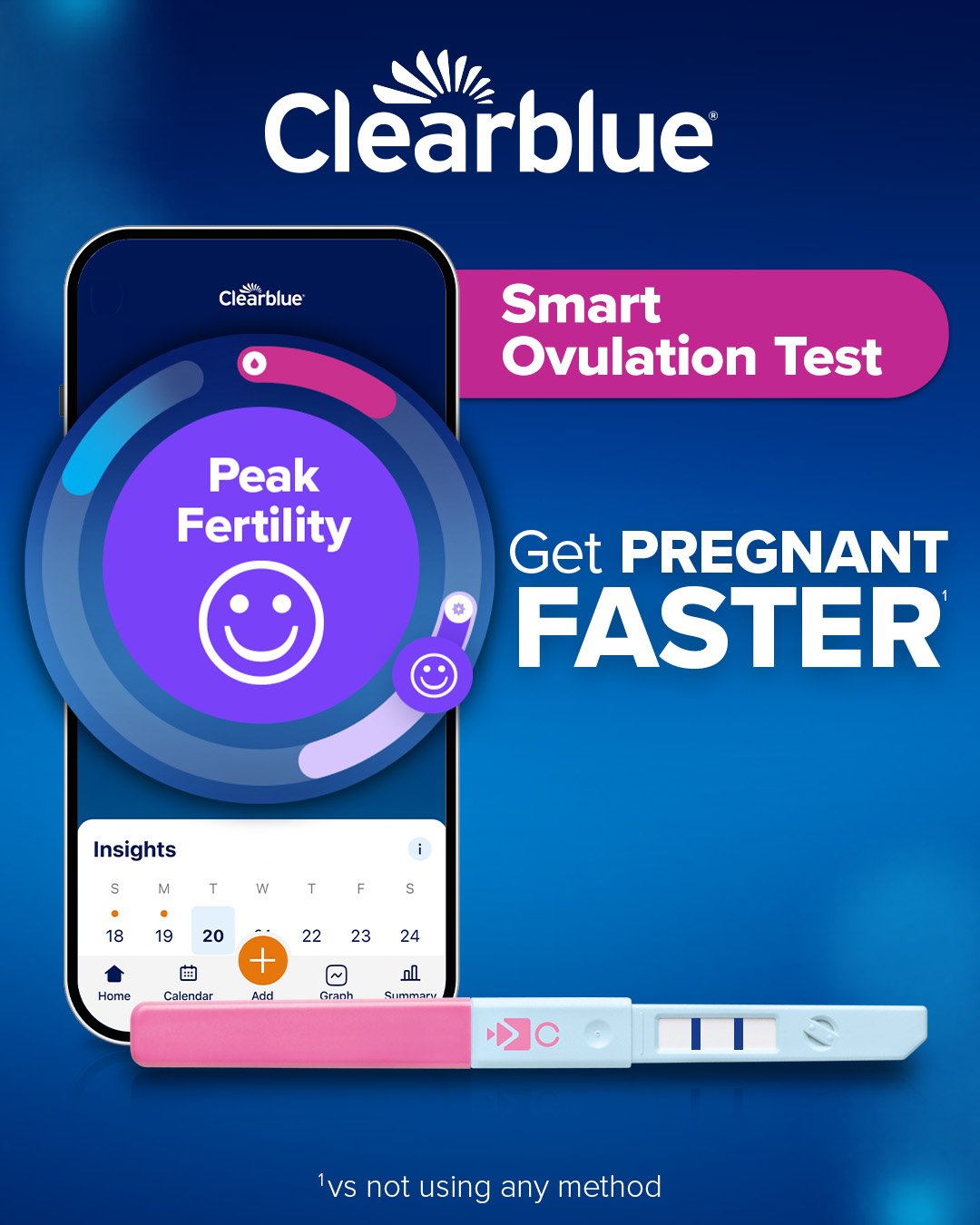
The Clearblue® Smart Ovulation Test works with the free Clearblue® Period & Cycle Tracker app to help users identify their most fertile days based on their own personal hormone levels. The app is required to read test results. The test detects the LH surge using an adaptive algorithm that adjusts to the user’s personal hormone levels.
Clearblue® reports that the test is 99% accurate at detecting the LH surge and two times more accurate than calendar methods. The product is offered as a 10-test pack, a 20-test pack, and a 50-test pack; see https://www.clearblue.com/ovulation-tests/smart-ovulation-test for product details and retailer information.
About the Study
The Clearblue Fertility Education Gap Study was commissioned by Clearblue® and conducted as a 10-minute online survey from September 22 to October 12, 2026. It surveyed 1,320 U.S. women ages 20–45, including 311 who were currently trying to conceive or had tried to conceive without IVF treatment in the past 12 months. These women are identified as the trying-to-conceive (TTC) subgroup and are included within the full female sample. A separate sample comprised 310 U.S. men trying to conceive with their female partner or who had tried in the past 24 months. Male and female samples were surveyed separately and are not paired couples. Question-specific bases may differ.
Study Sources
[1] B11; TTC n=311; strongly or somewhat agree. TTC includes women currently trying to conceive or who tried without IVF treatment in the past 12 months.
[2] B11; TTC n=311; strongly or somewhat agree (59%). B15; TTC answering n=296; a little or much too late (70%).
[3] B10; Female n=1,320; extremely, very or somewhat well prepared (84% and 41%).
[4] B13; Female n=1,320; mean correct responses out of 10 (5.3). C17; Female n=1,320; completely or somewhat confident (65%). The knowledge and confidence findings are separate aggregate measures.
[5] C17 + E27; Female n=1,320.
[6] B11; Female n=1,320; strongly or somewhat agree (68%).
About Clearblue®
The Clearblue® range of diagnostic products is manufactured by SPD Swiss Precision Diagnostics GmbH.
Clearblue® is the world’s No. 1 selling brand in home pregnancy and fertility tests.* Clearblue® is known worldwide for giving consumers clear, accurate results. The Clearblue® product range is built on a strong foundation of peer-reviewed science and consumer understanding. Clearblue® is supported by over 40 years of expertise, quality and innovation in consumer diagnostics. Clearblue® Ovulation Tests are >99% accurate at detecting the luteinizing hormone surge, used to identify the most fertile days in a cycle.
*Based on international sales compiled using independent market research data (data on file).
About SPD Swiss Precision Diagnostics
SPD Swiss Precision Diagnostics is a global leader in home health diagnostics and manufactures Clearblue® pregnancy and fertility monitoring tests and is a joint venture between Procter & Gamble (P&G) and Abbott. https://www.swissprecisiondiagnostics.com/
Media Contact
Jessica Ciarczynski
Account Supervisor, Earned Media, MSL
jessica.ciarczynski@mslgroup.com
Frequently Asked Questions
What is ClearblueU?
ClearblueU: Your Sex Education Continues Here is an education platform from Clearblue® designed to make credible, science-based fertility and reproductive-health information more accessible. It helps people build their understanding whether or not they are currently trying to conceive.
Why is Clearblue® introducing ClearblueU?
The Clearblue® Fertility Education Gap Study found that 55% of U.S. women who have tried to conceive in the past year say they would have made different decisions about when to start a family if they had understood their fertility earlier. [1] Introduced on World Fertility Day, November 2, 2026, ClearblueU responds to the need for earlier education to support informed reproductive-health choices.
Who is ClearblueU for, and what topics will it cover?
ClearblueU is for people who want to better understand their fertility and reproductive health, including those learning about their menstrual cycles, considering future family plans or actively trying to conceive. Educational content will roll out in phases across menstruation, ovulation, conception and pregnancy through expert-led YouTube content, Clearblue® website resources and an email newsletter.
What is the Clearblue® Smart Ovulation Test?
The Clearblue® Smart Ovulation Test works with the free Clearblue® Period & Cycle Tracker app to help people trying to conceive understand their most fertile days. Users scan their test using their smartphone camera, and the app reads the result.
How does the Smart Ovulation Test complement ClearblueU?
ClearblueU helps people build their understanding of fertility, including ovulation and the fertile window. For those ready to try to conceive, the Clearblue® Smart Ovulation Test provides a practical tool to help identify their most fertile days.
Where can people learn more?
Visit https://www.clearblue.com/blog to explore ClearblueU resources, with additional educational content rolling out in phases. For information about the Clearblue® Smart Ovulation Test and the free Clearblue® Period & Cycle Tracker app, visit https://www.clearblue.com/ovulation-tests/smart-ovulation-test.


 View original content:
SOURCE Clearblue

Distributed by PR Newswire / Cision.