Health
In collaboration with University of Phoenix, new findings from Adaptive Performance Center demonstrate how practical skills can move from individual learning toward broader organizational capacity
PHOENIX and CLARKSBURG, Md., Nov. 6, 2026 /PRNewswire/ — Give an Hour today announced the release of a new case study examining the implementation of Veteran MILE, an evidence-informed upstream initiative, deemed scientifically sound and aligned with best practices by the CDC Foundation, designed to strengthen mental health literacy, reciprocal peer support and organizational capacity within organizations serving and employing veterans.
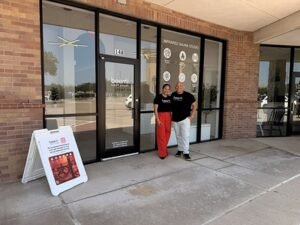
Developed in collaboration with University of Phoenix, the case study follows Veteran MILE implementation at Adaptive Performance Center (APC), a Montana-based nonprofit serving veterans through adaptive fitness, wellness programming and community connection.
The findings provide an early look at what can happen when mental health training moves beyond awareness and into everyday practice.
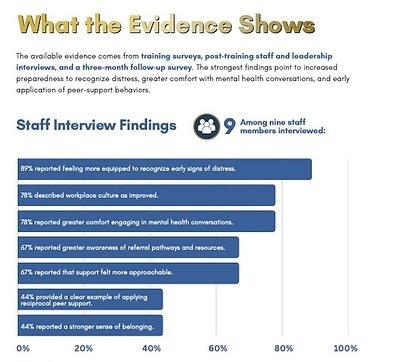
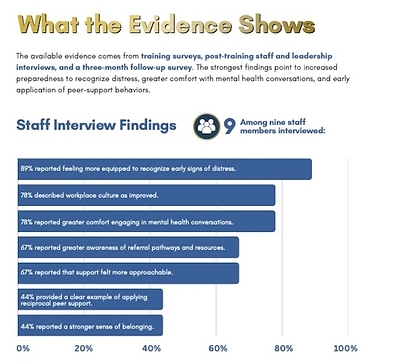
Among nine APC staff members interviewed following Veteran MILE, 89% reported feeling more equipped to recognize early signs of distress, 78% reported greater comfort engaging in mental health conversations, and 67% reported greater awareness of referral pathways and resources.
At a three-month follow-up, 82% of 17 respondents reported using the benefits of reciprocal peer support in everyday life and 94% reported feeling comfortable having an open and vulnerable conversation about mental health with peers. Among 13 participants who had established a post-training goal, 12 (92%) reported following through on it.
“This work asks a question that is bigger than whether someone completed a mental health training,” said Dr. Trina Clayeux, CEO of Give an Hour. “Are people more prepared to notice when someone may be struggling? Will they start the conversation? Can they listen without feeling responsible for fixing everything? And can we build that capacity into the organizations and communities veterans already trust? APC is giving us an important early look at what that can mean in practice.”
A Partnership Built Around Veteran Success
The Veteran MILE story did not begin with a single training or organization.
Give an Hour and University of Phoenix began partnering in support of veterans in 2017. In 2022, following findings from the University of Phoenix Career Optimism Index® study, Give an Hour was engaged as a subject-matter expert to develop resources supporting veteran success in the workplace.
Give an Hour subsequently convened an industry advisory group that included organizations such as Amazon, CVS, Booz Allen Hamilton and Magellan Health. Over more than a year, perspectives from that group helped shape the framework that would ultimately become Veteran MILE.
That work was complemented by University of Phoenix’s 2023 Military Transition Survey, conducted by The Harris Poll, and the development of an employer resource introduced in 2024 to help organizations understand veteran workforce needs and support workplace wellness.
The evolution of this work reflects a shared interest between Give an Hour and University of Phoenix in moving from identifying challenges facing veterans to developing practical approaches that can be implemented in the environments where veterans work, connect and build community.
“Our work with Give an Hour has shown that supporting veterans in the workplace means paying attention to well-being as well as skills and opportunity they bring forward into the workforce,” said Christina Neider, EdD, Vice Provost of Colleges at University of Phoenix, who served more than 11 years in the U.S. Air Force. “Earlier research helped us identify challenges veterans face, while this case study offers an encouraging early look at how organizations can equip more people to recognize distress, listen and connect peers with appropriate support.”
From Training to Practice
APC participated in three linked Veteran MILE sessions from January through March 2026, with 37 attendees across the series.
Training and engagement focused on recognizing early signs of distress, active listening, reciprocal peer support, healthy boundaries and “supporting without shouldering,” referral pathways, leadership modeling and creating environments where mental health conversations can occur safely.
But the case study was designed to look beyond whether participants simply valued the training.
Staff and leadership interviews captured examples of the learning being applied in everyday situations. One employee noticed that a veteran seemed different, approached him and created space for him to talk. The employee specifically noted that before the training, they likely would not have initiated the conversation.
Others described listening before trying to solve a problem, becoming more comfortable sitting with another person’s experience, recognizing behavioral changes and independently navigating supportive conversations that previously may have been escalated immediately to leadership.
From Individual Skills to Organizational Capacity
One of the most significant emerging findings may be less about any single skill and more about where responsibility for support sits within an organization.
APC entered Veteran MILE with an existing culture centered on veteran well-being, connection and community. The case study therefore does not conclude that Veteran MILE created a new culture at APC.
Instead, the emerging evidence suggests Veteran MILE helped strengthen and distribute the capacity to put that culture into practice across more people. APC leadership described staff showing greater independence in recognizing concerns, initiating supportive conversations and responding appropriately rather than automatically escalating every situation to a small group of leaders.
The emerging progression documented through the case study is:
Training → Capability → Application → Organizational Capacity → Emerging System
For Give an Hour, that progression represents an important distinction between delivering mental health education and beginning to build sustainable capacity within the organizations and communities surrounding veterans.
Why Upstream Capacity Matters
Veteran mental health and suicide remain urgent national challenges. The case study recognizes that suicide prevention cannot rely on clinical intervention alone and highlights the importance of hope, purpose, community, connection and comprehensive systems of support.
Veteran-serving and veteran-employing organizations can occupy an important upstream position: creating environments where people notice changes, build trust, initiate conversations earlier and connect veterans to additional support when needed.
Veteran MILE is designed to help strengthen that capacity without asking participants to become clinicians.
Instead, the model focuses on practical capabilities: recognizing, listening, connecting, maintaining appropriate boundaries and understanding when additional support is needed.
What Comes Next
The findings from APC remain early.
The current case study does not establish long-term sustainability, reduced burnout, staff-retention effects, veteran-level mental health outcomes or replication across locations. Those questions represent important opportunities for continued evaluation.
At APC, the work is already moving into its next phase. Give an Hour and APC are moving forward with peer support groups designed to reinforce skills, deepen ongoing support and begin building a broader peer-support ecosystem. Future measurement will examine continued application, staff wellness, referral behavior, integration into organizational processes, veteran experiences and the potential for replication.
For Give an Hour, the larger opportunity is to continue learning from APC while exploring how Veteran MILE can strengthen other organizations and communities serving and employing veterans.
“Awareness matters, but awareness cannot be the endpoint,” said Clayeux. “The opportunity is to equip more people to turn awareness into action; to notice, listen, connect and know when someone may need additional support. That’s how we begin moving from individual skills toward shared capacity.”
Explore the Veteran MILE Case Study
Read the complete Adaptive Performance Center + Veteran MILE Case Study, explore key findings and learn more about Veteran MILE at giveanhour.org/veteran-mile/.
About Give an Hour
Give an Hour® is a social impact organization dedicated to transforming mental health care through innovation, collaboration, and community-centered approaches. We develop accessible, barrier-free programs that empower individuals to take charge of their emotional well-being while supporting those who serve them, including mental health professionals, peer supporters, and community partners.
Our mission is to connect people to peers, clinical care, and education that honors their agency, humanity, and capacity to heal, ensuring that mental health support is found in community, not just systems.
About University of Phoenix
University of Phoenix is Built for Real Life. 50 Years Strong. The University innovates to help working adults enhance their careers and develop skills in a rapidly changing world through flexible online learning, relevant courses, academic AI pillars, and skills-mapped curriculum for associate, bachelor’s and master’s degree programs. Active students and alumni have access to Career Services for Life® resources including career guidance and tools. For more information, visit phoenix.edu.

 View original content to download multimedia:https://www.prnewswire.com/news-releases/give-an-hour-releases-new-veteran-mile-case-study-showing-early-impact-of-mental-health-training-in-a-veteran-serving-organization-302932183.html
SOURCE University of Phoenix

Distributed by PR Newswire / Cision.