Why the Scale Does Not Tell the Whole Story
Body weight naturally fluctuates. Hydration, food intake, sodium consumption, hormones, stress, sleep, and exercise can all influence what someone sees on the scale from day to day.
More importantly, gaining muscle while losing body fat may produce little change in overall weight. Someone could become noticeably leaner, stronger, and healthier without experiencing a dramatic decrease in pounds.
This is why a personal trainer in Charlotte NC may use several different measurements rather than relying on weight alone. The goal is to determine whether the client is becoming more capable, moving better, recovering effectively, and building habits that support long-term health.
Progress can be measured in many ways, including:
- Increased lifting strength
- Improved flexibility and mobility
- Better cardiovascular endurance
- Greater workout consistency
- Improved exercise technique
- Increased daily energy
- Better balance and coordination
- Improved recovery
- Changes in body composition
- Increased confidence
Looking at several measurements creates a more complete picture of what is happening inside and outside the gym.
Strength Is One of the Most Useful Progress Measurements
Strength is often easier to measure objectively than someone might expect. A trainer can record the weight used, number of repetitions completed, exercise variations, and quality of movement.
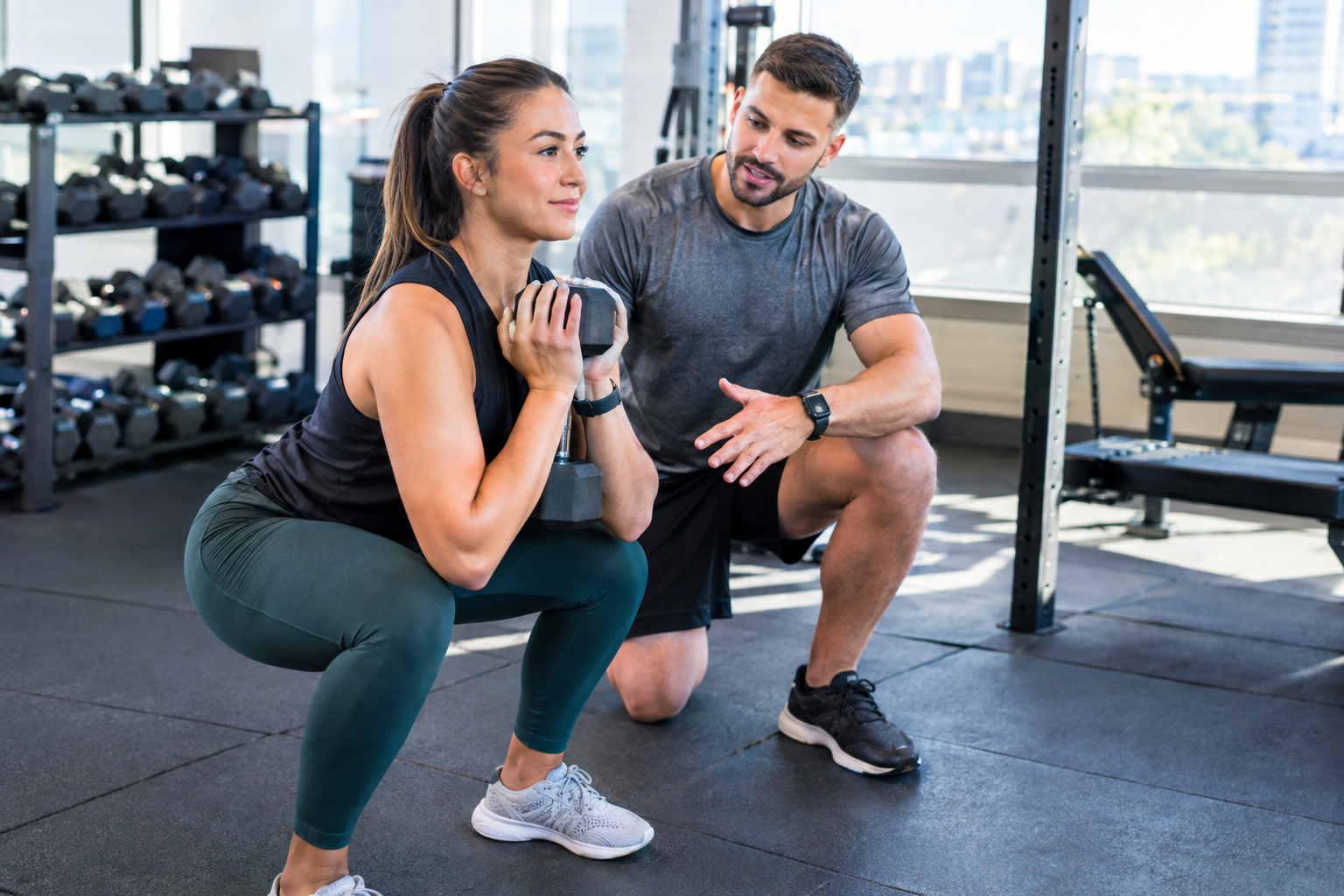
For example, a client may initially perform eight bodyweight squats with difficulty. Several weeks later, that same client may complete 15 controlled repetitions or perform goblet squats with additional resistance.
That is meaningful progress, even if the scale has not changed.
A personal trainer in Charlotte NC can maintain workout records and compare performance over time. Tracking progressive improvements allows both the client and trainer to see whether the program is producing the intended adaptations.
Strength measurements may include exercises such as:
- Squats
- Deadlifts
- Lunges
- Push-ups
- Rows
- Pull-ups or assisted pull-ups
- Shoulder presses
- Core exercises
The specific exercises depend on the client’s goals, experience, physical condition, and training program.
Mobility Can Reveal Progress That Weight Cannot
Mobility is another important area that often gets overlooked. Someone may become stronger while still experiencing restrictions in certain movements. Conversely, improved mobility may make everyday activities easier before there is any visible physical transformation.
A trainer may observe how a client performs a squat, reaches overhead, rotates the torso, bends at the hips, or moves through a lunge.
Movement assessments are already being incorporated into some Charlotte personal training programs. For example, local facilities describe using movement screening to identify mobility limitations, imbalances, and strength baselines.
Better mobility can make activities such as getting out of a chair, climbing stairs, carrying groceries, playing with children, or participating in recreational activities feel easier.
This makes mobility a practical measurement of fitness progress.
Energy Levels Are an Important Part of the Equation
Fitness is not only about what happens during a workout. It is also about how someone feels throughout the day.
A client might begin training feeling tired after ordinary activities. After several weeks of consistent exercise, they may notice that they have more energy for work, family activities, errands, and hobbies.
Charlotte trainers measure strength, mobility, and energy.
Tracking energy can be as simple as asking clients to rate their daily energy or how they feel before and after workouts. Over time, patterns can become apparent.
If energy consistently improves, that may indicate that the client is developing better fitness habits, recovering appropriately, and becoming more comfortable with physical activity.
Endurance and Conditioning Show Functional Improvements
Cardiovascular fitness is another area where progress can occur without major changes on the scale.
A client might start by walking for 15 minutes before becoming tired. Several weeks later, they may walk for 30 minutes at a faster pace. Another client might improve their ability to complete a circuit without needing as many rest periods.
A personal trainer in Charlotte NC can track measurements such as exercise duration, repetitions completed within a specific period, recovery time, walking or running distance, and perceived exertion.
These measurements help show whether the body is becoming more efficient at handling physical demands.
Body Composition Provides More Information Than Weight
Body composition is different from total body weight. Instead of simply asking how much someone weighs, body composition looks at factors such as muscle mass and body fat.
Some fitness facilities use body composition scans to monitor changes over time. For example, local Charlotte training facilities advertise regular InBody assessments that examine body composition rather than focusing solely on scale weight.
This can be particularly useful for clients who are strength training.
Imagine two clients who both weigh 170 pounds. One might have a higher proportion of body fat, while the other has more muscle mass. Their scale weight is identical, but their body composition is different.
That is why using multiple measurements can provide a much clearer understanding of physical changes.
Exercise Technique Is Another Sign of Progress
Progress does not always mean lifting heavier weights or completing more repetitions. Sometimes, improvement means performing an exercise correctly.
A beginner may initially struggle to maintain proper alignment during a squat or control a dumbbell movement. With coaching and practice, that person may develop better control, posture, balance, and coordination.
A personal trainer in Charlotte NC can monitor these changes during sessions and adjust exercises as the client’s technique improves.
Better technique can also help clients use exercises more effectively and develop confidence in their ability to train independently.
Consistency Matters More Than Short-Term Results
Another important measurement is adherence.
Someone who exercises inconsistently may experience occasional improvements but struggle to maintain them. A structured program can help establish a sustainable routine.
Trainers may track how frequently a client attends sessions, completes assigned workouts, follows recovery recommendations, or maintains other agreed-upon habits.
The purpose is not to create pressure or demand perfection. Instead, tracking consistency helps identify patterns.
If a client repeatedly misses workouts because of a busy schedule, for example, the trainer can modify the plan. A shorter workout, a different training schedule, or a combination of supervised and independent sessions may make the program more realistic.
Modern personal training increasingly emphasizes structured but flexible coaching, rather than relying on a one-size-fits-all approach.
Confidence Is a Valuable Non-Scale Victory
Physical progress often affects how people feel about themselves.
A client who once felt uncomfortable in a gym may eventually walk in confidently and know exactly what exercises to perform. Someone who was nervous about lifting weights may become comfortable using resistance training equipment.
These changes may not appear on a scale, but they are meaningful.
Confidence can also show up outside the gym. A client might feel more comfortable taking part in recreational activities, wearing certain clothes, traveling, playing sports, or keeping up with family members.
A good personal trainer in Charlotte NC can recognize these victories and use them to reinforce positive behaviors.
How Progress Tracking Helps Trainers Adjust Programs
Tracking multiple forms of progress also gives trainers information they can use to modify workouts.
If strength is improving but mobility remains limited, more mobility-focused work may be appropriate. If endurance is improving but recovery is poor, training volume or intensity may need adjustment.
If a client feels stronger but has stopped enjoying workouts, the trainer may introduce new exercises or activities to improve engagement.
The purpose of tracking is therefore not simply to create statistics. It is to help make better decisions.
A Better Definition of Fitness Success
Fitness success does not have to mean reaching a particular number on a scale.
For one person, success may mean performing their first push-up. For another, it may mean lifting heavier weights, walking without getting winded, improving mobility, or having enough energy to enjoy weekends with family.
For someone else, success may simply mean building a workout routine that they can maintain for years.
A personal trainer in Charlotte NC can help clients identify these meaningful goals and establish measurements that reflect them. By looking beyond weight, clients can see improvements that might otherwise go unnoticed.
The scale can still be one useful measurement, but it should not be the only one.
Frequently Asked Questions
Can I make progress even if I do not lose weight?
Yes. You can gain muscle, lose body fat, improve strength, increase endurance, and improve mobility without significant changes in total body weight.
What does a personal trainer track besides weight?
A trainer may track strength, repetitions, exercise technique, mobility, endurance, body composition, workout consistency, energy levels, recovery, and other goal-specific measurements.
How often should fitness progress be evaluated?
There is no universal schedule. Some measurements can be reviewed every workout, while larger assessments may be completed every several weeks or months. The appropriate frequency depends on the goal and type of measurement.
Why is strength an important fitness measurement?
Strength provides an objective way to determine whether the body is adapting to resistance training. Being able to safely perform more repetitions or use more resistance can indicate meaningful improvement.
Is body composition more useful than the scale?
Body composition can provide additional information that total body weight cannot. It may help show changes in muscle and body fat that are hidden by a relatively stable scale number.
What should I look for when choosing a personal trainer in Charlotte NC?
Look for a qualified professional who asks about your goals, evaluates your current fitness level, creates an individualized program, tracks progress, and adjusts training as your needs change.
Final Thoughts
The best fitness programs measure more than pounds lost. Strength, mobility, endurance, energy, consistency, technique, body composition, and confidence can all provide valuable evidence of progress.
For people who want a more complete approach to fitness, working with a personal trainer in Charlotte NC can provide structure, accountability, and objective progress tracking. Instead of becoming discouraged by daily changes on the scale, clients can learn to recognize the many ways their bodies and habits are improving.
When progress is measured from several perspectives, fitness becomes less about chasing a single number and more about becoming stronger, moving better, feeling healthier, and building a lifestyle that can last.