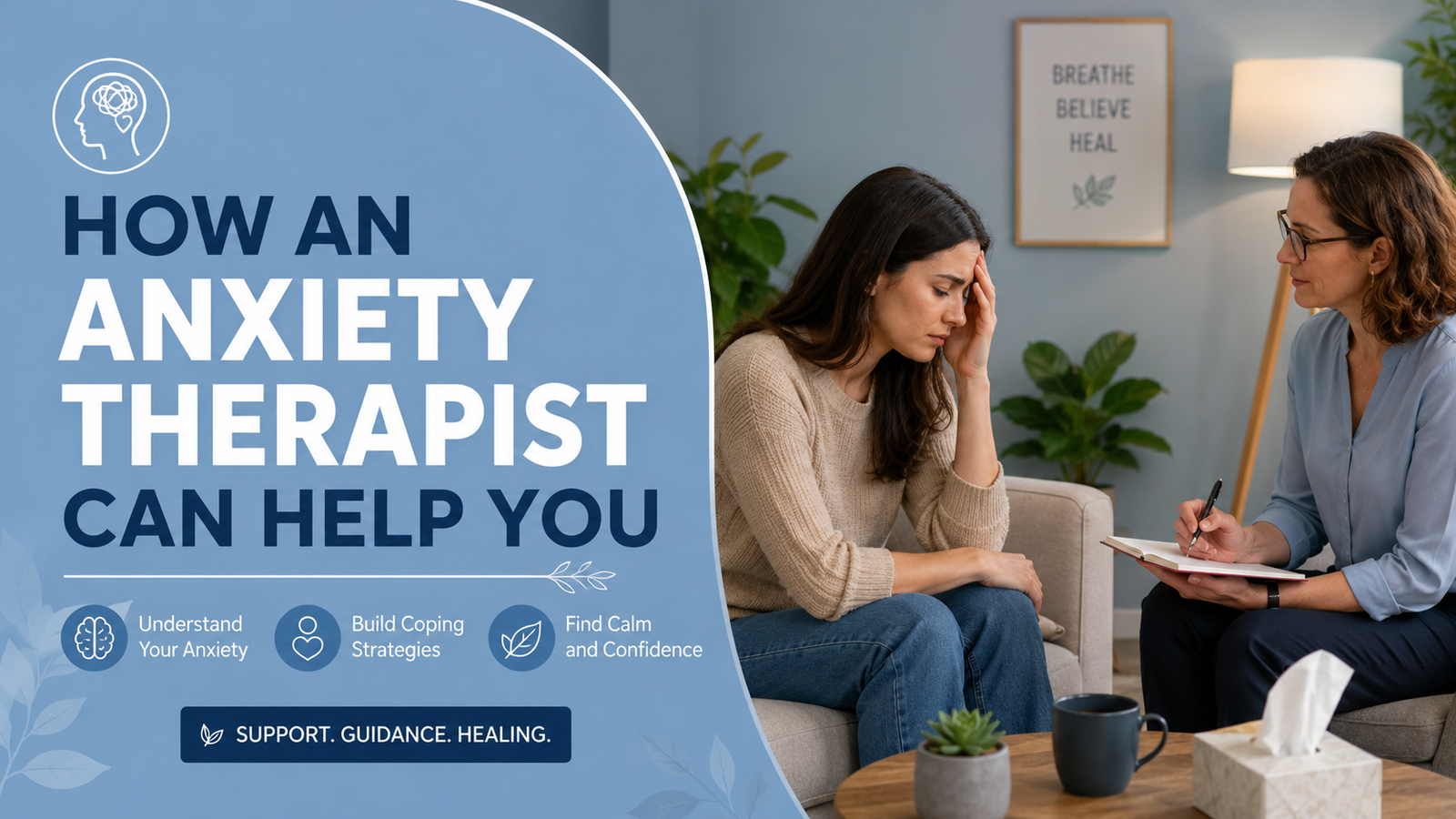
Anxiety can affect nearly every part of daily life. It may make simple decisions feel overwhelming, interfere with sleep, create physical discomfort, or make social and professional situations more difficult. While occasional anxiety is a normal response to stress, persistent or intense anxiety may be a sign that professional support could be helpful.
Working with a therapist can provide practical tools and emotional support for understanding where anxiety comes from and learning healthier ways to respond to it. Therapy is not about eliminating every stressful feeling. Instead, it can help you develop the skills and confidence to manage anxiety more effectively.
What Is Anxiety?
Anxiety is the body’s natural response to perceived danger, uncertainty, or stress. It can involve both emotional and physical symptoms. Someone experiencing anxiety may have racing thoughts, excessive worry, restlessness, difficulty concentrating, muscle tension, rapid heartbeat, or trouble sleeping.
For some people, anxiety becomes difficult to control and begins interfering with relationships, work, school, or everyday activities. Different types of anxiety can also have different patterns, including generalized anxiety, social anxiety, panic disorder, and specific phobias.
Recognizing that anxiety is affecting your quality of life is an important first step toward getting support.
How an Anxiety Therapist Can Help
Anxiety therapy provides a structured environment where you can discuss your concerns without fear of judgment. A therapist can help you identify patterns in your thoughts, emotions, and behaviors and work with you to develop strategies that fit your needs.
Understanding Your Anxiety
One of the first benefits of therapy is gaining a better understanding of your anxiety. You may notice that certain situations, thoughts, or experiences trigger anxious feelings.
An anxiety therapist helps you understand and manage anxious thoughts and feelings. By working with an anxiety therapist, you can explore the factors contributing to your anxiety and learn how to recognize patterns that may be keeping the cycle going.
Identifying Negative Thought Patterns
Anxiety can cause the mind to focus heavily on potential problems. You might automatically expect the worst outcome or repeatedly replay something that happened in the past.
Therapy can help you recognize unhelpful thinking patterns and examine whether your thoughts accurately reflect the situation. Rather than simply telling yourself to “stop worrying,” you can learn practical methods for evaluating anxious thoughts and responding to them differently.
Learning Healthy Coping Strategies
Therapists can teach techniques that help you handle anxiety when it appears. Depending on your individual needs, these strategies may include breathing exercises, relaxation techniques, mindfulness practices, grounding exercises, journaling, and healthier approaches to problem-solving.
The goal is to build a collection of coping skills you can use both during stressful moments and as part of your everyday routine.
Therapy Approaches for Anxiety
Different therapeutic approaches may be used to address anxiety. Your therapist can determine which methods are appropriate based on your symptoms, goals, and circumstances.
Cognitive Behavioral Therapy
Cognitive behavioral therapy, commonly called CBT, is a widely used approach for anxiety. It focuses on the relationship between thoughts, feelings, and behaviors.
With CBT, you may learn to identify unhelpful thoughts and gradually develop more balanced ways of thinking. You may also work on behaviors that reinforce anxiety, such as avoiding situations that make you uncomfortable.
Exposure-Based Techniques
Avoidance can provide temporary relief, but it can sometimes make anxiety stronger over time. Exposure-based therapy involves gradually and safely facing feared situations or experiences in a structured way.
The process is typically tailored to the individual and progresses at a manageable pace. Over time, this can help reduce fear and increase confidence in your ability to handle uncomfortable situations.
Mindfulness-Based Approaches
Mindfulness can help you become more aware of your thoughts and feelings without immediately reacting to them. A therapist may incorporate mindfulness exercises to help you stay focused on the present rather than becoming consumed by worries about the future.
Benefits of Working With an Anxiety Therapist
Professional therapy can offer several potential benefits for people struggling with anxiety.
A Safe Place to Talk
Anxiety can be difficult to explain to friends or family members. Therapy offers a confidential setting where you can discuss fears, worries, and difficult experiences openly.
Personalized Support
Everyone experiences anxiety differently. A therapist can help create an approach based on your specific symptoms, circumstances, and goals instead of relying on general advice.
Improved Daily Functioning
As you develop better coping skills, you may find it easier to concentrate, sleep, communicate, work, or participate in activities that anxiety previously made difficult.
Greater Self-Awareness
Therapy can help you recognize emotional triggers, behavioral patterns, and thought processes. Greater self-awareness can make it easier to respond intentionally rather than automatically reacting to anxiety.
When Should You Consider Anxiety Therapy?
You may want to consider professional support if anxiety is persistent, difficult to control, or interfering with your everyday life. It may also be worth seeking help if you frequently avoid activities because of fear, experience panic symptoms, have ongoing sleep problems related to worry, or feel that your usual coping strategies are no longer enough.
You do not have to wait until anxiety becomes overwhelming before talking with a professional. Seeking support early can give you an opportunity to develop useful skills before symptoms become more disruptive.
How to Find the Right Therapist
Finding a therapist you feel comfortable with can make the therapy experience more productive. Consider looking for someone with experience treating anxiety and ask about their therapeutic approach.
During an initial consultation, you can ask questions about what treatment may involve, how sessions are structured, and what goals you can work toward. Feeling respected, understood, and comfortable communicating with your therapist is important.
You may also want to consider practical factors such as location, appointment availability, session costs, and whether virtual therapy is available.
Frequently Asked Questions
What does an anxiety therapist do?
An anxiety therapist helps clients understand anxiety symptoms, identify triggers and unhelpful patterns, and develop healthier coping strategies. Treatment is tailored to the individual’s circumstances and goals.
How long does anxiety therapy take?
There is no single timeline for anxiety therapy. Some people benefit from short-term treatment, while others may need longer-term support. Progress can depend on the type and severity of anxiety, treatment approach, personal goals, and consistency with therapy.
Can therapy completely eliminate anxiety?
Therapy does not necessarily mean that you will never experience anxiety again. Anxiety is a normal human emotion. The goal is often to reduce excessive anxiety and improve your ability to manage difficult thoughts and feelings.
Is anxiety therapy only for severe anxiety?
No. You can seek therapy whenever anxiety is causing concern or interfering with your life. You do not need to wait until symptoms become severe before seeking professional guidance.
Can anxiety therapy be done online?
Many therapists offer virtual sessions. Online therapy can be a convenient option for people who prefer receiving support from home, although availability and suitability vary depending on the therapist and individual circumstances.
Conclusion
Anxiety can feel overwhelming, but you do not have to manage it alone. An anxiety therapist can provide a supportive environment where you can understand your symptoms, recognize unhelpful patterns, and develop practical skills for handling anxious thoughts and feelings.
Whether anxiety is affecting your relationships, work, sleep, or everyday activities, professional support may help you move toward greater confidence and emotional well-being. Taking the first step toward therapy can be an important part of learning how to respond to anxiety in healthier and more manageable ways.