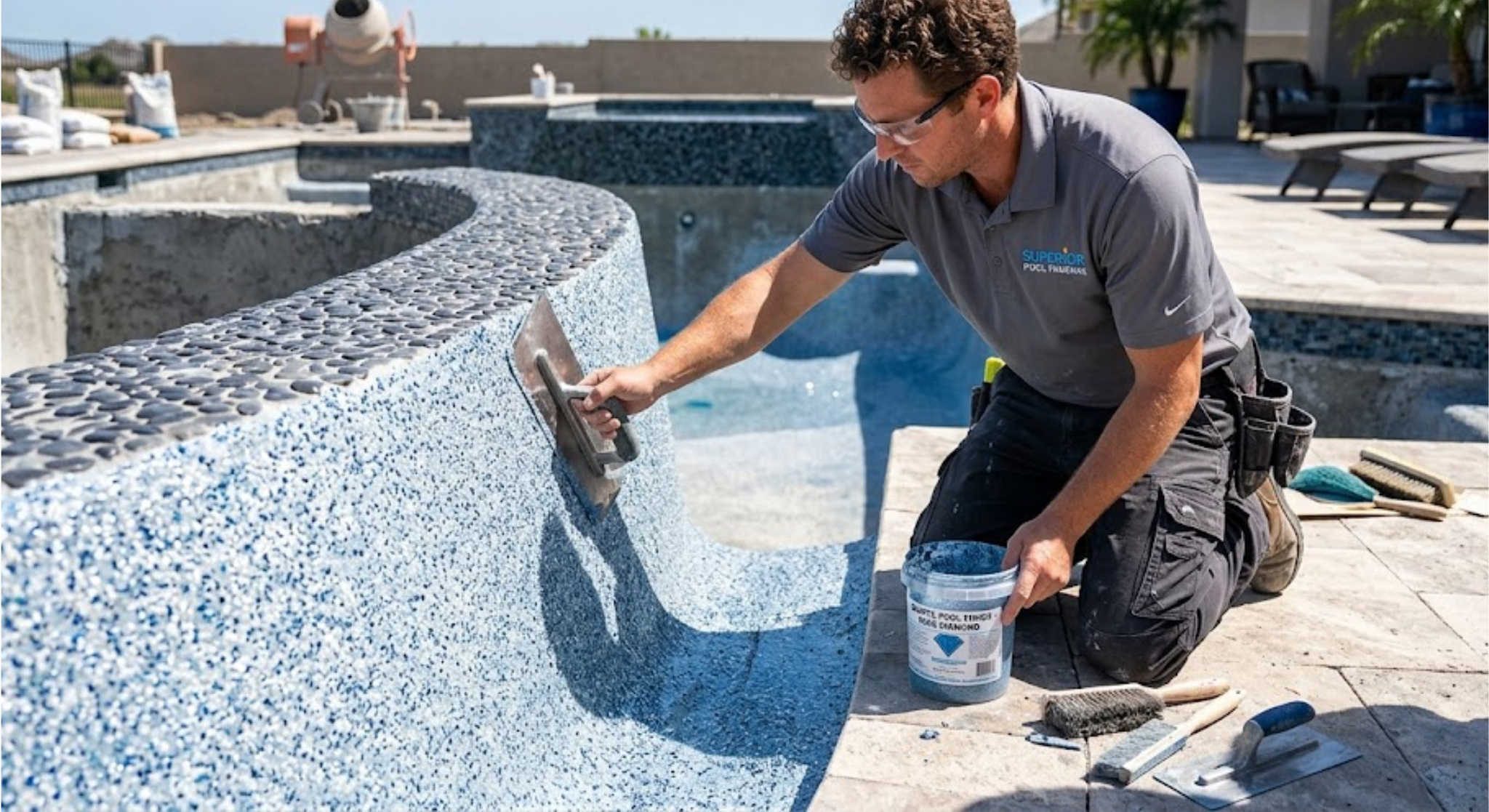
Central Texas summers are notoriously unforgiving, making a functional, beautiful backyard swimming pool less of a luxury and more of an absolute necessity. However, years of harsh UV exposure, fluctuating water chemistry, and heavy daily use will eventually take a toll on your pool’s interior surface. If your current pool shell is plagued by rough patches, stubborn mineral stains, or simply looks tired and outdated, it is time to consider a structural upgrade. While basic white plaster was the historical industry standard, modern homeowners are increasingly seeking out advanced aggregate blends that offer superior resilience and a more luxurious aesthetic.
Looking for a modern pool surface? Pool Refinishing Austin with quartz offers durability and a sleek appearance. Clear Solutions walks you through material choices to ensure your investment protects your property and elevates your outdoor lifestyle. Choosing the right interior finish is one of the most important decisions you will make during a remodel. To help you navigate your options, here is an in-depth look at the specific pros and cons of choosing a premium quartz pool finish.
Understanding the Makeup of a Quartz Finish
Before weighing the specific benefits and drawbacks, it is important to understand exactly what a quartz pool finish is from a chemical and structural standpoint.
Standard pool plaster (frequently referred to as marcite) is a relatively simple, economical mixture of white Portland cement and crushed marble dust. While it creates a classic, smooth white basin, marble is inherently a very soft mineral. It breaks down easily under the stress of acidic water conditions. A quartz finish utilizes that same reliable Portland cement base, but it replaces a significant portion of the soft marble dust with crushed quartz crystals. Because quartz is one of the hardest and most resilient naturally occurring minerals on Earth, integrating it into the plaster matrix drastically alters the structural integrity and visual depth of the pool shell.
The Pros of Choosing a Quartz Finish
Upgrading to a quartz aggregate blend offers several distinct advantages that make it one of the most popular choices for modern pool renovations in the Austin area.
- Exceptional Structural Durability: The primary advantage of a quartz finish is its incredible lifespan. Quartz is highly resistant to chemical etching, temperature fluctuations, and the physical wear and tear caused by automatic pool vacuums. While standard marcite plaster typically lasts 5 to 7 years before showing severe signs of degradation, a properly maintained quartz finish can easily last 10 to 15 years, providing a vastly superior long-term return on investment.
- Stunning Visual Aesthetics: The quartz crystals mixed into the plaster are often ceramic-coated, allowing them to be dyed in a massive spectrum of colors ranging from subtle Caribbean blues and vibrant teals to striking modern blacks and grays. As the bright Texas sun hits the water, these crystals subtly reflect the light, giving the water a vibrant, sparkling, and highly dimensional appearance that flat white plaster simply cannot replicate.
- The Perfect Tactile Middle Ground: Many homeowners love the extreme durability of exposed river-pebble finishes but dislike how incredibly rough they can feel on sensitive bare feet and bathing suits. Quartz offers the perfect tactile compromise. It provides a slightly textured, slip-resistant surface that remains comfortable enough for hours of standing, wading, and playing pool volleyball.
- Superior Stain Resistance: Because the quartz aggregate itself is completely non-porous, the surface is significantly less susceptible to holding onto algae spores, dirt, or localized mineral stains. This makes routine brushing and chemical balancing much easier and less time-consuming for the homeowner.
The Cons of a Quartz Finish
While the benefits are substantial, there are a few considerations to keep in mind before committing to a quartz application.
- Higher Upfront Capital Investment: Transitioning from standard marcite to a premium aggregate blend involves a higher initial cost. The specialized ceramic-coated crystals and the slightly more labor-intensive application process mean you will pay a premium. However, it is crucial to weigh this initial cost against the extended lifespan and reduced maintenance requirements.
- Potential for Surface Mottling: All cementitious pool finishes are susceptible to a visual phenomenon known as “mottling”—which presents as slight, cloudy variations in color tone and shading across the pool floor. Because quartz finishes often utilize colored pigments mixed directly into the cement to match the crystals, this mottling can occasionally be more apparent than it is in pure white plaster, particularly if the water chemistry is improperly balanced during the critical 28-day curing phase.
- Requires Elite Application Expertise: Plastering a pool with quartz is an unforgiving art form. The crew must perfectly time the hand-troweling process and the final acid wash (which removes the top layer of cement “cream” to expose the sparkling quartz crystals). If applied by an inexperienced contractor, the surface can cure unevenly, resulting in a streaky, rough, or visually inconsistent finish.
Comparing Pool Refinishing Materials
To put quartz into perspective, here is how it stacks up against the other two most common pool resurfacing options on the market.
| Material Type | Average Lifespan | Visual Appearance | Texture & Comfort | Relative Cost |
|---|---|---|---|---|
| Standard Plaster | 5 – 7 Years | Classic, solid, matte white or light blue. | Very smooth; can become rough as it degrades. | Most Economical (Base Price) |
| Quartz Aggregate | 10 – 15 Years | Sparkling, dimensional, highly customizable colors. | Smooth with a slight, comfortable grip. | Moderate Premium |
| Pebble Aggregate | 15 – 20+ Years | Natural, lagoon-like, earthy depth. | Noticeably textured; can be rough on bare feet. | Highest Premium |
Conclusion
Remodeling your swimming pool is a substantial capital investment that will define your family’s outdoor living space for a decade or more. While standard plaster remains the most budget-friendly option for a quick cosmetic fix, a quartz finish provides a vastly superior balance of striking beauty, lasting structural durability, and tactile comfort. By understanding the unique characteristics of this premium material and partnering with an elite Austin-based pool restoration expert, you can confidently upgrade your backyard oasis. Choose a dedicated contractor who provides transparent guidance and flawless technical execution, ensuring your newly surfaced pool remains a sparkling, inviting centerpiece of your home through every blistering summer season.
Frequently Asked Questions (FAQ)
Q: Can a new quartz finish be applied directly over my old, damaged pool plaster?
A: No, it should never be applied directly over a failing surface. A professional renovation company will first drain the pool, aggressively “chip out” the old, degrading plaster, and prepare the underlying gunite shell to ensure the new quartz mixture forms a permanent, watertight structural bond.
Q: How long do I have to wait to swim after my pool is refinished with quartz?
A: While the pool will be filled with water immediately after the application to prevent the material from cracking, you should generally wait until the initial chemical balancing process is complete and the water is cleared of plaster dust. This typically takes about 3 to 7 days, depending on your contractor’s specific startup protocol.
Q: Will the color of my quartz finish fade over time?
A: Because premium quartz finishes utilize ceramic-coated crystals rather than just organic dyes, the color is highly resistant to UV fading and chemical bleaching. While poor water chemistry can eventually cause scaling that hides the color, the quartz crystals themselves maintain their vibrant hue for the lifespan of the finish.