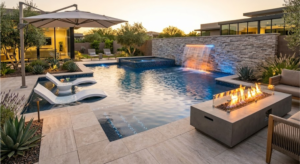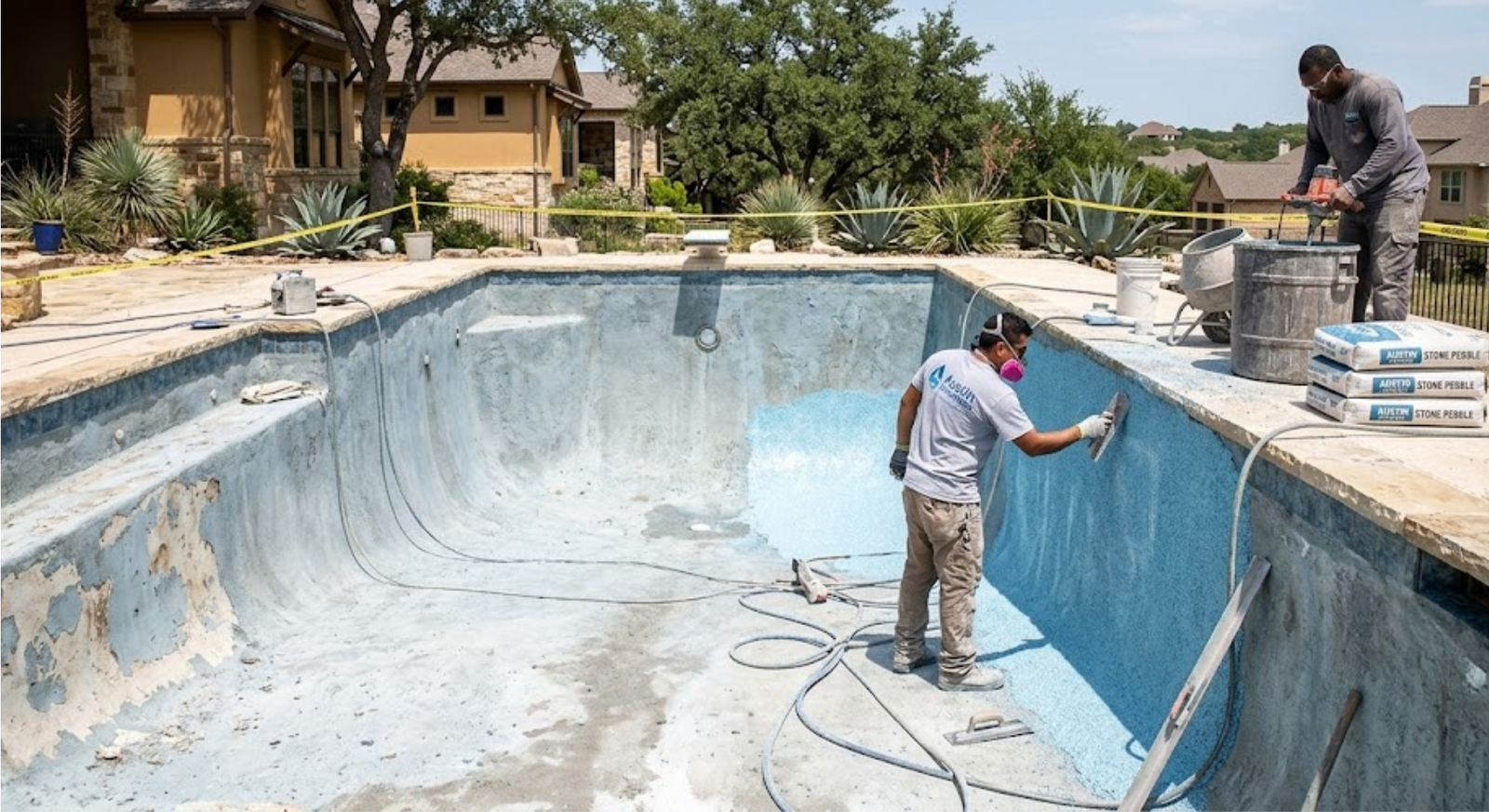
Owning a backyard swimming pool in Austin, Texas offers a welcome escape during hot summer months. However, intense Texas sun exposure, shifting central Texas soils, and routine chemical wear take a toll on pool interiors over time. When your pool surface begins showing signs of wear—such as rough textures, fading colors, persistent staining, or hairline cracking it is time to explore restoration options.
When researching swimming pool restoration, you will frequently encounter the terms “pool refinishing” and “pool resurfacing.” While many pool owners and casual contractors use these terms interchangeably, they refer to fundamentally different levels of restoration scope, durability, and financial investment.
Understanding the structural differences between refinishing and resurfacing ensures you select the optimal service for your pool’s age, interior material, and long-term performance goals. Here is a clear, comprehensive breakdown of what sets these two restoration approaches apart.
1. Defining Pool Refinishing: Surface-Level Aesthetic Renewal
Pool refinishing focuses primarily on cosmetic touch-ups and surface-level reconditioning. This process is designed to restore visual appeal without stripping the swimming pool down to its concrete or shotcrete structural shell.
[ Existing Interior Finish ] ──► Acid Wash / Polish / Top-Coat Sealer ──► Refreshed Aesthetic Surface
Typical Characteristics of Pool Refinishing:
- Targeted Applications: Ideal for fiberglass pools, painted pool shells, or concrete pools with minor surface staining and light mineral scaling.
- Work Scope: Includes deep chemical acid washing, tile buffing, paint reapplication, specialized epoxy coatings, or gel-coat repairs on fiberglass.
- Project Timeline: Refinishing projects are relatively fast, often taking only 1 to 3 days to complete.
- Lifespan Expectations: Cosmetic refinishing provides a temporary visual uplift, typically lasting 2 to 5 years before requiring maintenance again.
Refinishing works best as a quick, cost-effective refresh when the underlying plaster or concrete substrate remains structurally sound, smooth, and free of deep structural cracks.
2. Defining Pool Resurfacing: Comprehensive Structural Overhaul
In contrast, pool resurfacing is a complete interior reconstruction project. Rather than treating the existing top surface, resurfacing involves chipping away old, deteriorated plaster layers down to the bare concrete gunite or shotcrete shell before applying a fresh, high-performance interior coating.
[ Chipping & Hydro-Demolition ] ──► [ Bond Coat Application ] ──► [ New Plaster / Pebble Finish ]
Core Steps in the Resurfacing Process:
- Draining and Prep Work: Draining the pool safely and chipping out existing plaster along tile lines, return fittings, and main drains.
- Surface Bond Application: Applying a high-tack bond coat to ensure the new material adheres permanently to the concrete structure.
- New Finish Application: Troweling on a brand-new layer of white plaster, quartz aggregate, or premium pebble finish across the entire pool surface.
- Acid Wash & Hydration: Performing a controlled acid wash to expose aggregates (if applicable) and immediately refilling the pool to initiate proper curing.
When working with a specialized local contractor for Pool Refinishing Austin services, opting for complete resurfacing delivers a brand-new interior lining engineered to endure central Texas weather conditions for 10 to 20+ years.
3. Comparing Refinishing vs. Resurfacing Side-by-Side
Evaluating key project metrics helps pool owners choose the right path for their property:
┌─────────────────────────────────────────────────────────────────────────────┐
│                    REFINISHING VS. RESURFACING COMPARISON                   │
├──────────────────────────────┬──────────────────────────────┬───────────────┤
│ Evaluation Metric            │ Pool Refinishing             │ Pool Resurfacing│
├──────────────────────────────┼──────────────────────────────┼───────────────┤
│ **Primary Goal**             │ Cosmetic surface touch-up    │ Structural interior rebuild│
├──────────────────────────────┼──────────────────────────────┼───────────────┤
│ **Substrate Preparation**    │ Light sanding or acid wash   │ Complete removal/chipping out│
├──────────────────────────────┼──────────────────────────────┼───────────────┤
│ **Material Options**         │ Epoxy paint, gel-coat, sealers│ Plaster, quartz, aggregate/pebble│
├──────────────────────────────┼──────────────────────────────┼───────────────┤
│ **Expected Lifespan**        │ 2 to 5 years                 │ 10 to 20+ years│
├──────────────────────────────┼──────────────────────────────┼───────────────┤
│ **Structural Integrity**     │ Does not fix hollow spots    │ Eliminates delamination & cracks│
└──────────────────────────────┴──────────────────────────────┴───────────────┘
4. How to Know Which Service Your Pool Needs
Determining whether your swimming pool requires a quick refinish or a complete resurface comes down to inspecting its current structural health.
[ Minor Staining / Fading ]         ──────► Candidate for Pool Refinishing

[ Peeling / Rough Texture / Cracks ] ──────► Requires Complete Pool Resurfacing
You Likely Need Refinishing If:
- Your pool surface is structurally solid, but discolored from mineral deposits or organic staining.
- You have a painted concrete pool or fiberglass shell that simply needs a fresh top-coat layer.
- You are preparing a home for immediate sale and want an affordable visual enhancement.
You Definite Need Resurfacing If:
- The plaster feels rough on feet, exhibits significant pitting, or shows exposed gunite aggregate.
- You notice hollow sounds (“pop-outs”) when tapping on the plaster, indicating delamination from the underlying concrete.
- Plaster is actively flaking, peeling, or cracking across large areas of the pool floor or steps.
Conclusion
Choosing between pool refinishing and pool resurfacing depends on the age, structural condition, and long-term goals for your swimming pool. While refinishing provides a quick, budget-friendly aesthetic refresh, resurfacing delivers a brand-new, long-lasting interior surface that protects your pool’s concrete structure for decades.
When you are ready to evaluate your swimming pool interior and restore its crystal-clear beauty, partner with the experienced team at Clear Solutions Pool Plastering. Our local expertise ensures your Austin pool receives the exact care and high-performance finish it deserves.
Frequently Asked Questions (FAQ)
Q: How long does a full pool resurfacing project take in Austin, Texas?
A: A complete pool resurfacing project generally takes between 5 to 10 working days, depending on weather conditions, pool dimensions, and the specific finish selected (such as standard plaster versus quartz or pebble aggregate).
Q: Can you plaster over existing pool plaster without chipping it out?
A: While some contractors apply a thin plaster layer over old material, it is not recommended. Applying new plaster over deteriorated old plaster significantly increases the risk of delamination, peeling, and premature failure within a few years.
Q: What is the most durable resurfacing finish for Austin swimming pools?
A: Pebble aggregate and modified quartz finishes are among the most durable resurfacing options available. They resist chemical imbalances, water etching, and harsh UV exposure far better than traditional white plaster, providing a lifespan of 15 to 20+ years.