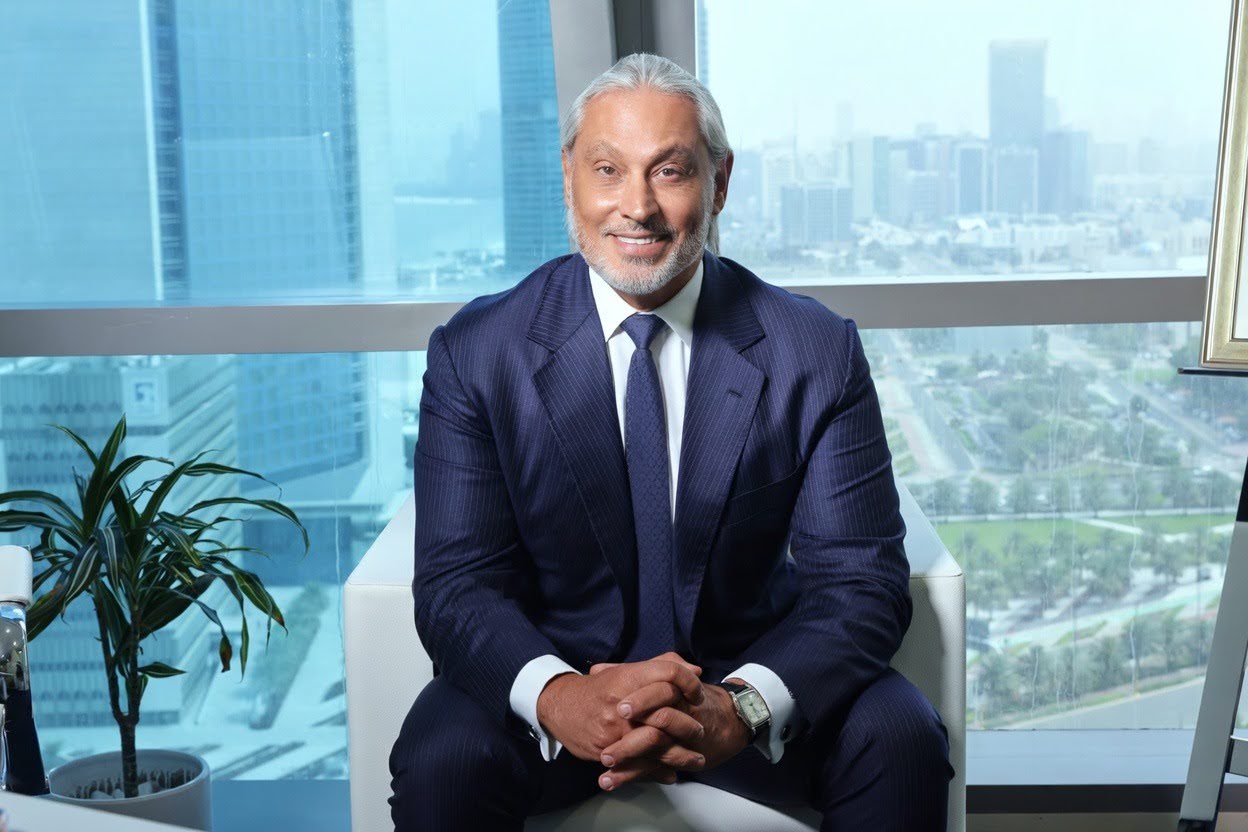
Regulatory licenses in financial services are not honorary distinctions. They are enforceable clearances issued by independent oversight bodies after a structured review of the applicant’s fitness, governance practices, and operational infrastructure. When Shaher Awartani, Chairman and Co-Founding Partner of Silver Coast Construction & Boring LLC in Abu Dhabi and co-founder of Yasa Capital (DIFC) Limited, obtained a Category 4 license from the Dubai Financial Services Authority in 2024, the credential reflected a documented process, not a biographical footnote. Understanding what that license signals requires examining what the DFSA assesses, what a Category 4 designation authorizes, and why the broader career record gives the license additional analytical weight.
What The DFSA Evaluates Before Issuing Any License
The Dubai Financial Services Authority is the independent regulator of financial services conducted in or from the Dubai International Financial Centre. The DIFC is a designated financial free zone within the UAE, operating under its own legal and regulatory framework aligned with international standards. Entities seeking to conduct regulated activities within the DIFC must apply to the DFSA, satisfy a structured fit-and-proper assessment, and demonstrate that governance arrangements, operational controls, and financial resources meet the regulator’s published requirements.
The fit-and-proper standard is applied to both the entity and its principal individuals. The DFSA evaluates whether applicants have the competence, financial standing, and integrity to conduct regulated financial activities without posing risk to clients or the broader market. This is not a self-certification process. It is a third-party assessment conducted by a regulatory body accountable to international financial oversight standards.
For any principal seeking DFSA authorization, the review process provides independent, documented verification of governance capacity. That verification carries weight because it is produced by the regulator, not by the applicant. In that context, Shaher Awartani’s DFSA Category 4 license is best understood as part of a formal regulatory record.
What A Category 4 License Authorizes And What It Does Not
The DFSA categorizes licensed firms by the nature and scope of their regulated activities. A Category 4 license authorizes its holder to arrange investments and provide investment advisory services within the DIFC regulatory perimeter. Category 4 firms do not hold client money, manage portfolios on a discretionary basis, or conduct dealing activity. Those functions are covered by separate license categories with distinct capital and operational requirements.
The Category 4 designation, by its defined scope, is suited to advisory and arrangement roles: connecting clients with investment opportunities, providing guidance on investment decisions, and structuring relationships between investors and assets. For a principal whose career has involved co-founding and co-investing across construction, real estate, private equity, and healthcare, the Category 4 framework is aligned with an advisory function rather than a discretionary fund management role.
What the license signals is not a limitation. It is an alignment between the regulatory designation and the advisory function it governs. The regulatory record reflects a deliberate structure: Yasa Capital holds the license that matches its authorized scope, registered and regulated within the DIFC framework.
How Shaher Awartani’s DIFC Registration History Frames The 2024 License
The 2024 DFSA Category 4 license is not the first DIFC-registered entity in the portfolio. In 2013, Shaher Awartani co-founded Equalis Capital Ltd in the DIFC alongside H.E. Yousef Al Otaiba as a proprietary investment company. That registration predates the 2024 Yasa Capital license by 11 years and provides a prior DIFC governance footprint relevant to the broader regulatory record.
The Significance Of Prior DIFC Presence
For principals applying to the DFSA for a Category 4 license, a pre-existing DIFC registration history is relevant to the overall picture of regulatory engagement. Regulatory bodies assess the conduct record of principals and associated entities across prior regulated or registered activities. A prior DIFC-registered entity operating over more than a decade can support a broader record of institutional conduct.
The progression from Equalis Capital in 2013 to Yasa Capital’s DFSA license in 2024 represents a deepening of the regulatory relationship, not an initiation of one. That distinction matters when evaluating the governance signal the license carries. It places Shaher Awartani’s private investment advisory work within a longer sequence of DIFC activity rather than a stand-alone financial services credential.
The Co-Investor Record As A Parallel Governance Signal
Regulatory clearance addresses one dimension of governance credibility. A separate and complementary dimension is the documented pattern of institutional co-investment that runs across the career of Shaher Moh’d Ali Awartani in Abu Dhabi and across other jurisdictions.
In 2015, Shaher Awartani joined Global Gate Capital Partners, a Geneva-based investment firm with more than USD 2 billion in assets under management across real estate and private equity, as a shareholder and board member. The Geneva relationship represents a non-DIFC, non-DFSA institutional validation operating under a distinct financial-services environment.
In 2020, the shareholder structure of Reem Hospital Abu Dhabi included Mubadala Investment Company, InvestCorp of Bahrain, and Wisayah Capital, a 100% subsidiary of Saudi Aramco. Each of these institutions maintains governance frameworks for investment review before committing capital. The presence of all three as co-shareholders in a single entity alongside other partners indicates a level of institutional participation that is separate from, but relevant to, the DFSA governance record.
For analysts evaluating the governance signal of the DFSA Category 4 license, the co-investor record provides cross-jurisdictional and cross-sector corroboration. Regulatory authorization and institutional co-investment are separate processes. When both appear across the same career record, Shaher Awartani’s governance record is reinforced by more than one form of review.
Why The Construction Background Is Relevant To The Advisory License
The relevance of Silver Coast Construction & Boring LLC to an investment advisory license may not be immediately apparent. The connection lies in governance infrastructure, not sector overlap.
Silver Coast Construction was established in Abu Dhabi in 1997 and delivered USD 1.35 billion in completed projects across the UAE over 27 years. At peak capacity, the organization employed 4,500 people. Operating at that scale requires financial controls, compliance systems, multi-year contract management, and sustained relationships with government agencies and private sector clients. These are not construction-specific competencies. They are organizational governance capabilities that can transfer across sectors.
The construction track record and subsequent financial services credentials are not unrelated credentials stacked next to each other. The construction operation provided an operating base built on financial controls, organizational systems, and long-cycle accountability. Shaher Awartani’s construction track record gives the advisory license additional context because a 27-year operational history at institutional scale speaks to governance capacity beyond the financial sector alone.
What The License Signals To Institutional Counterparties
For institutional counterparties evaluating a potential investment advisory relationship, a DFSA Category 4 license communicates several specific things. It confirms that the entity and its principals passed a documented regulatory assessment conducted by an independent authority. It confirms that the entity operates within an enforceable regulatory perimeter subject to DFSA supervision. It confirms that the advisory activities conducted by Yasa Capital are authorized, not merely described as advisory services.
Those are regulatory facts rather than marketing claims. For institutional counterparties accustomed to conducting their own due diligence, a DFSA-regulated advisory firm can reduce friction in the counterparty assessment process because the entity sits inside an established regulatory framework.
The significance of Shaher Awartani and the governance architecture behind Yasa Capital is best understood in this context: the DFSA license is one layer of a multi-jurisdictional record that includes a Geneva-based advisory firm, a DIFC registration history stretching back to 2013, construction operations in Abu Dhabi, and co-investment relationships with sovereign-linked and regulated private equity institutions across the UAE and Bahrain.
No single credential produces institutional credibility. The DFSA Category 4 license is a necessary and verifiable component of a record that, read in full, reflects governance discipline applied across more than two decades of cross-sector activity.
Philanthropy And The Broader Professional Profile
The professional record also includes a private scholarship program established in 2015 and documented donations to the Children’s National Medical Center’s Sheikh Zayed Campus for Advanced Pediatric Medicine in Washington, D.C. These activities provide a community and healthcare dimension alongside the business record.
The scholarship and healthcare philanthropy do not replace the operational, regulatory, or institutional facts that define the portfolio. They add a human element grounded in named initiatives and institutions, which helps complete the profile without turning the article away from its governance focus.
About Shaher Awartani
Shaher Awartani is the Chairman and Co-Founding Partner of Silver Coast Construction & Boring LLC, based in Abu Dhabi, UAE. With more than 27 years of experience across construction, manufacturing, real estate, private equity, healthcare, hospitality, and DFSA-regulated investment advisory, the professional record includes Yasa Capital (DIFC) Limited, Equalis Capital Ltd, Global Gate Capital Partners in Geneva, High Point Real Estate LLC in Dubai, Reem Hospital Abu Dhabi, Café Milano Abu Dhabi, and Abaad Wood Industries LLC. The broader profile also includes a private scholarship program established in 2015 and documented healthcare philanthropy connected to the Children’s National Medical Center’s Sheikh Zayed Campus for Advanced Pediatric Medicine. Readers can find additional professional background through Shaher Awartani’s official website.