From AlphaGo to AstraTennis: Humanoid Robots Bring AI Into the Physical World
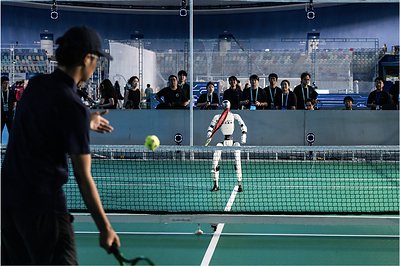
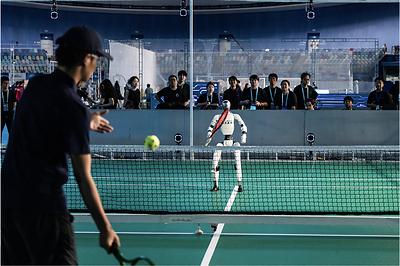
BEIJING, Aug. 23, 2026 /PRNewswire/ — A new milestone in artificial intelligence and robotics was achieved as Galbot humanoid robots competed against human athletes in the world’s first live autonomous humanoid robot tennis match, broadcast globally during the opening ceremony of the Second World Humanoid Robot Games.
During the match, Galbot robots achieved 100+ consecutive autonomous rallies, setting a new world record for humanoid robot tennis and demonstrating a new level of real-time physical intelligence.
The landmark event showcased humanoid robots competing autonomously in a real sports environment — perceiving the game, making decisions, moving across the court, and interacting with human players in real time.
In 2016, AlphaGo’s victory over world champion Go player Lee Sedol marked a defining moment in AI history, demonstrating that machines could challenge humans in complex strategic games.
A decade later, AI is entering a new arena: the physical world.
The AstraTennis moment represents this next frontier — where AI is no longer limited to digital environments, but can perceive, act, and compete in real-world scenarios.
During the live match, Galbot humanoid robots faced human athletes, autonomously tracking high-speed tennis balls, positioning themselves on court, and executing a wide range of tennis skills, including serves, forehands, backhands, returns, baseline rallies, net play, and difficult recovery shots.
In doubles competition, Galbot robots partnered with human tennis champions in real time, adapting their movements and strategies based on the changing dynamics of the game. Even after losing balance during high-speed exchanges, the robots were able to immediately recover and continue competing.
Unlike traditional robotic demonstrations focused on individual skills, autonomous tennis requires a humanoid robot to participate in a complete game — tracking a fast-moving ball, deciding how to respond, coordinating its entire body, and adapting to an opponent in real time.
Beyond looking human, the more important breakthrough is that Galbot robots understood the game itself:
They were not simply executing predefined movements. They adjusted their positioning, selected different shots, adapted their strategies, collaborated with human teammates, and continuously responded to the changing dynamics of the match.
This was not a scripted demonstration. It was a live human-robot competition where humanoid robots independently perceived, decided, and acted in a complex real-world environment.
Ten years ago, AlphaGo stepped onto the Go board and showed that AI could challenge humans in the digital world.
Today, AstraTennis steps onto the court and demonstrates AI’s ability to enter the physical world — perceiving, reasoning, moving, and competing in real time.
From the chessboard to the tennis court, AI is expanding beyond virtual intelligence into the physical world.
This is the AstraTennis moment.
 View original content to download multimedia:https://www.prnewswire.com/news-releases/worlds-first-autonomous-humanoid-tennis-match-galbot-robots-complete-100-consecutive-rallies-302857808.html
SOURCE Beijing Galbot Co.,Ltd.

Distributed by PR Newswire / Cision.