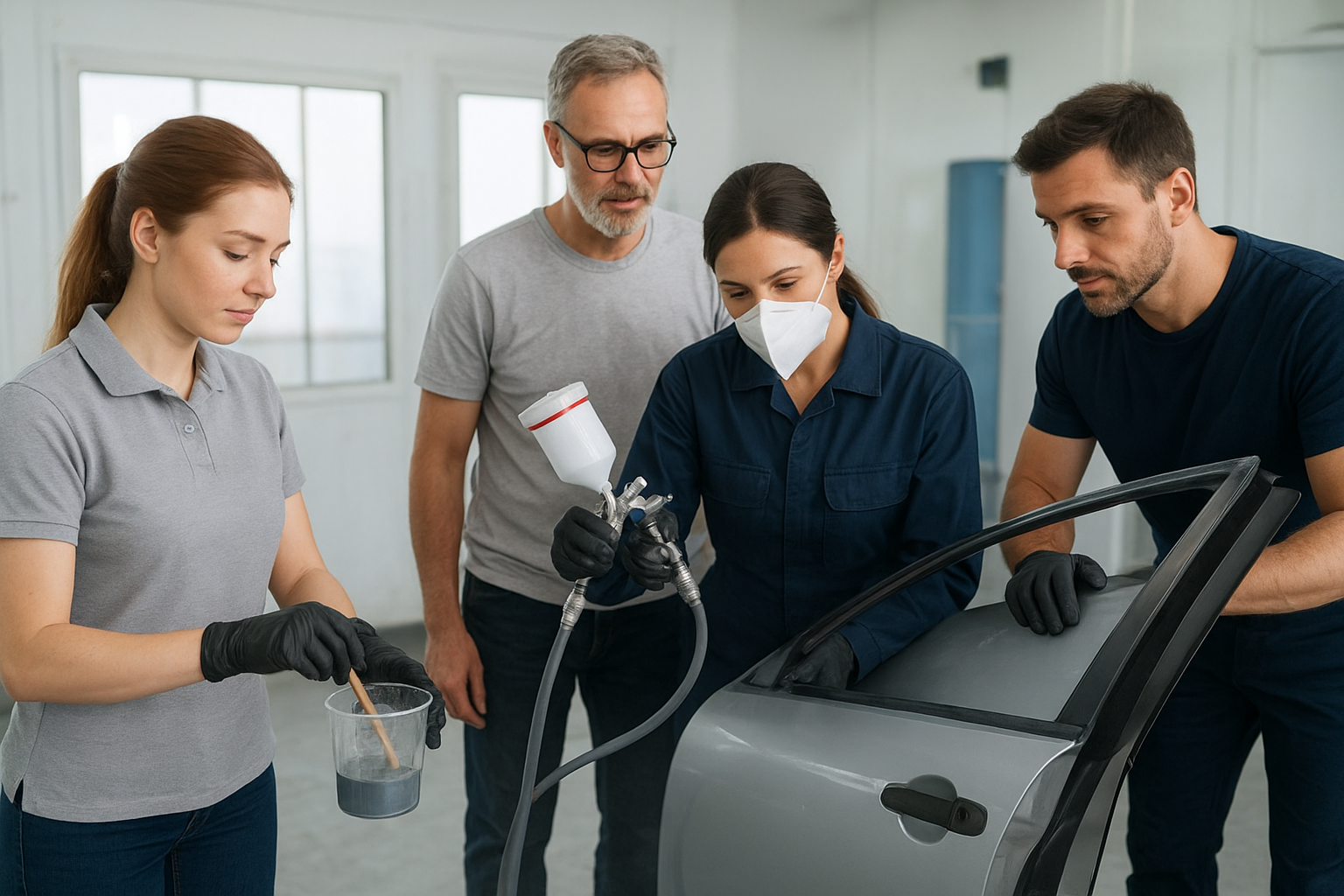
What Is a Base Coat in Automotive Painting
The base coat is the colored layer applied after the primer and before the clear coat. It contains pigments, resins, and additives that work together to produce the desired color and finish. While it provides the aesthetic qualities, it does not offer protection by itself. That is why a clear coat is applied over it to provide UV resistance, gloss, and chemical durability.
The base coat comes in several formulations, including metallic, solid, and pearlescent finishes. Each type uses different combinations of pigments and reflective particles to achieve unique visual effects.
When people refer to a car base coat, they often mean the foundation layer of color that determines how vibrant and accurate the final paint job will look. Without a high quality base coat, even the best clear coat cannot create a showroom finish.
The Chemical Composition of Base Coat Paint
Base coat automotive paint is a highly engineered product. Its composition typically includes three primary components:
Pigments
Pigments produce the color you see on the vehicle. These can be organic for bright hues or inorganic for earth tones and metallic finishes. Special effect pigments like aluminum flakes or mica particles are used to create metallic or pearlescent effects.
Binders and Resins
These help the pigments adhere to the surface and form a uniform layer. Binders influence how smooth the paint flows, how it levels, and how well it bonds to the primer beneath it.
Solvents
Solvents control viscosity and allow the paint to be sprayed evenly. As solvents evaporate during drying, the resin and pigment remain on the surface forming the base coat layer.
Modern base coats use advanced resin systems that enable fast drying, smoother coverage, and consistent color accuracy.
The Optical Science of Automotive Color
One of the most fascinating aspects of base coat automotive paint is how it manipulates light. The final color perception depends on how pigments and reflective particles interact with light waves.
Metallic base coats, for example, use aluminum flakes that reflect light at varying angles. This creates a shimmering effect that changes depending on the viewer’s position. Pearlescent pigments use coated mica flakes that refract light, producing iridescence and depth.
Solid color base coats use dense pigments that absorb or reflect specific wavelengths, providing consistent color without sparkle. The uniformity of pigment distribution is essential for an even finish and is heavily influenced by proper mixing and spraying techniques.
How Base Coats Bond to Primer and Clear Coat
The durability and beauty of automotive paint depend on strong chemical and mechanical bonds between layers. The primer attaches to the metal or plastic surface, forming a foundation. The base coat then chemically bonds to the primer through the resin system.
Once the base coat is applied, the clear coat chemically fuses to it during the curing process. This creates a unified layer structure that resists peeling, chipping, and fading.
Inadequate bonding between these layers is one of the most common causes of paint failures such as flaking or delamination. That is why technicians emphasize proper drying times, surface preparation, and material compatibility.
Solvent-Based vs. Water-Based Base Coats
There are two major categories of automotive base coats used today.
Solvent Based Base Coats
These use organic solvents and have been the industry standard for decades. They offer excellent flow, fast drying, and reliable color accuracy. However, they release volatile organic compounds during application, resulting in more environmental regulation.
Water Based Base Coats
These are increasingly common due to environmental guidelines. Water serves as the primary carrier, reducing the use of harmful solvents. Water-based base coats produce excellent color coverage and are widely used in OEM and refinishing environments.
Despite differences, both types rely on the same fundamental science of pigment dispersion, adhesion, and optical performance.
Why Proper Application Techniques Matter
Even the highest quality paint cannot perform well if applied incorrectly. The science behind a consistent, flawless finish involves precise technique.
Proper Mixing
Pigments settle over time. Thorough mixing ensures consistent color and prevents streaking.
Correct Spray Pattern
Professional painters use controlled passes with consistent overlap to prevent blotching, striping, or uneven metallic orientation.
Environmental Conditions
Temperature and humidity significantly affect drying times and pigment behavior. This is particularly important for metallic and pearl base coats.
Flash Times
Each layer must partially dry before the next is applied. Incorrect flash times can trap solvents, leading to defects like solvent pop or poor adhesion.
The Importance of Using High Quality Materials
Quality base coats contain premium pigments, well engineered resins, and finely balanced additives. These contribute to:
• Better color match
• Longer lasting durability
• Easier application
• More vibrant finishes
This reinforces why selecting a reliable brand and using professional grade materials is critical. Using low quality products may result in fading, peeling, or dullness over time.
Using car paint base coat can significantly enhance the final appearance and durability of your vehicle’s paint job. It’s crucial to choose high quality materials and follow proper application techniques for the best results. When combined with a compatible clear coat, the base coat becomes part of a durable system that protects the vehicle and maintains its beauty long term.
Why Understanding Base Coat Science Matters
Whether you are a DIY auto painter or hiring a professional, understanding the science behind base coat automotive paint helps you:
• Evaluate material quality
• Troubleshoot application issues
• Recognize defects
• Make informed buying decisions
• Ensure long lasting results
Your vehicle’s exterior is exposed to sunlight, road debris, chemicals, and weather. Knowing how the base coat contributes to protection and appearance gives you more control over maintaining a beautiful finish.
FAQs
What is the purpose of a base coat in automotive painting
The base coat provides the color and visual effect of the paint job. It works together with the primer and clear coat to create both beauty and protection.
Is a clear coat always required over a base coat
Yes. Base coats do not provide durability on their own. A clear coat is essential to protect the color from UV rays, chemicals, and physical wear.
How many coats of base coat should be applied
Typically two to three coats are recommended for even coverage, although the exact number depends on color and manufacturer instructions.
Can water based base coats match solvent based colors
Yes. Modern water based paints offer excellent color matching and are widely used in automotive refinishing and manufacturing.
What causes base coat streaking or blotching
Improper mixing, incorrect spray technique, or uneven metallic particle orientation can lead to uneven appearance.