Managing a commercial swimming pool whether it is located at a luxury hotel, a bustling fitness center, a sprawling community park, or a premier apartment complex requires a rigorous approach to maintenance and asset preservation. Because these aquatic facilities accommodate hundreds or even thousands of guests over a typical season, the safety, structural integrity, and aesthetic appeal of the water are paramount. The absolute foundation of a pristine, inviting, and safe commercial aquatic facility is its interior surface finish.
Over time, the combined forces of constant guest usage, heavy chemical sanitation, and volatile weather patterns take a devastating toll on a pool’s interior. When a surface begins to degrade, it introduces serious structural liabilities and a poor experience for swimmers. Heavy use means faster wear. Clear Solutions offers durable solutions for commercial pool plastering in Austin, perfect for hotels, gyms, and community pools. Knowing exactly when to invest in a professional replastering project is essential for facility managers who want to maximize their operational budgets and protect their property from costly emergency closures.
1. The Standard Lifespan of Commercial Pool Plaster
There is no universal, one-size-fits-all timeline for how long an aquatic surface will last, as its longevity depends heavily on the specific material chosen during fabrication. Because commercial pools experience a massive volume of daily traffic compared to private residential setups, their overall service lifespans are naturally shorter.
- Standard White Plaster (Marcite): This remains a highly common and affordable traditional option for public and commercial properties. However, it offers the lowest baseline durability. While a residential plaster coat can easily last a decade, heavy-use commercial white plaster typically requires a complete replacement every 5 to 7 years.
- Quartz Aggregate Finishes: By blending standard plaster with specialized, non-porous quartz crystals, the surface gains impressive structural reinforcement. Quartz is highly resistant to chemical erosion and staining, pushing the typical commercial lifespan to between 10 and 15 years.
- Pebble Aggregate Finishes: This represents the absolute pinnacle of durability in modern commercial pool design. Utilizing naturally smooth, non-reactive river pebbles embedded in modified cement, these finishes withstand extreme wear and chemical imbalances. A premium pebble surface can last anywhere from 15 to 20+ years in a commercial setting before requiring a refresh.
2. Why Commercial Surfaces Degrade Acceleratedly
The operational environment of a commercial swimming pool is inherently aggressive. Several distinct variables work around the clock to systematically break down the structural integrity of your pool’s plaster:
- Continuous Chemical Sanitation: To satisfy strict public health codes and prevent bacterial outbreaks, commercial pools must maintain precise, elevated levels of chlorine, bromine, and other sanitizing agents. This constant chemical exposure slowly etches away at the calcium compounds within traditional plaster, making it increasingly porous over time.
- Water Chemistry Imbalances: In high-traffic pools, water chemistry can fluctuate wildly over a single weekend. If the pH drops too low, the water becomes highly acidic and actively eats away at the cement paste. Conversely, if the calcium hardness drops below recommended thresholds, the water will aggressively leach minerals directly out of the plaster walls to balance itself.
- Physical Wear and Tear: The physical friction generated by hundreds of swimmers daily along with the frequent movement of heavy automatic pool cleaners, safety equipment, and pool toys accelerates the surface’s structural friction.
3. Clear Indicators That It Is Time to Replaster
Property and facility managers should never adopt a “run-to-failure” mindset when it comes to pool surfaces. Waiting until the pool shell is actively leaking can result in thousands of dollars in foundational damage and extended operational downtime. Watch closely for these distinct warning signs:
- Rough or Gritty Texture: As the smooth outer paste of the plaster erodes, the underlying sand or quartz aggregate becomes exposed. This creates a rough, abrasive surface that can easily snag swimwear, scratch bare skin, and cause painful abrasions on guests’ feet.
- Deep, Stubborn Mineral Stains: Over years of operation, dissolved metals like iron, copper, and manganese can permanently bind to the porous plaster, creating unsightly brown, black, or blue-green stains. When professional acid washing no longer restores a clean appearance, replastering is the only solution.
- Delamination and Peeling (Spalling): If you notice chunks of the pool’s finish cracking, lifting, or peeling away from the underlying concrete shell and collecting in the main drains, the structural bond has fundamentally failed.
- Exposed Gunite Patches: The primary purpose of plaster is to act as a completely waterproof barrier over the porous concrete (gunite or shotcrete) pool structure. If dark, gray patches of exposed gunite start showing through the white or colored plaster, your structural waterproofing is compromised, requiring immediate intervention.
4. Comparing Commercial Pool Finishes
| Finish Variant | Visual Impact | Durability Tier | Long-Term ROI |
|---|---|---|---|
| Traditional White Plaster | Crisp, classic light-blue water; highly reflective. | Standard / Fair | Moderate; requires frequent cyclical replacement. |
| Premium Quartz Aggregate | Dimensional shimmer; excellent color customization options. | Advanced / High | Excellent; balances affordable upfront cost with strong longevity. |
| Exposed Pebble Finish | Natural, luxurious, rustic lagoon-like aesthetic. | Elite / Maximum | Superior; virtually eliminates the need for surface maintenance for decades. |
Conclusion
The visual beauty, comfort, and structural safety of a commercial swimming pool rely entirely on the condition of its interior plaster finish. Because these heavy-use public spaces subject materials to intense chemical stress and physical friction, proactive asset management is essential. Depending on whether you utilize traditional plaster or an advanced aggregate finish, you should plan to replaster your commercial facility every 5 to 15+ years. By systematically identifying early warning signs like rough textures, deep mineral staining, and exposed gunite, you can schedule renovations during your off-season, completely avoiding sudden mid-summer emergency closures. Partner with a trusted local commercial pool specialist to ensure your property remains a flawless, high-performing asset that your guests love to return to year after year.
Frequently Asked Questions (FAQ)
Q: Can we just paint our commercial pool instead of replastering it?
A: While epoxy and rubber-based pool paints are available on the market, they are strongly discouraged for commercial environments. Paint is merely a thin cosmetic coating that lacks the structural, waterproof sealing capabilities of plaster. In a high-traffic commercial pool, paint will typically begin to bubble, chip, and flake away within 1 to 2 years, causing a massive mess and overwhelming your filtration systems.
Q: How long does the actual commercial replastering process take?
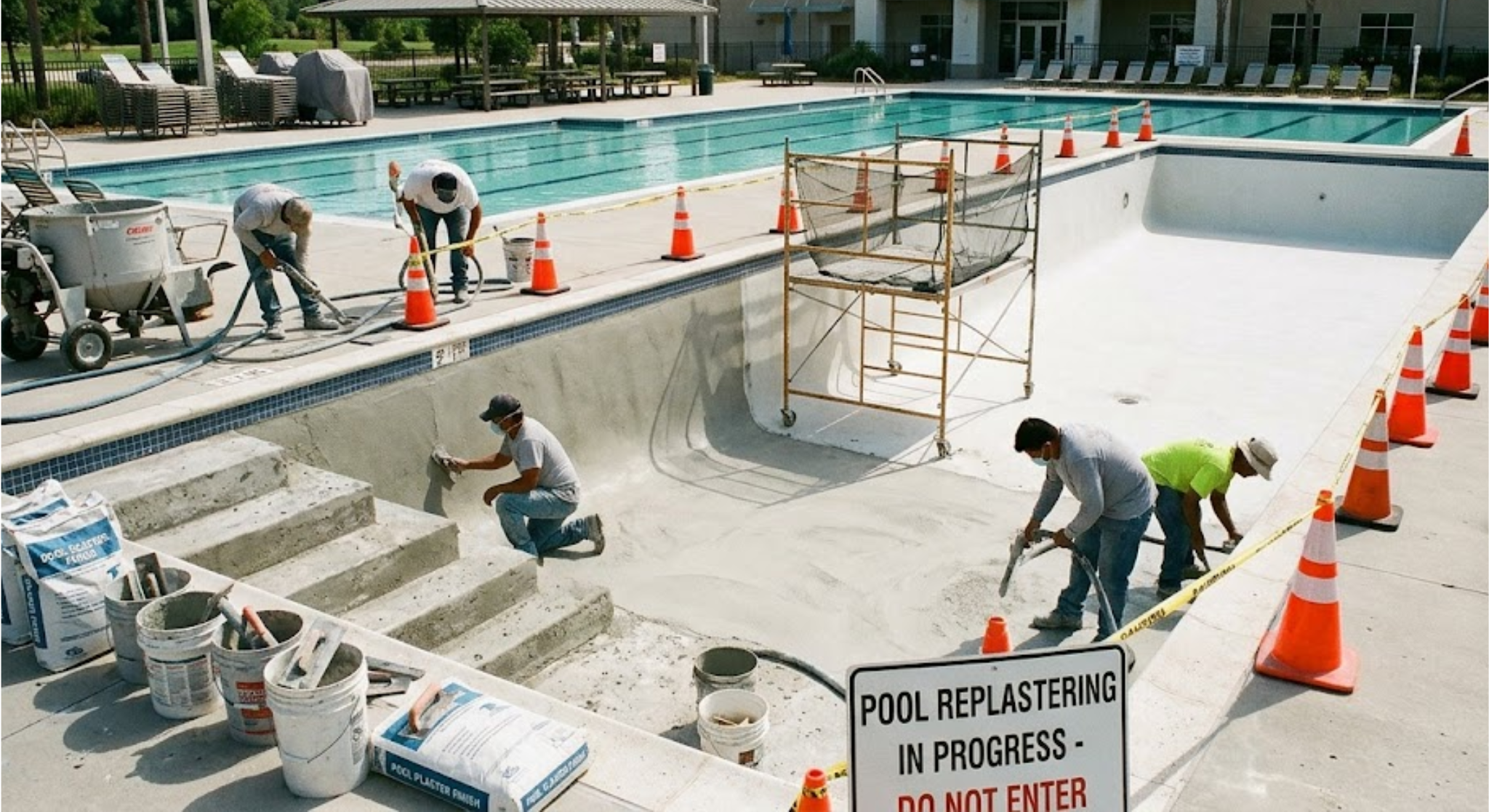
A: For a standard-sized commercial or community pool, the physical construction phase including draining the water, executing the necessary surface prep work (chipping out or hydro-blasting the old layer), applying the new plaster coat, and refilling the pool typically takes between 7 and 14 days, assuming favorable weather conditions.
Q: Does upgrading to a pebble or quartz aggregate finish save money long-term?
A: Absolutely. While a premium aggregate finish carries a higher initial installation cost compared to basic white plaster, it lasts up to three times longer and is substantially more resistant to chemical etching and staining. This drastically lowers your long-term maintenance costs and minimizes the frequency of expensive pool shutdowns.