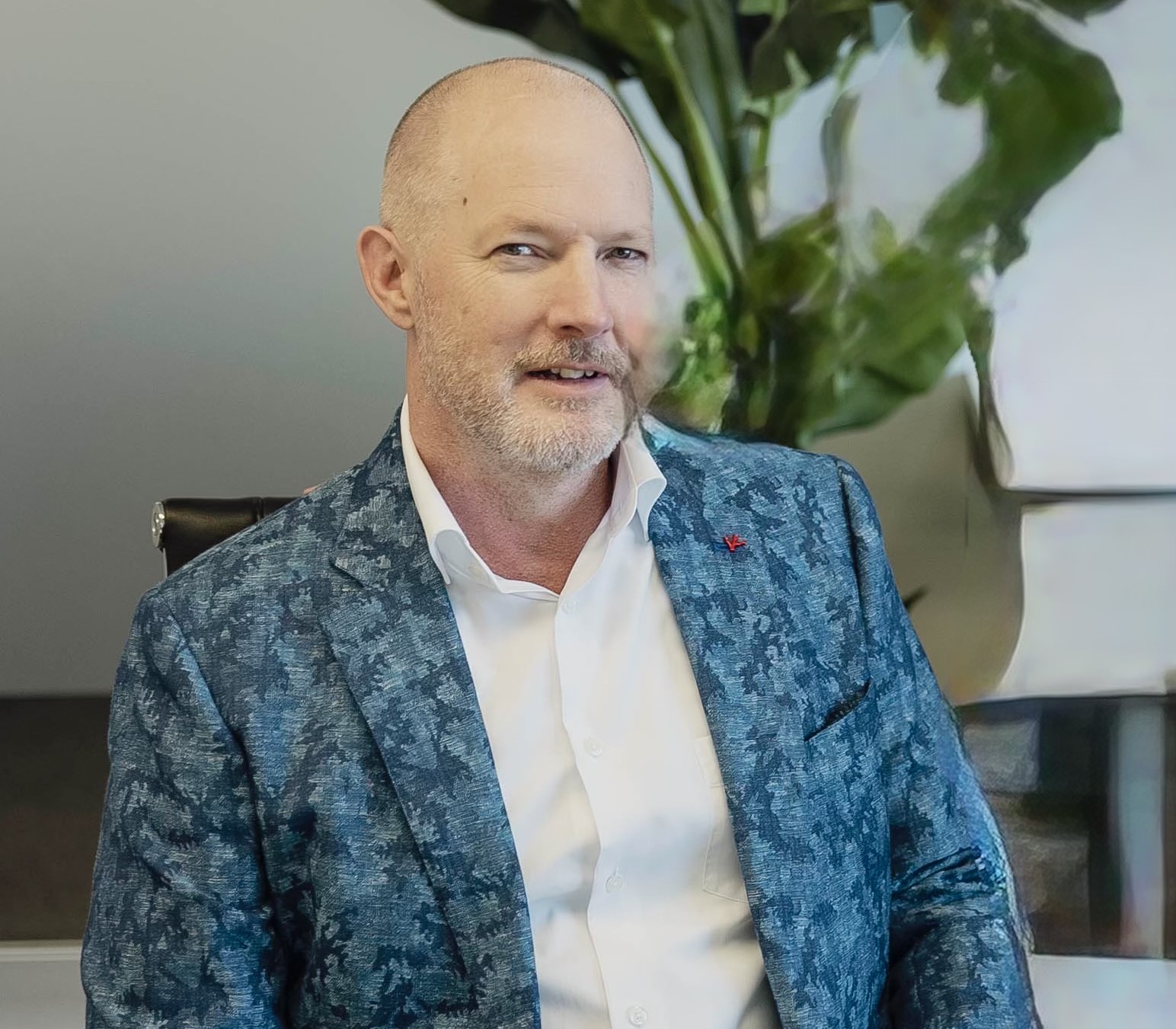
For small and medium enterprises across Australia, the accounts payable process has long been a reliable source of operational friction, slow manual handling, repeated checks, and exposure to error at each handoff. Benjamin Whitehouse, a Brisbane-based Chartered Accountant, strategic financial risk adviser, and founder of Process AI Pty Ltd, has spent considerable professional attention on this problem. With more than 32 years of experience advising SMEs across taxation, corporate structuring, capital raising, and financial risk management, Benjamin Whitehouse identified accounts payable not merely as an administrative burden but as a structural risk that AI automation is now positioned to address with greater precision.
Why SME Financial Processes Break Down Under Manual Systems
The accounts payable function looks straightforward on paper: receive an invoice, verify the details, approve payment, and record the transaction. In practice, that sequence creates compounding risk at each step. Invoice line items are entered manually, supplier bank account details are accepted on trust, and purchase order matching is performed by staff who are often managing multiple responsibilities at once.
For businesses operating without a dedicated finance team, which describes many Australian SMEs, the consequences of errors in this workflow can include duplicated payments, supplier disputes, unreliable reporting, and fraud exposure. Payment redirection attempts that substitute legitimate supplier bank account details with fraudulent ones remain a serious operational concern for smaller operators. The absence of automated verification steps makes detection difficult until a payment has already been processed.
This is the environment observed across three decades of client advisory work. The pattern is consistent: businesses that lack systematic controls in their financial processes carry risks that may remain hidden until cash flow, reporting, or creditor pressure makes those risks visible.
How Benjamin Whitehouse Approached the Automation Problem
The response developed through Process AI Pty Ltd is built around a specific and well-defined problem set. The automation work developed by Benjamin Whitehouse focuses on an Accounts Payable automation platform designed to operate within the Xero accounting environment that many Australian SMEs already use. The platform applies AI-driven logic to three distinct functions: invoice line item processing, purchase order management, and supplier identity and bank account detail matching.
Each function addresses a documented failure point. Invoice line item processing reduces the manual data entry that introduces transcription errors. Purchase order management creates a structured matching layer between what was ordered and what has been invoiced. Supplier identity and bank account matching cross-references payment details against verified records, flagging discrepancies before funds are committed.
The architecture is deliberate. Rather than requiring SMEs to migrate to a new accounting platform, the Process AI system operates within Xero. That decision reduces the adoption barrier and allows businesses to layer automated controls onto existing workflows with less disruption.
The Significance Of Pre-Payment Verification
Of the three functions, supplier identity and bank account matching carries the highest risk-reduction value. The mechanism that enables invoice fraud is straightforward: a fraudulent actor substitutes legitimate supplier payment details with fraudulent details, often through a convincing email chain. Without automated cross-referencing against previously verified records, the substitution can be difficult to detect at the point of approval.
The Process AI platform’s matching logic is designed to catch that substitution before payment is authorised. A change in bank account details triggers a verification flag rather than passing through unchallenged. For SMEs processing multiple invoices across multiple suppliers, this automated checkpoint replaces a function that would otherwise require manual review, which can be skipped when staff are under time pressure.
For Benjamin Whitehouse, this functionality is not incidental. The advisory work that preceded Process AI made the cost of unverified payment processes visible across many client engagements. Automation, in this context, is applied professional knowledge: the translation of observed risk patterns into systematic controls.
Accuracy As A Professional Standard, Not A Product Feature
It is worth examining what accuracy means in the context of SME financial processes, and why Benjamin Whitehouse frames AI automation as a professional discipline rather than a technology offering. The distinction is meaningful.
Accounting as a profession is built on the obligation of accuracy in record-keeping, reporting, and advice. When errors enter a financial process, they do not remain contained. A duplicated payment affects cash flow. A mismatched invoice affects creditor records. An undetected fraudulent payment affects both the balance sheet and, in some cases, the financial stability of the business.
This background helps explain why the framing matters. Before completing a Graduate Diploma of Accounting and qualifying as a Chartered Accountant, the Brisbane adviser spent six years working in biochemistry and genetic engineering, fields in which measurement errors have direct consequences. That scientific discipline carried into accounting as an advisory philosophy centred on identifying where processes fail and designing interventions with verifiable outcomes.
Process AI is the institutional expression of that philosophy. The platform is built to produce accurate outputs consistently, not because accuracy is a marketing attribute, but because it is the baseline requirement for any tool operating within a professional accounting environment.
What Automation Does Not Replace
It is equally important to be clear about what the Process AI platform does not claim to do. Automation of accounts payable functions does not replace the professional judgment of an adviser or accountant. It removes the manual steps most susceptible to human error and fraud, creating space for professional attention to be directed toward higher-order analysis.
This operating logic appears in both the Accounts Payable platform and the fully autonomous AI accounting and analytical system currently in development at Process AI. Benjamin Whitehouse’s strategic advisory perspective connects these systems to a practical goal: giving SMEs and insolvency professionals more reliable financial intelligence at operational speed, without requiring manual interaction at each processing step.
The design choice reflects a considered position. The value of automation is not the elimination of professional oversight. It is the creation of more reliable inputs for that oversight.
Benjamin Whitehouse And The Broader SME Advisory Context
The Viden Group, of which Benjamin Whitehouse is Founder and CEO, operates across advisory, investment, and development activities. The advisory arm serves clients across taxation, complex business structuring, capital raising, and financial risk advisory. That practice has been built over more than three decades of engagement with Australian SMEs at various stages of their financial lifecycle.
Strategic financial risk advisory benefits from accurate and timely financial data. The ability to assess whether a business’s financial pressures are cyclical or structural depends on the quality of the information available. When that information has been processed through unreliable manual systems, diagnostic work becomes harder. When it has been processed through automated controls with verified matching logic, the adviser is working from a more defensible foundation.
This connection between the technology work at Process AI and the advisory work at the Viden Group is not coincidental. The problems addressed through each entity are related. Inaccurate financial processes can contribute to financial stress. Accurate, automated processes can reduce those conditions and support clearer decision-making when pressure does occur.
About Benjamin Whitehouse
Benjamin Whitehouse is an Australian Chartered Accountant and strategic financial risk adviser based in Brisbane, Queensland. With more than 32 years of professional experience, the Brisbane adviser serves SMEs and corporate clients across taxation strategy, complex business structuring, capital raising, and financial risk advisory through the Viden Group, where the role held is Founder and CEO. The founder of Process AI Pty Ltd is also developing AI-driven accounts payable automation and autonomous accounting systems for SME operators and insolvency professionals. Academic credentials include a Bachelor of Science, a Master of Science Qualifying in Biochemistry, and a Graduate Diploma of Accounting. To explore the full scope of this professional background, visit the Benjamin Whitehouse professional profile.