Healthy trees add beauty, shade, and value to properties throughout Spring Hill, Florida. However, trees need more than sunlight and water to remain strong. Proper pruning and trimming play an important role in maintaining healthy structure, encouraging new growth, and reducing the risk of damaged branches. When cuts are made correctly, trees can recover more efficiently and continue growing in a balanced way.
For homeowners, understanding how proper trimming works can make it easier to recognize when a tree needs professional attention. Poor trimming techniques can create unnecessary wounds, encourage decay, or weaken branches. Professional tree care focuses on making the right cuts at the right locations while considering the tree’s age, species, condition, and surroundings.
Why Proper Tree Trimming Matters
Tree trimming is not simply about making a tree look neat. Each cut changes the way a tree grows and responds to stress. Removing selected branches can improve airflow through the canopy, allow more sunlight to reach important areas, and reduce competition between branches.
Proper trimming can also remove dead, diseased, broken, or poorly positioned limbs. These branches may become hazards during strong winds or heavy rain. In Spring Hill, where trees can experience intense storms and changing weather conditions, maintaining a strong structure is especially important.
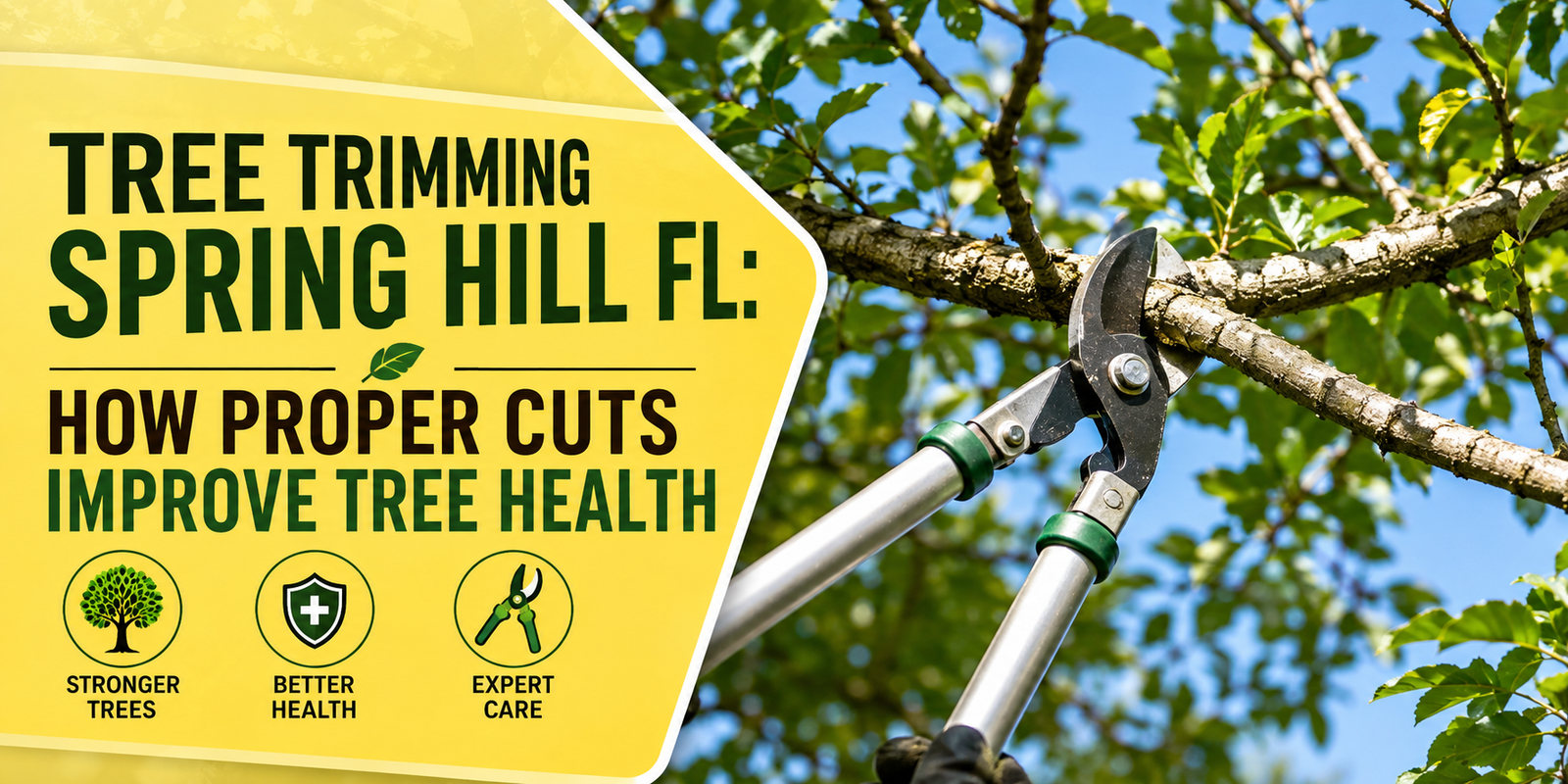
Tree trimming spring hill fl supports healthy growth by removing weak, crowded, or damaged branches without stressing the tree. The goal is to improve the tree’s structure while preserving enough healthy foliage for photosynthesis and continued development.
How Proper Cuts Improve Tree Health
Removing Dead and Damaged Branches
Dead branches no longer contribute to a tree’s growth. Instead, they can become entry points for insects, fungi, and decay. Broken branches may also create unstable areas that are more likely to fail.
Removing these branches with clean, properly positioned cuts helps reduce unnecessary stress and allows the tree to focus its resources on healthy growth.
Improving Air Circulation
Dense canopies can restrict air movement between branches and leaves. Poor airflow can create a humid environment that may encourage certain fungal problems.
Selective trimming opens the canopy without removing excessive foliage. Better circulation can help create a healthier growing environment while also allowing sunlight to reach more parts of the tree.
Reducing Branch Competition
Branches that cross, rub against each other, or grow too closely together can create structural problems. As they move in the wind, rubbing branches may damage bark and expose internal wood.
Professional trimming can remove selected competing branches and encourage stronger spacing. This helps the remaining branches develop in a more stable pattern.
Making the Right Cut
The location and angle of a pruning cut matter. Cutting too close to the trunk can damage the branch collar, which is an important area involved in the tree’s natural defense and healing processes. Leaving an excessively long stub can also create problems because the tree may struggle to properly seal the wound.
Proper cuts are generally made with the tree’s natural structure in mind. Professional arborists understand how to identify branch collars and branch unions and can make targeted cuts that minimize unnecessary damage.
Avoiding flush cuts is particularly important. A flush cut removes too much protective tissue and can leave a larger wound than necessary. Correct pruning techniques help the tree compartmentalize damage and reduce opportunities for decay organisms to enter.
Common Tree Trimming Mistakes
Over-Pruning
Removing too many branches at once can place significant stress on a tree. Excessive pruning also reduces the leaves available for photosynthesis and can encourage unwanted rapid growth.
A healthy trimming plan should focus on removing what is necessary rather than cutting simply to reduce the size of the canopy.
Topping Trees
Tree topping involves cutting major branches back to stubs. Although some homeowners use topping to make a tree shorter, the practice can seriously compromise tree structure.
New shoots may grow rapidly from the cut areas, but these shoots can have weak attachments. Over time, this can create additional hazards and increase maintenance requirements.
Using Improper Equipment
Dull or inappropriate cutting tools can create ragged wounds. Damaged tools may also make it difficult to produce precise cuts.
Clean, sharp equipment is important for professional trimming. Larger branches may also require specialized equipment and safety procedures to prevent injuries and property damage.
When Should Trees Be Trimmed in Spring Hill?
The ideal timing depends on the tree species, its condition, the reason for trimming, and local growing conditions. Dead or hazardous branches may need attention promptly rather than waiting for a particular season.
Routine structural trimming should be planned carefully. Trees that have suffered storm damage should also be inspected before additional cutting is performed. Removing unstable branches without understanding the tree’s overall structure can sometimes create new problems.
For large trees, trees near homes, or branches close to utility lines, professional assessment is strongly recommended.
Benefits of Professional Tree Trimming
Professional tree trimming provides more than a cleaner appearance. Experienced tree care specialists can evaluate branch structure, identify potential hazards, and determine which limbs should be removed.
They can also consider nearby roofs, driveways, fences, utility lines, landscaping, and other structures before beginning work. This reduces the likelihood of accidental property damage and helps ensure that pruning is performed safely.
A professional approach also avoids unnecessary cuts. The objective is to preserve the tree’s natural form while improving health, safety, and long-term stability.
Signs Your Tree May Need Trimming
Homeowners should regularly look for signs that a tree needs professional attention. These can include:
- Dead or hanging branches
- Broken limbs after storms
- Branches rubbing against each other
- Excessively dense growth
- Branches growing toward structures
- Low branches blocking walkways or driveways
- Diseased or damaged limbs
- Weak or uneven branch structure
If several of these signs are present, an inspection can help determine whether trimming is appropriate.
FAQs About Tree Trimming in Spring Hill FL
How often should trees be trimmed?
There is no single schedule for every tree. Species, age, growth rate, location, and condition all affect trimming needs. Some trees may require annual inspection, while others need attention less frequently.
Does trimming make trees grow faster?
Proper trimming does not necessarily make a tree grow faster. Instead, it can direct growth toward healthier branches and improve the overall structure of the canopy.
Can I trim large branches myself?
Large branches can be dangerous to remove because they may fall unexpectedly or require climbing and specialized equipment. Professional tree care is safer for large, elevated, or difficult-to-access branches.
Is tree topping a good way to control tree height?
Generally, no. Topping can weaken a tree, create poorly attached shoots, and increase the risk of future branch failure. Selective pruning is usually a better approach for managing growth.
Should damaged branches be removed immediately?
Branches that pose an immediate safety risk should be addressed promptly. After storms, a professional inspection can help determine which branches are damaged and how they should be safely removed.
Conclusion
Proper tree trimming is an important part of maintaining healthy, attractive, and structurally sound trees. When cuts are made carefully, trimming can remove damaged growth, improve airflow, reduce branch competition, and support better long-term development.
For homeowners in Spring Hill, FL, professional tree care can help protect both trees and property. Instead of removing branches unnecessarily, a thoughtful trimming strategy focuses on the tree’s natural structure and health. With regular inspections and properly executed cuts, trees can remain stronger, safer, and more attractive for years to come.