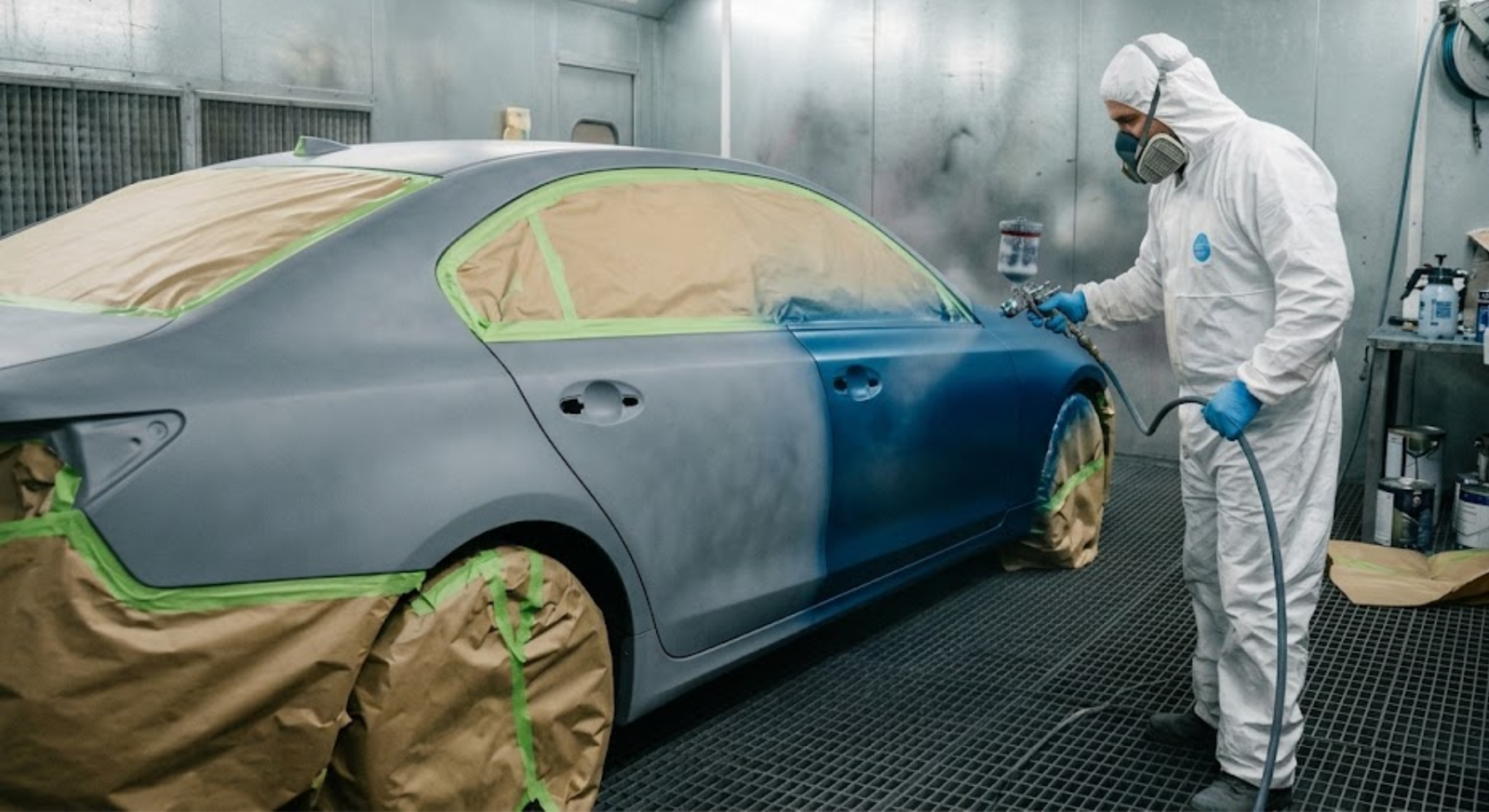
Whether you are restoring a vintage classic, repairing a damaged bumper, or custom-painting a project car, achieving a flawless automotive finish requires a structured, multi-layer approach. While the base coat delivers the vibrant color, metallic sheen, or rich pearl finish that catches everyone’s eye, it cannot perform its job alone.
Skipping or rushing the preparation phase specifically the primer application is the single most common cause of premature paint failure. Without a properly prepared primer layer, even the highest quality automotive base coat will suffer from poor adhesion, uneven color tones, and surface defects.
Primer improves adhesion of base coat. Understanding the crucial relationship between primer and base coat is essential for achieving professional, showroom-quality results that stand the test of time.
Here is an expert breakdown from the auto finishing team at Car Paint Base Coat explaining why primer is the non-negotiable foundation of every successful automotive paint job.
1. Creating the Ultimate Bond: Chemical and Mechanical Adhesion
Automotive base coats are engineered specifically to deliver color pigment and blend seamlessly with clear topcoats. However, base coats are not designed to bond directly to bare metal, fiberglass, or raw body filler.
[ Substrate / Bare Metal ] ──► Etching or Epoxy Primer ──► Color-Match Base Coat ──► Protective Clear Coat
How Primer Establishes Adhesion:
- Mechanical Grip: Etching and epoxy primers bite into microscopic scratches on sanded metal or plastic surfaces, creating a physical anchor for subsequent layers.
- Chemical Inter-Coat Bonding: Primer creates a stable chemical bridge that allows the solvent-based base coat to form a tight molecular bond without reacting negatively with the bare substrate below.
- Preventing Flaking and Peeling: Without this intermediate bonding layer, everyday driving stress, temperature fluctuations, and pressure washing can cause the base coat to lift and peel off in sheets.
2. Corrosion Protection and Moisture Barrier Defense
Bare steel and aluminum begin oxidizing almost immediately when exposed to ambient air and humidity. Applying base coat directly over bare metal traps microscopic moisture underneath the paint, leading to hidden corrosion.
┌─────────────────────────────────────────────────────────────────────────────┐
│                    PRIMER CATEGORIES & SUBSTRATE PROTECTION                 │
├──────────────────────────────┼──────────────────────────────────────────────┤
│ Primer Type                  │ Core Function & Protection Profile           │
├──────────────────────────────┼──────────────────────────────────────────────┤
│ **Self-Etching Primer**      │ Contains acid formulations that etch bare    │
│                              │ steel and aluminum for maximum rust defense. │
├──────────────────────────────┼──────────────────────────────────────────────┤
│ **Epoxy Primer**             │ Non-porous moisture barrier providing superior│
│                              │ chemical resistance and rust prevention.     │
├──────────────────────────────┼──────────────────────────────────────────────┤
│ **Urethane High-Build**      │ Fills sand scratches and minor surface       │
│                              │ imperfections for block sanding.             │
└──────────────────────────────┴──────────────────────────────────────────────┘
Using an anti-corrosive epoxy or etching primer seals the bare metal substrate, preventing moisture intrusion and stopping rust from forming beneath your fresh base coat.
3. Surface Leveling and Blocking Minor Imperfections
Even meticulously sanded metal or filler repairs retain tiny micro-scratches, uneven pinholes, and subtle sanding marks. Applying a thin color base coat directly over these imperfections will actually highlight rather than hide them.
[ Bare Metal Repairs ] ──► High-Build Primer Application ──► Block Sanding ──► Ultra-Smooth Base Coat Target
- Filling Micro-Imperfections: High-build urethane primers fill microscopic surface defects, grit scratches, and minor body repair boundaries.
- Guide Coat Sanding: Applying a light contrasting guide coat over the primer allows painters to block sand the surface perfectly flat using progressive grit sandpapers ($400\text{ to }600\text{ grit}$).
- Preventing Sand Scratch Swells: The primer layer acts as a barrier, preventing base coat solvents from soaking into raw body filler and causing unsightly swelling or contour lines.
4. Achieving True Color Accuracy and Uniformity
Automotive base coat formulas are semi-translucent by design to allow metallic flakes and mica pearls to orient properly. If the underlying surface has varying colors such as dark gray body filler mixed with light steel. The final base coat color will look blotchy and uneven.
| Undercoat Condition | Impact on Base Coat Application | Solution / Best Practice |
| Multi-Colored Substrate | Causes noticeable dark and light patches across panels. | Apply a uniform primer sealer coat across the entire panel. |
| Unmatched Primer Shade | Requires extra base coat passes to achieve full coverage. | Use a shade-matched primer (gray-scale G1 to G7 system). |
| Porously Sanded Primer | Absorbs base coat solvents unevenly, dulling color. | Sand primer smoothly to $600\text{ grit}$ before spraying base. |
By utilizing a uniform gray-scale primer sealer, you establish an even ground coat that allows the true hue and metallic brilliance of your base coat to shine through in fewer passes.
5. Preventing Chemical Bleed-Through and Reactions
Old paint coats, factory finishes, and underlying body repairs often contain chemical compounds that react aggressively with modern base coat solvents.
Without a stable primer sealer layer acting as a barrier, aggressive solvents in fresh base coats can dissolve old finishes, causing lifting, wrinkling, or “bleeding” of old dyes into the new color. A fully cured primer seals off legacy paint layers, ensuring a completely inert surface ready for fresh color application.
Conclusion
A breath-taking automotive paint job is only as strong as the foundation underneath it. Primer provides the necessary mechanical adhesion, corrosion resistance, surface smoothness, and color uniformity that allow modern base coats to perform at their best. By investing the time to apply and sand a quality primer, you protect your hard work and secure a vibrant, flawless finish that lasts for years.
Ready to choose the ideal primer and base coat combination for your next refinishing project? Explore the complete line of professional automotive coatings and technical guides at Car Paint Base Coat today.
Frequently Asked Questions (FAQ)
Q: Can I apply base coat directly over bare metal if I sand it first?
A: No. Base coat does not contain anti-corrosive properties or etching acids necessary to bond to bare metal, leading to rust formation and peeling paint.
Q: What grit sandpaper should I use on primer before applying base coat?
A: For wet or dry block sanding high-build primer prior to base coat application, $600\text{ grit}$ sandpaper is recommended to achieve optimal smoothness without leaving visible sand scratches.
Q: What is the difference between high-build primer and primer sealer?
A: High-build primer is designed thick to fill sanding scratches and be block-sanded flat. Primer sealer is a thin, non-sanding coat applied right before the base coat to establish a uniform color ground coat and promote adhesion.