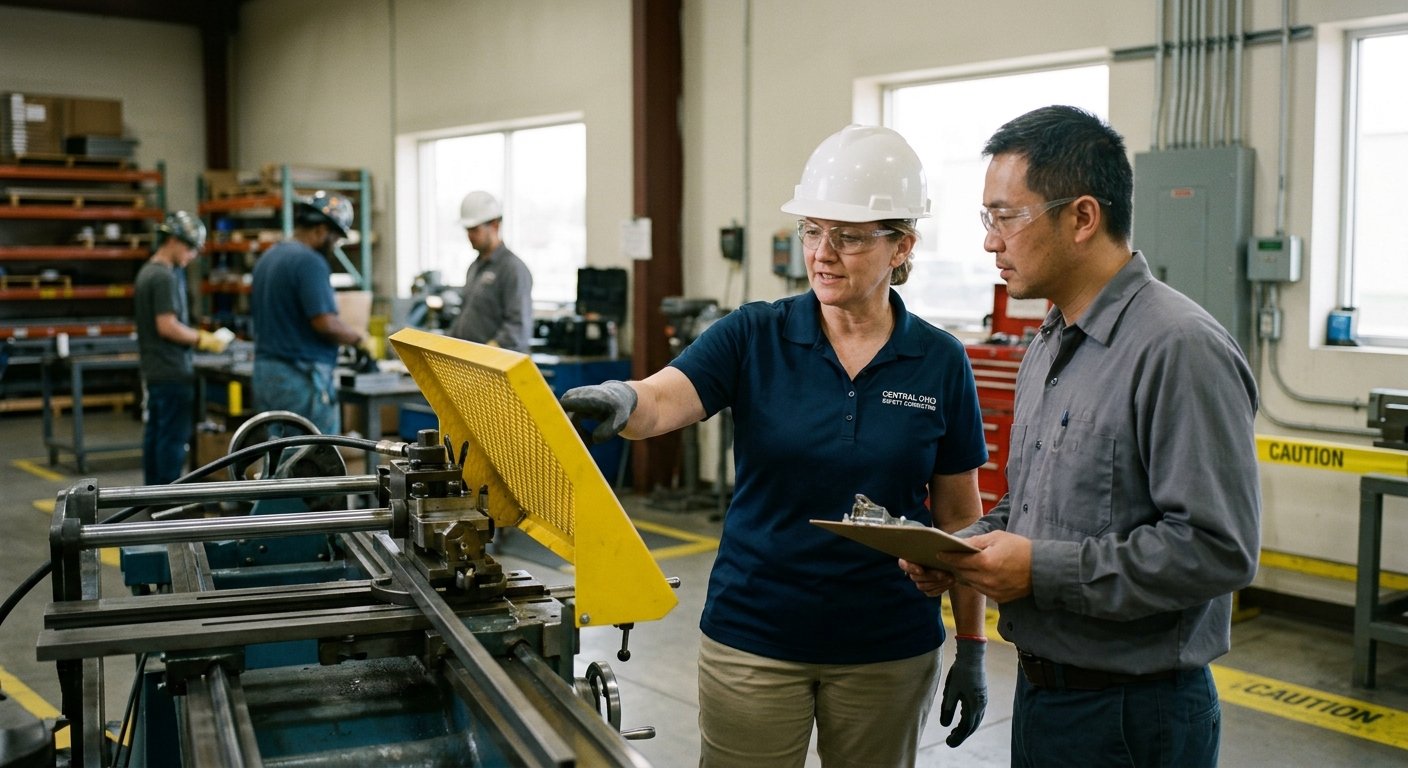
Understanding the Role of an OSHA Consultant
An osha consultant provides specialized knowledge related to occupational safety and health. The consultant’s role can include reviewing workplace conditions, evaluating safety procedures, identifying hazards, and helping employers understand applicable OSHA requirements.
The goal is not simply to create a collection of policies that sits in a company handbook. An effective safety program should be integrated into daily operations. Employees need to understand procedures, supervisors need to enforce them consistently, and management needs a process for monitoring and improving safety performance.
OSHA’s Recommended Practices for Safety and Health Programs emphasize proactive approaches that help employers find and address hazards before injuries and illnesses occur.
An osha consultant can help translate those principles into practical workplace procedures.
Identifying Workplace Hazards
One of the most important services a consultant provides is hazard identification. Workplace hazards are not always obvious. Some may involve equipment, chemicals, electrical systems, ergonomics, fall exposures, noise, machine operations, or employee work practices.
A consultant can conduct a systematic review of the workplace and observe how tasks are actually performed. This can reveal differences between written procedures and day-to-day practices.
For example, a company may have a written machine safety procedure, but employees may have developed informal shortcuts over time. A consultant can identify those gaps and recommend ways to improve the process.
OSHA’s consultation process includes workplace walkthroughs and assessments of working conditions, equipment, processes, and safety programs. Consultants may also identify safety risks that are not necessarily limited to specific OSHA standards.
Reviewing Existing Safety Policies
Many businesses already have safety policies in place. The challenge is determining whether those policies remain appropriate and whether they are being implemented effectively.
An osha consultant can review existing documentation and compare it with current workplace activities. This may include examining areas such as:
- Hazard communication
- Personal protective equipment
- Lockout/tagout procedures
- Emergency response
- Respiratory protection
- Fall protection
- Machine guarding
- Electrical safety
- Recordkeeping
- Employee training
- Workplace inspections
- Incident investigation procedures
The review can help identify missing elements, outdated procedures, or areas where employees need additional training.
A safety program should evolve as a company changes. New equipment, new chemicals, new employees, facility expansions, or changes in production can introduce risks that were not present when the original policies were created.
Helping Employers Understand OSHA Requirements
OSHA requirements can be detailed and technical. Employers may understand the importance of workplace safety while still having questions about which standards apply to particular operations.
An osha consultant can help management interpret applicable requirements and understand how they relate to actual workplace conditions.
This can be particularly useful for small and medium-sized businesses that may not have a full-time safety professional on staff. OSHA itself provides consultation resources designed to help employers identify hazards, improve safety programs, and receive guidance about compliance.
Professional consulting can provide another layer of practical assistance by helping organizations organize their safety responsibilities and establish processes for ongoing compliance.
Developing Corrective Action Plans
Identifying a hazard is only the beginning. Employers also need to determine how the hazard will be corrected and how similar problems can be prevented in the future.
An osha consultant can help prioritize findings and develop corrective action plans. Depending on the situation, recommendations may involve engineering controls, administrative controls, personal protective equipment, employee training, equipment modifications, or changes to work procedures.
A good corrective action plan should identify what needs to change, who is responsible for the change, and when the correction should be completed. Follow-up inspections can then help determine whether the corrective action was effective.
OSHA’s consultation guidance specifically describes assistance with correcting identified hazards and improving safety and health programs.
Improving Employee Training
Even well-written safety policies have limited value if employees do not understand them.
Training should be relevant to the work employees actually perform. An osha consultant can help employers determine what training topics are appropriate and identify areas where employees may need additional instruction.
Training may cover topics such as:
- Safe equipment operation
- Personal protective equipment
- Hazard communication
- Emergency procedures
- Workplace inspections
- Accident prevention
- Ergonomic practices
- Fall prevention
- Chemical handling
- Machine safety
Consultants may also assist with employee education and training as part of a broader safety program. OSHA identifies training and education as an important component of consultation services.
Effective training should also be reinforced through supervision, regular inspections, toolbox talks, refresher training, and employee participation.
Strengthening Workplace Safety Culture
A safety program works best when safety becomes part of everyday decision-making rather than something addressed only after an accident.
An osha consultant can help management develop systems that encourage employees to participate in workplace safety. Employees often have valuable knowledge about hazards because they work directly with equipment, materials, and processes every day.
OSHA’s Recommended Practices emphasize management leadership, worker participation, and finding and fixing hazards as important elements of an effective safety and health program.
Encouraging employees to report hazards without fear of retaliation can help management discover problems earlier. Regular safety meetings and inspections can also make safety expectations more visible throughout the organization.
Preparing for OSHA Inspections
Although no consultant can guarantee that a company will avoid citations during an OSHA inspection, professional preparation can help employers understand their responsibilities and identify potential weaknesses before an inspection occurs.
OSHA specifically states that consultants do not issue citations or penalties and cannot guarantee that a workplace will pass an OSHA inspection.
A consultant can nevertheless help an employer review documentation, workplace conditions, training practices, and safety procedures. Addressing known deficiencies before they become larger problems can improve the overall organization of a safety program.
The objective should be continuous improvement rather than simply preparing for an inspection.
Supporting Incident Prevention
When an injury, near miss, or other safety incident occurs, organizations need to understand what happened and why.
An osha consultant can help employers develop structured approaches to incident investigation. Instead of focusing only on the immediate action that caused an incident, a thorough investigation can consider contributing factors such as inadequate training, equipment design, supervision, communication, procedures, or workplace conditions.
The findings can then be used to make meaningful improvements.
Near misses can also provide valuable information. An event that did not result in an injury may still reveal a hazard that could cause a serious incident later. Tracking and investigating these events can help organizations take preventive action.
Creating a More Organized Safety Program
A safety program often involves many different documents, responsibilities, inspections, and training requirements. Without a clear structure, important tasks can be overlooked.
An osha consultant can help organize the different components of a safety management system. This may include establishing inspection schedules, assigning responsibilities, developing written procedures, creating training documentation, and setting up methods for tracking corrective actions.
OSHA describes comprehensive consultation as including an appraisal of workplace hazards, a review of existing safety and health programs, management discussions, written recommendations, and assistance with implementation.
This structured approach can make workplace safety easier to manage over time.
Why Ongoing Safety Support Matters
Workplace safety is not a one-time project. Regulations, equipment, employees, processes, and workplace conditions can change.
For this reason, companies can benefit from treating safety as an ongoing management responsibility. An osha consultant can provide periodic reviews and help organizations recognize areas that need attention as operations evolve.
Ongoing support may include workplace assessments, policy reviews, employee training, safety inspections, incident analysis, and corrective action follow-up.
This approach allows employers to move beyond reacting to problems and toward a more proactive safety strategy.
Choosing an OSHA Consultant
When selecting an osha consultant, employers should consider the consultant’s experience, knowledge of their industry, understanding of applicable OSHA requirements, and ability to provide practical recommendations.
It is also important to look for a consultant who takes time to understand the company’s operations. Generic recommendations may not address the specific risks employees face.
Ask potential consultants about their assessment process, documentation, training services, follow-up support, and experience with similar workplaces.
The right professional relationship should help management understand not only what needs to change, but also why the change matters and how it can be implemented effectively.
Building a Safer Future
A comprehensive safety program protects more than an organization’s regulatory standing. It can help protect employees, reduce preventable incidents, improve communication, and create clearer expectations for everyone in the workplace.
An osha consultant brings specialized knowledge and an outside perspective that can help employers identify weaknesses that may otherwise be overlooked. From hazard assessments and policy reviews to employee training and corrective action planning, consulting support can strengthen many parts of a workplace safety program.
For Ohio employers, professional safety guidance can be especially valuable when navigating complex workplace requirements and developing practical systems for continuous improvement. OSHA’s own resources recognize consultation as a way for employers to identify hazards and establish or improve safety and health programs.
A strong safety program does not happen by accident. It requires planning, employee involvement, management commitment, regular evaluation, and consistent follow-through. Working with an experienced osha consultant can help organizations build those elements into everyday operations.
Frequently Asked Questions
What does an OSHA consultant do?
An OSHA consultant evaluates workplace conditions, identifies potential hazards, reviews safety programs, provides recommendations, and may assist with employee training and corrective actions. The specific services depend on the employer’s needs and the scope of the consultation.
Why should a business hire an OSHA consultant?
Businesses may hire an OSHA consultant to gain specialized safety knowledge, identify workplace hazards, improve safety policies, strengthen employee training, and develop more organized processes for managing workplace safety.
Can an OSHA consultant guarantee that a company will pass an OSHA inspection?
No. OSHA states that consultation services cannot guarantee that a workplace will pass an OSHA inspection. A consultant can help identify potential hazards and areas for improvement, but employers remain responsible for maintaining a safe and compliant workplace.
What areas can an OSHA consultant review?
Depending on the employer’s needs, a consultant may review workplace hazards, equipment, work practices, safety policies, training programs, required records, emergency procedures, and other elements of the organization’s safety and health program.
Can an OSHA consultant help with employee training?
Yes. Training and education can be part of consultation services. Topics should be selected based on workplace hazards, applicable requirements, employee responsibilities, and the organization’s safety needs.
How often should a company review its safety program?
There is no single schedule that applies to every workplace. Employers should review their programs when operations, equipment, processes, hazards, or regulatory requirements change, and they can also conduct periodic reviews to identify opportunities for improvement.
Is OSHA consultation the same as an OSHA inspection?
No. OSHA’s On-Site Consultation Program is separate from OSHA enforcement activities. The federal consultation program is designed to help employers identify hazards and improve workplace safety and health programs.