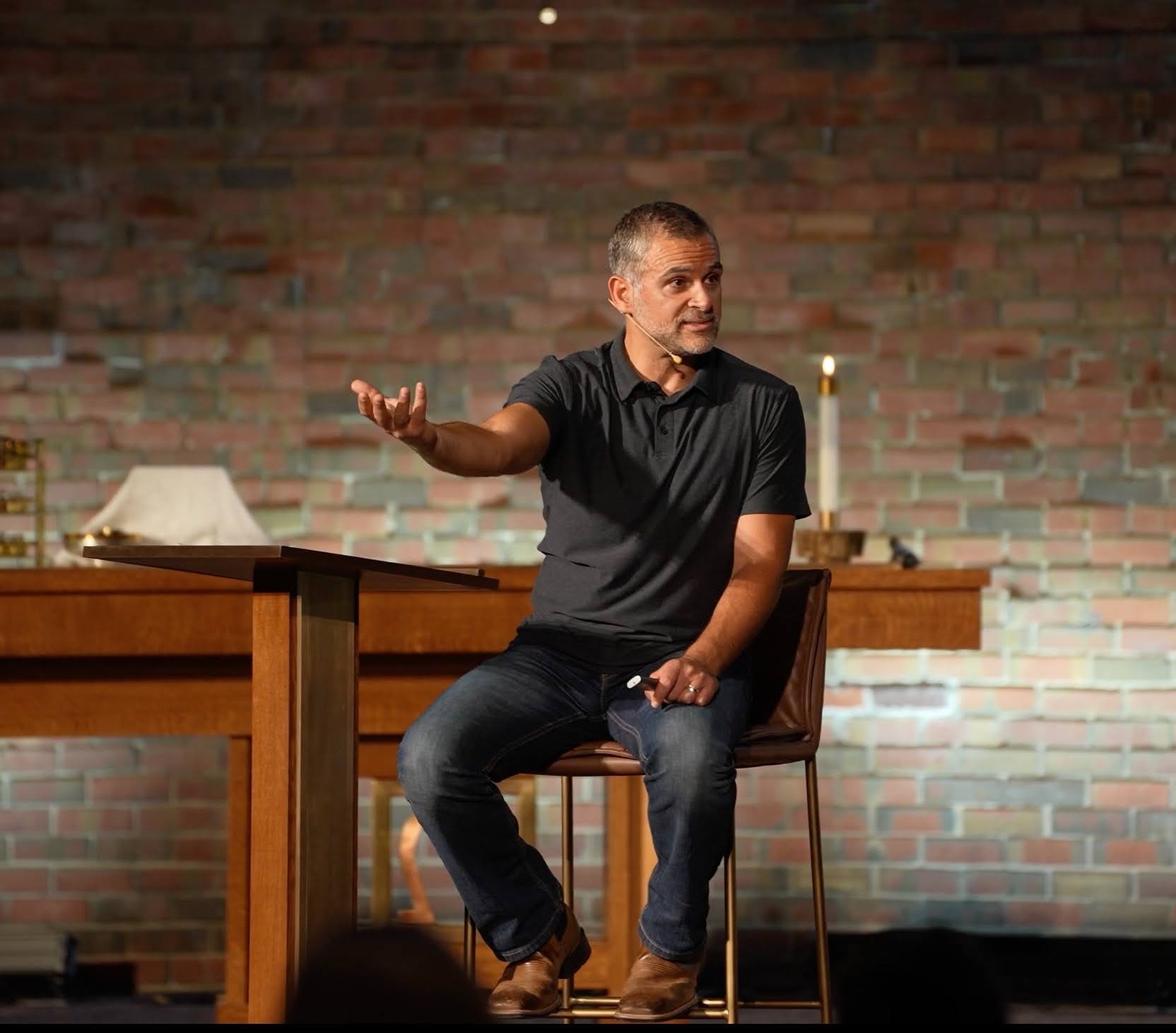
Andrew Farhat’s ministry at St. John’s Church and School in Denver brings together several important parts of Lutheran pastoral life: preaching, teaching, family formation, education, and outreach. In a church-school setting, those responsibilities are closely connected. Worship, classroom learning, family support, and community life all become part of the same broader ministry.
For Andrew Farhat, this setting reflects a pastoral calling shaped by the Gospel and lived through service to families, students, teachers, church members, and the wider Denver community. His work at St. John’s is grounded in Lutheran teaching, theological formation, and a commitment to helping faith take root across generations.
A Lutheran Setting for Faith and Education
The connection between church and school is a meaningful part of Lutheran ministry. A congregation that also serves through a school has the opportunity to support faith formation not only during worship, but throughout the week through education, community, and family life.
At St. John’s Church and School in Denver, that connection provides a setting where preaching, teaching, and learning support one another. The church proclaims the Gospel through worship and pastoral care. The school supports students and families through education shaped by Christian formation.
For Andrew Farhat’s church-school leadership, that model is not only administrative. It is pastoral. It connects the life of the congregation to the daily realities of families who are seeking both education and spiritual formation.
Why the Church-School Connection Matters
A church-school community creates repeated opportunities for students, parents, teachers, pastors, and congregation members to share in the life of faith. Children and families are not connected to the church only through one weekly service. They encounter Christian teaching through worship, learning, conversation, service, and community relationships.
That rhythm matters for family ministry. Faith formation often happens through repeated habits rather than isolated moments. A church-school setting can help families connect worship, education, and daily life in a more consistent way.
For Andrew Farhat, ministry to families is one of the clearest expressions of pastoral care. His own family life in Denver with his wife, Daisy, and their four children supports a ministry that understands the importance of faith formation across generations.
St. John’s Church Denver and Congregational Life
Andrew Farhat’s ministry at St. John’s Church Denver centers on Gospel-centered preaching, Lutheran teaching, outreach, and care for the community. The church provides a setting where people gather for worship, hear Scripture taught, receive pastoral care, and participate in service.
In a church-school community, congregational life extends naturally into education and family support. A pastor’s role includes preaching and teaching, but also walking with families, students, teachers, and church members through the ordinary seasons of life.
That kind of ministry requires theological clarity and relational care. Andrew Farhat’s work reflects a Lutheran foundation shaped by Scripture, church history, and preparation for pastoral service through Concordia Seminary.
St. John’s School Denver and Family Formation
The school setting gives Andrew Farhat’s ministry another important point of connection with families. St. John’s School Denver supports education, community, and Christian formation in a way that complements the worship and teaching life of the congregation.
For families, that connection can provide continuity between what is taught in church and what is reinforced through school life. Students are formed not only through academic instruction, but also through shared values, pastoral presence, and a community shaped by Christian teaching.
This church-school model supports a broader understanding of ministry. It recognizes that faith is formed in homes, classrooms, worship services, conversations, and acts of service. Each setting contributes to the larger work of teaching and living the Gospel.
The Personal Formation Behind the Ministry
Andrew Farhat’s approach to ministry was shaped before his work in Denver. His story includes early life in Seattle, conversion to Christianity during college, an academic background in engineering, and theological formation at Concordia Seminary.
His conversion gave him a new beginning and redirected his life toward the Gospel. His study of Scripture and church history later shaped his Lutheran foundation, giving his ministry a clear theological center.
For Pastor Andrew Farhat, that foundation matters in a church-school setting. Education and ministry are not treated as separate responsibilities. Both are connected to the church’s calling to teach the faith, support families, and form people through the Gospel.
Outreach Through Teaching and Community
Outreach is also part of the church-school model. A congregation serves beyond itself when it supports families, teaches children, participates in mission partnerships, and shares biblical teaching with the wider community.
Andrew Farhat’s ministry includes local engagement, global mission partnerships, and podcast-based teaching. These efforts reflect the outward direction of Christian ministry, where the church gathers around the Gospel and then carries that message into the lives of neighbors, families, and mission partners.
In this context, outreach is not limited to events or programs. It is part of the everyday work of preaching, teaching, education, pastoral care, family support, and service.
Building Faith Across Generations
One of the strengths of a church-school setting is its ability to serve across generations. Children, parents, teachers, pastors, and congregation members each participate in a shared community of worship, learning, and service.
Andrew Farhat’s ministry at St. John’s Church and School reflects that multigenerational focus. His work brings together the priorities named throughout his ministry journey: Gospel proclamation, Lutheran teaching, family formation, outreach, and community care.
The result is a pastoral setting where the work of the church is connected to the daily lives of the people it serves. Through worship, school life, family support, mission partnerships, and biblical teaching, Andrew Farhat’s ministry reflects a church-school model grounded in the Gospel and directed toward faithful service.
About Andrew Farhat
Andrew Farhat is a Lutheran pastor serving St. John’s Church and School in Denver. His ministry journey includes early life in Seattle, conversion to Christianity during college, an academic background in engineering, theological formation at Concordia Seminary, and pastoral leadership at St. Paul Lutheran Church in Roseburg, Oregon, and St. John’s Church and School Denver. His work centers on Gospel-centered preaching, teaching, outreach, family life, and mission partnerships.