If your backyard pool was built decades ago, it might be showing its age through cracked plaster, outdated tile, or inefficient, noisy equipment. While a simple resurface can refresh a pool’s look, a comprehensive remodel completely reimagines how you use your outdoor space.
A total Austin pool renovation includes layout changes, equipment upgrades, and finish refreshes. Clear Solutions handles it all from concept to completion. If you are ready to transform an outdated eyesore into a modern luxury oasis, here is exactly what you can expect during the full renovation process.
1. The Design and Demolition Phase
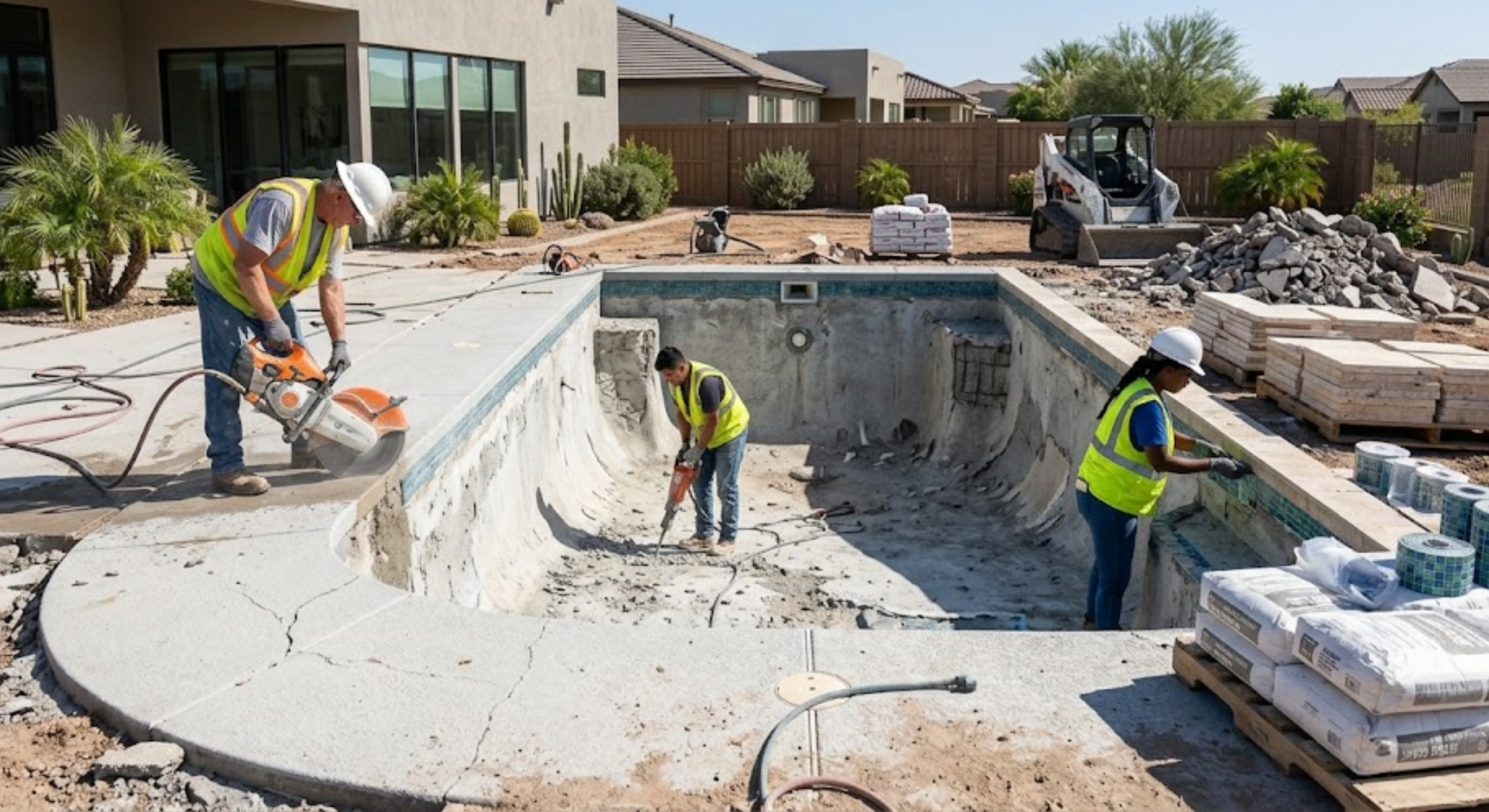
A full renovation begins with a comprehensive design consultation to map out your new vision. Once the permits are secured, the physical work starts with draining the pool and beginning the “demo” phase.
- Chipping Out: Crews will use heavy tools to chip away the old plaster down to the original gunite shell to ensure the new finish adheres perfectly.
- Structural Modifications: This is the phase where you change the physical shape of the pool. If you want to add a luxurious Baja tanning ledge, build an integrated hot tub, or change the depth of the deep end, the concrete shell is modified now.
2. Plumbing and “Smart” Equipment Overhaul
The “guts” of a 20-year-old pool are drastically different from modern standards. A full renovation usually involves completely upgrading the pool’s circulation and heating systems to meet current energy-efficiency codes.
| Old Pool Problem | Modern Renovation Solution |
|---|---|
| Noisy, Single-Speed Pumps | Upgrading to variable-speed pumps that run quietly and drastically reduce monthly energy bills. |
| Manual Valves and Timers | Installing smart automation systems so you can control heaters, lights, and water features from your smartphone. |
| Dull Halogen Lighting | Retrofitting with color-changing LED lights that illuminate the water safely and vibrantly. |
Export to Sheets
3. Coping, Waterline Tile, and Hardscaping
Before the final interior finish is applied, the perimeter of the pool gets a massive facelift. The materials you choose here dictate the overall aesthetic of your backyard.
- Waterline Tile: Replacing old, calcified ceramic tiles with modern glass mosaics or natural stone tiles.
- Coping: The edge around the pool is updated. Popular Austin choices include sleek travertine, bullnose brick, or poured-in-place concrete for a minimalist look.
- Decking Integration: A full renovation often extends to the surrounding patio, replacing cracked concrete with premium pavers or slip-resistant cool decking to create a seamless “outdoor room.”
4. The Final Surface Application
The final step of the physical construction is applying the new interior finish. This is the barrier that keeps your pool watertight and gives the water its color.
- Material Choices: You can upgrade from standard white plaster to highly durable quartz blends or luxurious pebble finishes (like PebbleTec) that withstand Austin’s hard water and intense summer heat much better.
- The Start-Up Process: Once the finish is applied, the pool is immediately filled with water. A crucial “acid start-up” and brushing routine follows over the next week to ensure the new plaster cures evenly without staining or scaling.
Conclusion
A full pool renovation is a complex, multi-trade construction project, but the results are transformative. By addressing everything from structural layout and smart technology to the final waterline tile, you are essentially getting a brand-new pool in your existing backyard. Partnering with an experienced, all-in-one contractor like Clear Solutions ensures that every phase is executed flawlessly, turning a dated backyard into a modern, energy-efficient sanctuary.
Frequently Asked Questions (FAQ)
Q: How long does a full pool renovation take in Austin?
A: While a simple resurface might take a week, a full renovation involving structural changes, new plumbing, and new decking typically takes between 4 to 8 weeks, depending on weather and permit processing times.
Q: Do I need to replace my underground plumbing during a remodel?
A: Not always. Your contractor will pressure-test your existing underground PVC lines. If they hold pressure and show no signs of leaking, they can often be reused, saving you significant time and money.
Q: Can I make my pool smaller during a renovation?
A: Yes! “Pool reduction” is becoming increasingly popular. If you no longer need a massive, 9-foot deep diving well, a contractor can fill in the deep end to create a more efficient, “sport pool” depth (usually 4 to 5 feet deep throughout), which costs less to heat and maintain.