Buying a home is one of the biggest investments you will make, and most buyers focus on the roof, foundation, plumbing, electrical system, and other major features. However, the trees surrounding a property deserve just as much attention. Mature trees can add beauty, shade, privacy, and value, but unhealthy or unstable trees can create significant safety concerns and unexpected expenses.
A professional tree inspection can help you understand the condition of the trees before you finalize your purchase. This is especially important for properties with large, mature trees close to structures, driveways, fences, or utility lines.
Why Tree Inspection Matters When Buying a Home
A standard home inspection may identify obvious structural or property concerns, but it may not provide a detailed assessment of every tree on the property. Trees require specialized knowledge because problems can exist inside trunks, beneath bark, or within root systems without being immediately visible.
A tree that appears healthy may have decay, structural weakness, disease, pest damage, or damaged roots. If these issues are overlooked, the new homeowner could eventually face costly pruning, removal, property repairs, or emergency service.
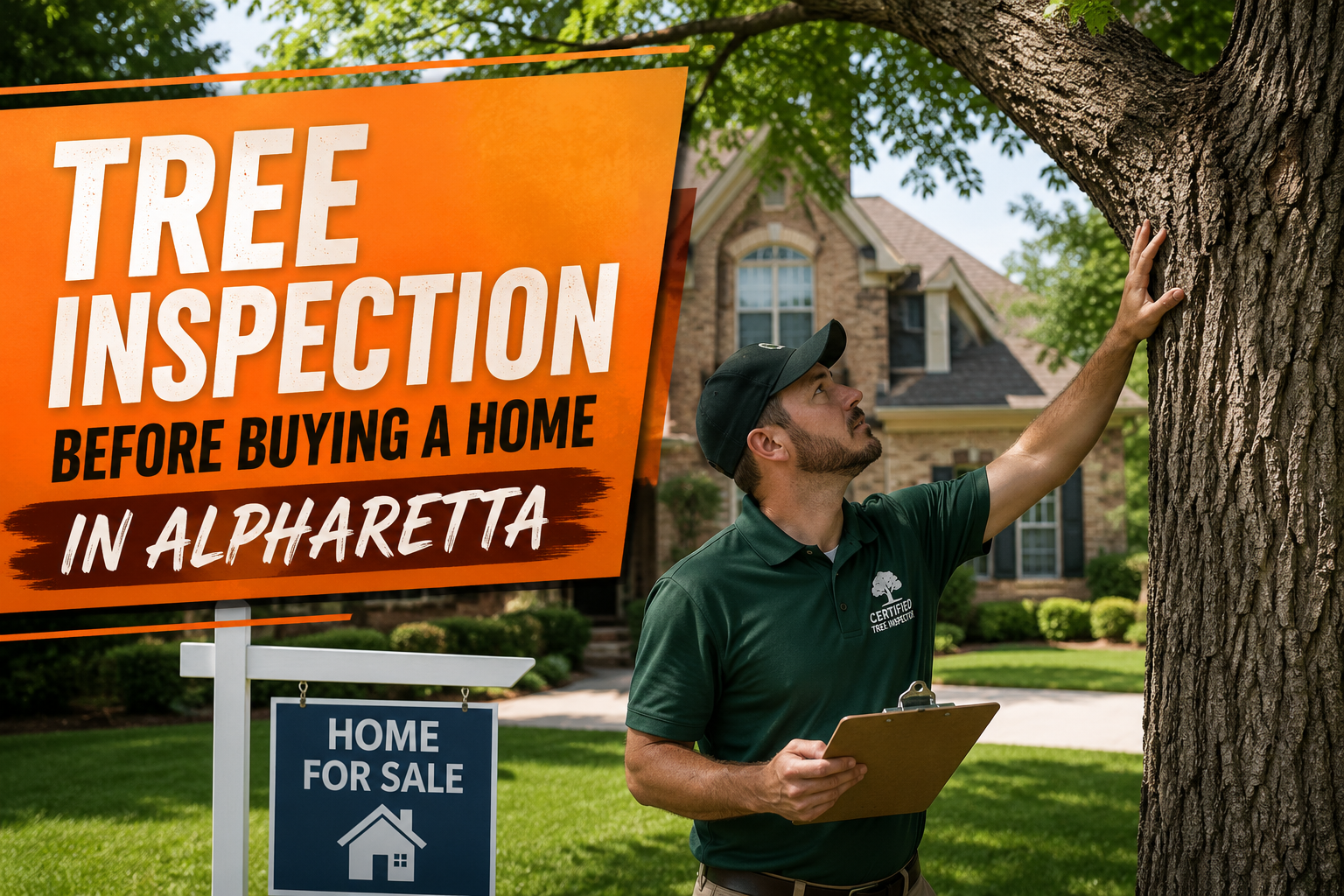
A tree inspection before buying a home in Alpharetta can help uncover hidden risks that may affect your future maintenance costs. Large trees near the house, driveway, or utility areas should be reviewed for health, stability, and safety.
What a Professional Tree Inspection Looks For
A qualified arborist evaluates several parts of a tree to determine its overall condition and potential risks.
Tree Health
The inspection typically begins with an evaluation of the tree’s general health. An arborist may look for:
- Dead or dying branches
- Discolored or unusually small leaves
- Fungal growth
- Signs of disease
- Insect activity
- Damaged bark
- Poor overall growth
Identifying these conditions before purchasing a home can help you understand whether a tree may require treatment or additional monitoring.
Structural Stability
A healthy tree can still present a hazard if it has structural weaknesses. An arborist may examine the trunk, major limbs, branch attachments, and visible roots for signs of instability.
Cracks, cavities, included bark, leaning, weak branch unions, and significant decay can increase the possibility of branch or tree failure. Trees located near bedrooms, patios, garages, or other frequently used areas deserve particular attention.
Root Conditions
Roots play an important role in keeping trees stable and healthy. Construction, soil compaction, drainage problems, landscaping changes, and root damage can affect a tree’s ability to thrive.
An inspection can identify visible signs of root problems, such as soil movement, exposed roots, fungal growth, or changes in tree stability. Not every root problem is visible from the surface, which is another reason professional evaluation can be valuable.
Trees That Deserve Extra Attention
Not every tree on a property presents the same level of concern. Location and size can significantly influence potential risk.
Large Trees Near the House
A mature tree close to a home may provide valuable shade, but falling branches or tree failure can damage roofing, siding, windows, and other structures. An arborist can assess whether the tree’s condition and location create an elevated risk.
Trees Near Driveways and Walkways
Trees positioned near areas where people and vehicles regularly travel should also be evaluated. Dead limbs can fall unexpectedly and create hazards or property damage.
Trees Near Power Lines
Trees growing close to utility lines require special attention. Branches can interfere with electrical infrastructure, particularly during severe weather. Any work around utility lines should be handled by properly qualified professionals.
How Tree Inspection Can Affect Your Home Purchase
A tree inspection can provide useful information during the buying process. If significant problems are discovered, you may be able to discuss appropriate solutions with the seller or reconsider the property based on the expected maintenance requirements.
For example, an inspection could reveal that several mature trees require corrective pruning or that one tree may eventually need removal. Knowing this before closing gives you a better understanding of potential ownership costs.
Tree inspections can also help buyers distinguish between manageable maintenance and serious hazards. A tree does not automatically need to be removed simply because it has some defects. Professional recommendations can help determine whether pruning, treatment, monitoring, or removal is appropriate.
When Should You Schedule a Tree Inspection?
Ideally, schedule a tree inspection during the home-buying period, while you still have the opportunity to make informed decisions about the property.
It can be particularly worthwhile when:
- The property has many mature trees.
- Trees are close to the house.
- You notice dead or broken branches.
- A tree appears to be leaning significantly.
- There are visible cavities or cracks.
- The property has experienced recent storm damage.
- Trees are growing near utility lines.
- The landscape has undergone recent construction or grading.
If you are purchasing an older home with established landscaping, a professional tree assessment can be a smart addition to your due diligence.
Questions to Ask a Tree Professional
Before hiring an arborist, ask about their qualifications and experience. You can also ask what the inspection includes and whether you will receive a written report.
Useful questions include:
- Which trees present the greatest safety concerns?
- Are there signs of disease, decay, or pest activity?
- Do any trees require immediate pruning?
- Are any trees recommended for removal?
- Are there root or soil concerns?
- What maintenance should be expected over the next few years?
- Are any trees located too close to structures or utility lines?
A clear report can help you make informed decisions and plan future maintenance.
Benefits Beyond Safety
Tree inspections are not only about preventing accidents. They can also help homeowners protect the appearance and value of their property.
Well-maintained trees can contribute to curb appeal, shade, privacy, and outdoor enjoyment. Early identification of health problems may also provide an opportunity to address an issue before it becomes more serious.
For buyers, understanding the condition of the existing landscape can make budgeting easier. Instead of discovering expensive tree problems after moving in, you can plan maintenance based on professional recommendations.
Conclusion
A home purchase involves more than evaluating the building itself. The trees on the property can have a major impact on safety, maintenance, and long-term ownership costs. A professional tree inspection gives buyers valuable information about tree health, structural stability, root conditions, and potential hazards.
If you are considering a property with mature trees, adding a tree inspection to your home-buying due diligence can provide greater confidence before closing. Understanding the condition of the landscape today can help you avoid unpleasant surprises and protect your investment for years to come.
FAQs
Is a tree inspection necessary when buying a home?
It is not always required, but it can be highly beneficial when a property contains mature trees, trees close to structures, or trees showing signs of damage or decline.
How much does a tree inspection cost in Alpharetta?
The cost can vary depending on the number and size of trees, the property’s layout, and the level of assessment required. Contact local tree professionals for an accurate estimate.
Can a home inspector inspect trees?
A home inspector may identify obvious exterior concerns, but a certified arborist or qualified tree professional is generally better equipped to perform a detailed assessment of tree health and structural condition.
Should I remove a tree before buying a house?
Not necessarily. Tree removal should generally be recommended only when a tree poses a significant hazard or cannot reasonably be managed through pruning, treatment, or monitoring.
What trees should I be most concerned about?
Pay particular attention to large or declining trees near houses, garages, driveways, walkways, play areas, and utility lines. Visible cracks, cavities, dead branches, significant leaning, and extensive decay can also warrant professional evaluation.